REVIEW · ZANZIBAR
Stone Town Historical Walking Tour
Book on Viator →Operated by Days Zanzibar Tourguides · Bookable on Viator
Stone Town is a lesson you can walk. This 2–3 hour heritage tour is a smart way to make sense of Zanzibar’s past—religions side by side, trade routes, and real daily life—without getting lost. I love the street-level details (carved doors, sea air, perfumes, and the calls to prayer) and I especially appreciate how guide Ahmed can adjust the pace to what you care about. One thing to plan for: some key stops have extra entrance costs and it’s still a lot of walking in old streets.
You’ll start and finish at Forodhani, and the route is built for an easy flow: history first, then markets, then museums, with a strong chance to catch the evening food scene. The tour is private, so it’s just your group, and that makes it easier to ask questions and go at a comfortable speed.
If you’re short on time in Zanzibar City, this tour gives you a high value snapshot that feels grounded—architecture, commerce, and the difficult parts of the island’s story all in one loop.
In This Review
- Key highlights worth knowing before you go
- Why this Stone Town walk works so well
- Price and the small extras that affect value
- Is it worth paying the entrance fee?
- Meeting at Forodhani: the best start point for senses and direction
- Stone Town’s old lanes: trading hub to UNESCO street map
- How long you’re here
- Consideration
- Ngome Kongwe (Old Fort): the Portuguese chapter and the Omani shift
- Timing
- Forodhani Gardens at sunset: where street food becomes part of the culture
- Timing
- Consideration
- Darajani Bazaar: spices, seafood, clothing, and local rhythm
- What you’ll do here
- Consideration
- People’s Palace Museum: the Sultan’s residence and cultural artifacts
- Timing
- Consideration
- Christ Church Cathedral: a former slave market site
- Timing and entrance note
- Freddie Mercury Museum: Zanzibar identity through music
- Timing and entrance note
- The cultural threads you’ll actually notice during the walk
- Should you book this Stone Town heritage walking tour?
- FAQ
- How long is the Stone Town Historical Walking Tour?
- How much does the tour cost?
- Is there an entrance fee?
- What’s included in the price?
- Where do I meet for the tour?
- Is food and drink included?
- Is this tour private?
- Can I cancel for a full refund?
Key highlights worth knowing before you go
- Guide Ahmed adapts the pace so the walk matches your interests, not a rigid script
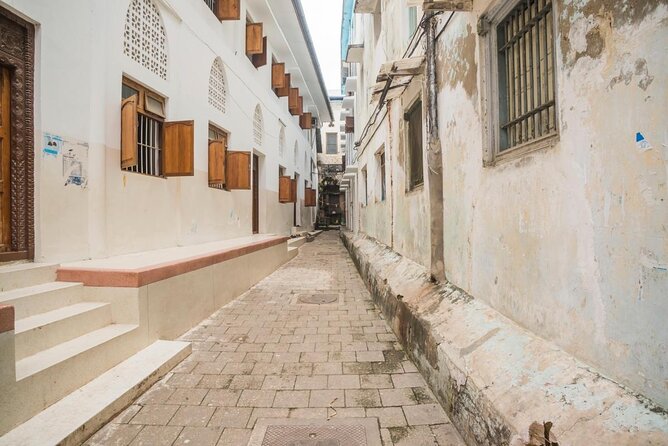
- UNESCO Stone Town context helps you see why these streets matter
- History tied to real places including the former slave market site
- Forodhani Gardens after sunset is where the street food energy peaks
- Darajani Bazaar shows everyday Zanzibar: spices, produce, seafood, crafts
- Music meets identity at the Freddie Mercury Museum stop
Why this Stone Town walk works so well
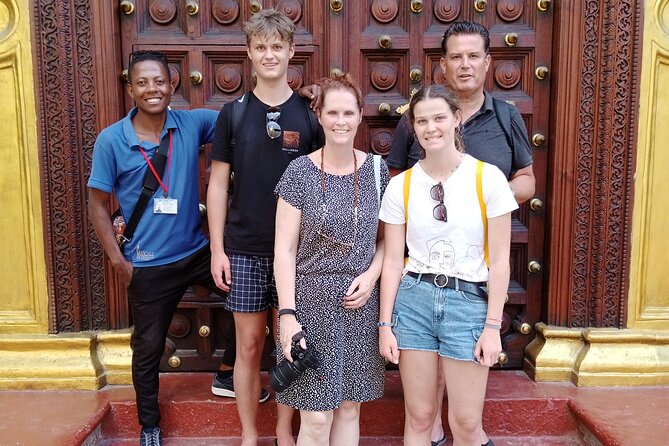
Stone Town can feel like a maze at first. You’ll turn a corner and suddenly you’re looking at old architecture, carved wooden doors, and narrow lanes that seem designed for lingering. A guided walk fixes the main problem: you know what you’re looking at and why it’s here.
What I like most is that the experience doesn’t only focus on pretty buildings. It links the sights to the big forces that shaped Zanzibar: trade, religion, and power. You also get the small, human stuff—how people live and shop right now, not just how the island used to function.
The tour is also a good fit for limited time. At about 2 to 3 hours, you can still keep the rest of your day open for beach time, dinner, or other Zanzibar stops.
You can also read our reviews of more walking tours in Zanzibar


Price and the small extras that affect value
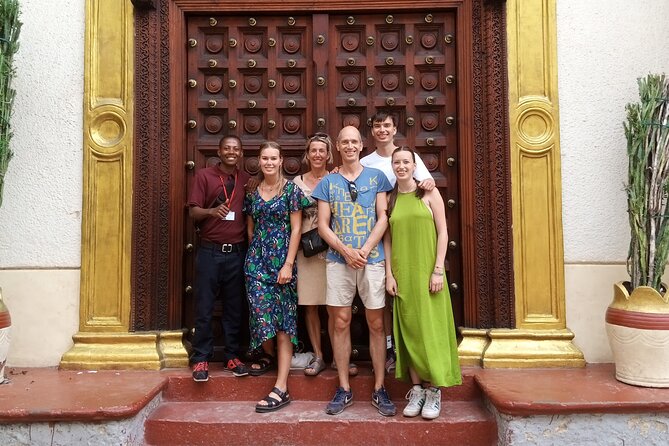
The tour costs $25 per person, and it’s booked most often about 13 days in advance. That price is fairly straightforward for a guided heritage walk in Stone Town, especially because you get a professional guide and a private format for your group.
Two costs to keep in mind:
- Entrance fee: $5 per person (not included)
- Food and drink: not included
Also note: tips aren’t included. If you like the guide a lot—and you probably will since Ahmed tailors the pacing—factor in a gratuity at the end.
Is it worth paying the entrance fee?
For this kind of walking tour, the entrance fee often matters because it gives access to certain sites during your route. And since the itinerary includes museums and churches tied to Zanzibar’s history, that extra payment can be the difference between seeing a location from the outside versus getting the inside context.
Meeting at Forodhani: the best start point for senses and direction

You meet at Forodhani, Zanzibar, Tanzania, and you end back there. I like meeting at a central spot like this because it reduces the stress of coordinating transport and directions at the end of the walk.
From the moment you begin in Stone Town, you’ll feel how the city runs on senses: sea air and perfume-like smells float through the lanes, and calls to prayer carry over the area. It’s one of the simplest ways to understand Zanzibar without any lecture—your body picks up the rhythm.
One practical note: the tour includes pick up from Stone Town hotels if you request it in advance. If you’re staying somewhere else on the island, the tour starts in Stone Town, so you’ll still need to get there on your own.
Stone Town’s old lanes: trading hub to UNESCO street map
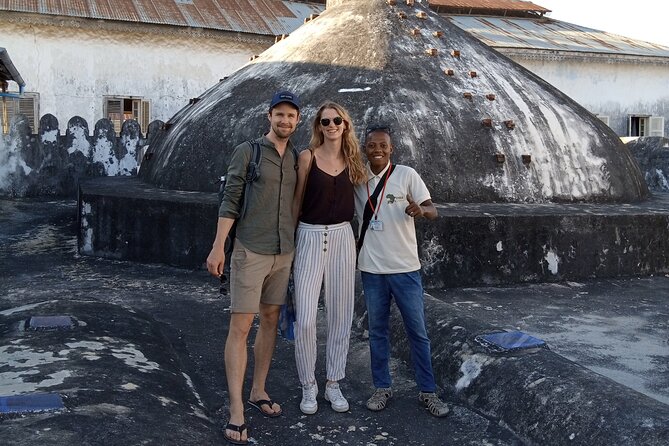
Your first stop is Stone Town itself, the historical center of Zanzibar City and a UNESCO World Heritage Site. This part works because it turns the city into a story map. You’re not just walking—you’re learning how the built environment reflects centuries of contact.
You’ll hear how Zanzibar served as a major meeting place for African, Indian, Arab, and European influences, and how the island’s role in trade routes—spice, silk, and the slave trade—shaped what you see today. When you look at old colonial buildings and the carved doors made with Zanzibari style, it starts to click: these weren’t random decorations. They were the visual language of connection, wealth, and cultural mixing.
You also get the religious coexistence theme in a real-world way. The tour highlights peaceful coexistence among Islam, Christianity, and Hinduism. Even if you’ve never thought much about religious geography while traveling, Stone Town makes it hard to ignore.
You can also read our reviews of more historical tours in Zanzibar





How long you’re here
About 30 minutes for the main Stone Town introduction. That’s enough for orientation plus a few key sights, without turning the walk into a full day.
Consideration
Because it’s a compact intro, you’ll want to bring a question or two. If you’re the type who loves deep historical detail, Ahmed can pace and focus, but you may still want a second day for extra wandering on your own.
Ngome Kongwe (Old Fort): the Portuguese chapter and the Omani shift

Next up is the Old Fort (Ngome Kongwe), noted as one of the oldest stone buildings in Stone Town, around 1560. This stop is valuable because it places architecture inside a power story.
You’ll learn how the fort’s stone form is linked to Zanzibar’s occupation by the Yaarub, who expelled the Portuguese after Portuguese actions related to Mombasa. The explanation helps you understand that European influence didn’t just happen in one place—it moved through regional events. You’ll also hear how this Portuguese presence continued until the Oman took over in 1698.
Even if you’re not a history buff, forts do something useful on a walking tour: they give your eyes a reference point. You can see the scale, the stone character, and the strategic idea of control in a way that’s hard to grasp from a photo.
Timing
About 40 minutes here, so this is one of the longer stops. Plan to take your time with questions—this is where a good guide makes a noticeable difference.
Forodhani Gardens at sunset: where street food becomes part of the culture
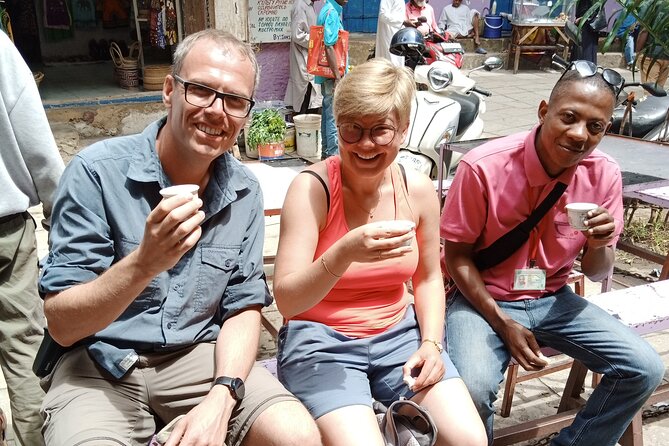
Then you’ll reach Forodhani Gardens, a place that turns into a gathering hub after sunset. It gets busy when tourists and locals head to the street food market in the main square.
This is one of my favorite types of stops: not a staged attraction, but a real social moment where food and conversation carry the city’s energy. You’ll see and taste (if you choose) Kiswahili and Zanzibari dishes like grilled seafood, samoosa, cassava and potatoes. The food theme matters because it connects history to present-day identity. Zanzibar’s trade past isn’t only about ships and politics—it’s also about flavor movements and cooking techniques.
Timing
About 30 minutes. That’s enough to understand the scene and decide what you want to eat without feeling rushed.
Consideration
Food isn’t included, and you’ll likely pay for what you order. If you’re counting budget tightly, use the visit to sample small bites rather than committing to a full meal.
Darajani Bazaar: spices, seafood, clothing, and local rhythm

After the gardens, the tour moves to Darajani Bazaar, around 18 minutes. This stop is where you get the daily-life Zanzibar picture: vendors with fresh produce, spices, seafood, clothing, and crafts.
Even in a short visit, markets teach you how locals talk with their hands—what people buy, how they bargain, and what’s considered worth bringing home. If you’re the kind of traveler who wants to understand a place beyond landmarks, this is the practical payoff.
What you’ll do here
You can interact with vendors, sample traditional foods if you want, and shop for items with local style. The goal isn’t to pressure you into buying—it’s to show you how the market works as a living system.
Consideration
Eighteen minutes can feel quick at a market, because your eyes will want to stop on everything. If you really care about shopping, tell Ahmed right away. A good guide can redirect focus.
People’s Palace Museum: the Sultan’s residence and cultural artifacts
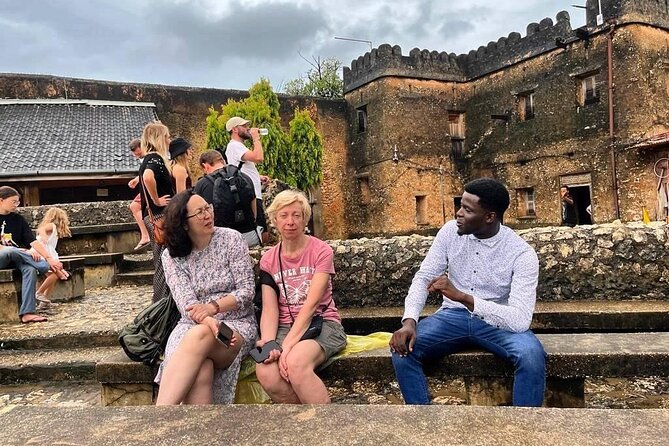
Next is People’s Palace Museum, also around 18 minutes. The focus here is the Sultan’s historical residence and the royal past of Zanzibar.
This stop is valuable because it gives you objects and exhibits that turn stories into something more concrete. Artifacts and displays help explain cultural heritage in a way that a street view can’t. You might also experience interactive elements such as traditional music or craft demonstrations, though that’s not guaranteed.
Timing
About 18 minutes, which is enough for context but not enough for a long museum crawl.
Consideration
If you love museums, you may want to return later on your own with more time. This tour’s museum moments are designed to keep momentum in a short heritage loop.
Christ Church Cathedral: a former slave market site
You’ll also visit Christ Church Cathedral, tied to a heavy historical reality. The church stands where the slave market site used to be.
This is the stop that changes the mood. It’s not just architecture. It’s memory—an acknowledgment that slavery wasn’t an abstract idea, and the cost of trade history is visible in human lives.
The tour keeps things respectful and factual, but you should come ready for emotional weight. If you prefer cheerful-only sightseeing, this may not be your favorite part. If you want a balanced understanding of Zanzibar, it’s essential.
Timing and entrance note
About 18 minutes, and admission is listed as not included.
Freddie Mercury Museum: Zanzibar identity through music
Finally, you’ll reach the Freddie Mercury Museum area for about 18 minutes. This stop connects Zanzibar’s cultural roots to global music history, showing how Mercury’s journey from Zanzibar to worldwide stardom connects back to Zanzibari heritage.
Even if you’re not a hardcore Queen fan, the museum can be a fun way to shift gears from older political history into modern cultural identity. It’s also a nice reminder that Zanzibar isn’t only defined by trade routes and empires; it also produces artists and stories that travel far beyond the island.
Timing and entrance note
About 18 minutes, and admission is also listed as not included.
The cultural threads you’ll actually notice during the walk
By the time you finish, you’ll likely start seeing Stone Town as several overlapping layers at once:
- Religious harmony: Islam, Christianity, and Hinduism living side by side in the city’s fabric
- Cultural fusion: African, Arab, Persian, Indian, and European influences showing up in everyday places
- Trade-driven architecture: why the city looks like it does, because of centuries of movement of goods and people
- A hard honest record: slavery-related history is treated as part of the story, not erased
And this is where the guide matters. One of the standout points from experience is that Ahmed doesn’t just recite facts. He can pace the walk based on your interests and share the current struggles Zanzibarians are facing. That makes the tour feel more human, more connected to now, not only then.
Should you book this Stone Town heritage walking tour?
I’d book it if:
- You want a quick, organized way to understand Stone Town in a few hours
- You prefer guided context over wandering randomly
- You like mixing history + markets + museums
- You’re traveling with a group and want a private experience
I might skip or adjust expectations if:
- You hate paying separate entrance fees (the tour price is $25, but there’s a $5 entrance fee and some sites aren’t included)
- You want a long, slow museum day rather than a compact walk
- You’d rather avoid emotionally heavy history like the slave market site connection
If you can, plan to book ahead (it’s commonly reserved around 13 days before). And bring a little extra money for snacks, because Forodhani Gardens is the kind of place where you’ll probably want to try something.
FAQ
How long is the Stone Town Historical Walking Tour?
The tour runs about 2 to 3 hours.
How much does the tour cost?
It’s $25.00 per person.
Is there an entrance fee?
Yes. There is an entrance fee of $5 USD per person that is not included.
What’s included in the price?
You get a professional tour guide plus pick up from Stone Town hotels if you request it in advance. The ticket is also mobile.
Where do I meet for the tour?
The meeting point is Forodhani, Zanzibar, Tanzania, and the tour ends back at the same place.
Is food and drink included?
No. Food and drink are not included.
Is this tour private?
Yes. It’s a private tour/activity, so only your group participates.
Can I cancel for a full refund?
Yes. You can cancel for a full refund if you cancel at least 24 hours in advance. Free cancellation is available up to that point. If you cancel within 24 hours of the start time, the amount paid isn’t refunded.