REVIEW · ZANZIBAR
Cultural Walking Tour through Stonetown, a UNESCO World Heritage Site
Book on Viator →Operated by Splash Tour Company · Bookable on Viator
Stone Town changes fast if you lose the thread. This private walk ties the big sights together with a local licensed guide and hotel pickup. You move through the seafront, markets, and the places where Zanzibar’s past still shows on the street.
I especially like how the tour uses landmarks you can’t really miss, like Forodhani Gardens and the Darajani Bazaar, then slows down just enough to explain what you’re seeing. The stop at Jaws Corner is also a smart palate break: you get to pause, have a fresh coffee moment, and watch locals playing bao.
One drawback to consider is timing and pacing: the walking route is tight, and if you rely on exact pickup times, give yourself a little buffer since punctuality can vary.
In This Review
- Key points to know before you go
- Stone Town on Foot: Why 2.5 Hours Feels Just Right
- Forodhani Gardens: The Seafront Start That orients You
- House of Wonders From the Street: History Even Without Entering
- Darajani Bazaar: Spices, Fish, Meat, and Everyday Trade
- Anglican Cathedral and the Old Slave Market: Stories You Should Not Rush
- Jaws Corner: Coffee Pause and the Bao Game Watching
- Princess Salme’s Story: A Romance That Shaped a Different Kind of Legend
- Price and Value: What $29 Buys in Stone Town
- Logistics That Matter: Start Point, End Point, and How to Plan Your Day
- Who This Tour Suits Best (and Who Might Want Something Different)
- Quick Reality Check: What You Should Expect at Each Stop
- Should You Book This Stonetown Walking Tour?
- FAQ
- How long is the Cultural Walking Tour through Stonetown?
- How much does the tour cost?
- Is hotel pickup included?
- Where does the tour start and end?
- Is this a private tour?
- What’s included in the tour price?
- What is not included?
- Do I need an admission ticket for the stops?
- What ticket format do I get?
- What if my plans change?
Key points to know before you go
- Private groups only: you get the guide’s attention without sharing it with strangers.
- Hotel pickup in Stone Town: transfers from other parts of the island aren’t included.
- Seafront start at Forodhani: a great orientation point right by the old city waterfront.
- Real market time at Darajani Bazaar: spices, fish, meat, and everyday bargaining energy.
- A few high-impact historical stops: including the Old Slave Market area and the Anglican Cathedral.
- House of Wonders is seen from outside: the building may be under construction, so plan for exterior context.
Stone Town on Foot: Why 2.5 Hours Feels Just Right
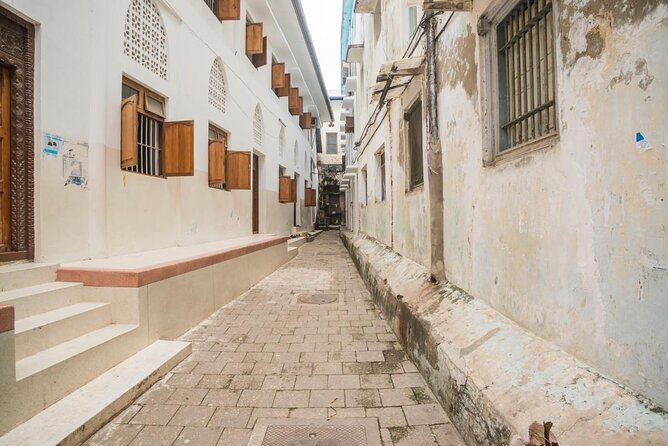
This is the kind of tour that helps you get your bearings fast. Stone Town is a maze of lanes, doorways, and sudden views of sea and sky. Having a guide who knows where the stories connect saves you from guessing.
At about 2 hours 30 minutes, the timing works well for a first visit. You’ll cover several major waypoints without turning the day into a nonstop march. And because it’s private, the guide can adjust the pace for your group rather than sticking rigidly to a checklist.
The price is also easier to swallow when you think in terms of what you avoid: hunting for the right route, trying to interpret signage, and figuring out which spots are worth lingering at. At $29 per person, it’s positioned as an efficient way to learn without paying for a long day tour.
You can also read our reviews of more walking tours in Zanzibar


Forodhani Gardens: The Seafront Start That orients You

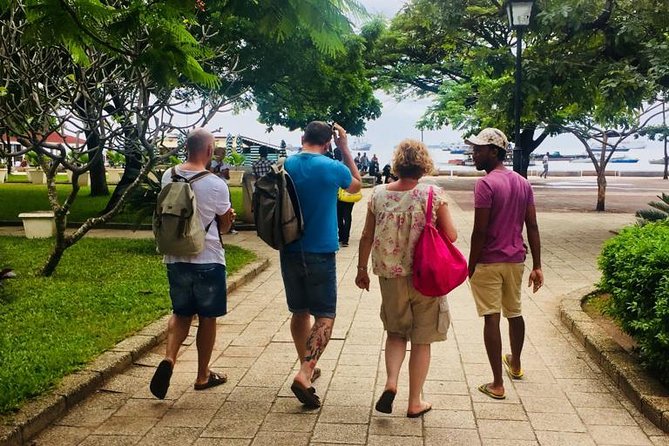
You begin at Forodhani, a small park along the main seawalk. It sits right in the old city zone, with the seafront opening your view to the wider shape of Stone Town. This matters because Stone Town can feel like a “inside-out” place: narrow streets, sudden courtyards, then—boom—the sea.
Forodhani is famous with locals and tourists alike. During the evening it turns into a lively night food market, so even if your tour time is during the day, you still get the sense that this place is a daily social hub. It’s also a practical start point: it’s easy to find and easy to regroup.
You’ll get a quick staging moment here—enough to settle in—before you head into the busier layers of the city.
House of Wonders From the Street: History Even Without Entering
On the way, you pass the House of Wonders (Beit-el-Ajaib). The key detail: the building may be under construction, so you likely won’t get a full inside look. Instead, you’ll hear the story and context from the outside.
That’s not a deal-break. In Stone Town, much of the character is in the exterior shapes and the way buildings sit in their neighborhoods. Seeing Beit-el-Ajaib while it’s wrapped in construction also tells you something real: the city is living, not frozen.
If you were hoping for a full museum-style visit, adjust expectations. You’re here for understanding and orientation more than for deep ticketed entry.
Darajani Bazaar: Spices, Fish, Meat, and Everyday Trade
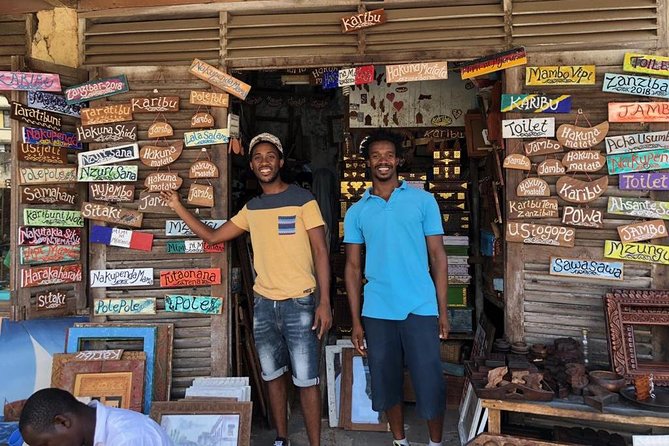
Next comes the Darajani Bazaar, Zanzibar’s main market. If you like travel days that feel like real life, this is the kind of stop that delivers. The market is loud with activity, and the sensory part is immediate: different spices, fruits, and vegetables all moving through the stalls.
You’ll also get to watch the traditional fish and meat areas in action. Markets like this aren’t just about buying—they’re about relationships. You can see people negotiating, moving quickly, and communicating through habit, not explanations. That’s where the guide adds value: you don’t just look at stalls, you learn how to read what you’re seeing.
One practical note: market stops can be crowded and busy. It’s worth keeping your belongings secure and staying aware of foot traffic, especially when you’re standing to listen.
Anglican Cathedral and the Old Slave Market: Stories You Should Not Rush

This part of the tour deals with one of the hardest topics connected to East Africa’s past: the slave trade. You’ll pass the area associated with the Old Slave Market and the Anglican Cathedral, and your guide will explain the history behind what happened and why these places matter.
I like that the tour doesn’t treat this as a quick photo stop. You’re given enough context to connect the architecture and location to the human story. That makes the sight more meaningful than just seeing a doorway or a wall.
A consideration here: if your group prefers lighter, purely scenic stops, this section will feel heavier. But if you want to understand Stone Town beyond postcards, this is exactly the kind of segment you shouldn’t skip.
You can also read our reviews of more historical tours in Zanzibar




Jaws Corner: Coffee Pause and the Bao Game Watching

After the weightier historical stop, the route shifts into something easier. Jaws Corner is the hotspot in Stone Town for a reason: you can grab a freshly brewed coffee, then slow down to watch everyday entertainment.
One of the most memorable parts is seeing locals play bao, a traditional board game. It’s simple in concept, but it pulls people into intense focus. Watching it for a few minutes helps you experience Stone Town as a community space, not only a museum corridor.
This break also helps you reset for the final story stop. It’s one of those moments where you realize the tour isn’t just about moving through sights—it’s about balancing the day so you remember more.
Princess Salme’s Story: A Romance That Shaped a Different Kind of Legend
Then comes a narrative stop tied to the Princess Salme story. She’s known as the daughter of the Sultan, and the tale goes that she fled after falling in love with a German man.
Why it works on a walking tour: it gives you a human-scale thread you can attach to the city. Stone Town has layers of power, trade, and change. A story like Salme’s is a way to understand how personal lives collided with politics and culture.
It’s not just gossip. In a place like this, personal decisions became public events. Hearing it while you’re still in the neighborhood atmosphere makes it stick.
Price and Value: What $29 Buys in Stone Town
At $29 per person for a private, guided walk, this is value-priced—especially because it includes pickup from Stone Town hotels and a licensed tour guide.
The biggest value isn’t only the guide’s knowledge. It’s the time and confusion you save. Stone Town can punish indecision: you take a wrong turn and suddenly you’re walking blocks that don’t match your plan. A guided route means you’re spending time looking, not just navigating.
That said, check what’s not included so you’re not surprised. Food and drinks are not included. Entrance fees are also not included, even though some stops are free (like Forodhani). If you plan to pay for anything inside a ticketed site, you’ll want to budget separately.
Also, you’re not being transferred from outside Stone Town, so if you’re staying elsewhere on Zanzibar, plan your own way into the meeting area.
Logistics That Matter: Start Point, End Point, and How to Plan Your Day
The tour starts and ends back at the meeting point—Forodhani. That’s helpful. You don’t need to worry about coordinating a return or chasing down a different pickup location later.
The activity runs Monday through Sunday, 8:00 AM to 5:00 PM. If you like cooler walking conditions and steadier light for photos, earlier can feel better than late afternoon when the city gets louder. But the schedule is flexible enough to fit most stays.
You’ll also have a mobile ticket, which simplifies check-in. And since it’s near public transportation, you’re not locked into one transport method if you need to get back on your own.
One more thing: because this is private, the guide’s presence is the product. Confirm your pickup time with your hotel if punctuality is important to you. Even with good communication, delays can happen.
Who This Tour Suits Best (and Who Might Want Something Different)
This tour is a great match if you:
- want a first-time Stone Town orientation with minimal stress
- like history explained in context rather than read from a plaque
- enjoy markets and street-level city life, not just viewpoints
- prefer a private format so the guide can pace to your group
It might be less ideal if you:
- want an itinerary filled mostly with ticketed museum entrances (entrance fees aren’t included)
- are hoping for a long food-focused experience (food isn’t included)
- strongly prefer only outdoor scenic stops with zero heavy historical content
Quick Reality Check: What You Should Expect at Each Stop
Here’s the practical rhythm you can expect:
- Forodhani Gardens: orientation at the seafront; daytime calm with a sense of evening nightlife.
- House of Wonders: exterior viewing with the story explained even if construction limits access.
- Darajani Bazaar: short market immersion—spices, produce, and watching the traditional trade.
- Old Slave Market / Anglican Cathedral area: guided historical explanation with a heavier theme.
- Jaws Corner: coffee break and watching bao in action.
- Princess Salme story: a final thread tying personality, power, and legend to the city.
Because the route moves, you’ll get good coverage. You just won’t have the time to do deep self-guided wandering in between stops—so if you’re the kind of person who wants to linger, ask the guide for a quick recommendation before you move on.
Should You Book This Stonetown Walking Tour?
I’d book it if you want the easiest path to seeing Stone Town’s main “must-not-miss” points with a guide who can connect them. The combination of market energy, a seafront start, and historical interpretation makes it feel like more than a casual stroll.
It’s also a smart budget choice for a private experience at $29, especially since hotel pickup is included in Stone Town. Just go in with realistic expectations: some landmarks may not be accessible in the usual way (like the House of Wonders during construction), and you’ll still need to handle food and any ticketed entrances yourself.
If you’re time-crunched, this is the type of tour that helps you see what matters while keeping your head above water.
FAQ
How long is the Cultural Walking Tour through Stonetown?
It runs for about 2 hours 30 minutes.
How much does the tour cost?
The price is $29.00 per person.
Is hotel pickup included?
Yes, pickup is included from hotels located in Stone Town.
Where does the tour start and end?
It starts at Forodhani, Zanzibar, Tanzania and ends back at the same meeting point.
Is this a private tour?
Yes. It is a private tour/activity, so only your group participates.
What’s included in the tour price?
A licensed tour guide is included, and pickup from Stone Town hotels is included.
What is not included?
Food and drinks, tips for the guide, transfers from other parts of the island (the tour starts in Stone Town), and entrance fees are not included.
Do I need an admission ticket for the stops?
Forodhani Gardens has a free admission ticket note, but entrance fees are generally not included in the tour.
What ticket format do I get?
You’ll have a mobile ticket.
What if my plans change?
You can cancel for a full refund if you cancel up to 24 hours in advance of the experience start time.