REVIEW · ZANZIBAR
Stone Town Historical Walking Tour
Book on Viator →Operated by Alfa Tours & Safaris · Bookable on Viator
Stone Town can feel like a maze until a good guide shows you the logic. This 2–3 hour walking tour is a smart way to connect major sights—Freddie Mercury’s home and key historic corners—with clear, human stories. I love that it’s led by a professional guide (and it can be private for your group), and I also like how it mixes well-known landmarks with harder-to-find context like the slave-trade history. One watch-out: some stops involve solemn subject matter, and the pace depends on your group’s questions.
You’ll start at the House of Wonders area on Sokoku Street and finish back near the meeting point, which makes the logistics easy after a day of travel. It’s also priced for value at $20 per person, with one notable extra cost—an entrance fee at the former slave market site (USD 5). If you’re short on time, this is a good “first Stone Town walk.” If you hate walking or you expect wheelchair-free flat routes, you’ll want to plan carefully (the city streets are often uneven).
In This Review
- What’s especially good about this tour
- Stone Town, Explained on Foot (The 2–3 Hour Sweet Spot)
- Where You Start: House of Wonders on Sokoku Street
- The Core Story: Mj Mpongwe and Old Stone Town
- House of Wonders: When Architecture Signals Power
- Old Fort: Trade Routes, Defense, and Daily Reality
- Freddie Mercury’s Home: Pop Culture With Local Context
- Jaws Corner and Forodhani Garden Area: Public Space, Market Life, Atmosphere
- Darajani Market: What to Watch, What to Taste, What to Skip
- Churches in Stone Town: Anglican and Catholic Corners
- Former Slave Market Site: The Most Important Stop
- Food, Souvenirs, and the Art of Not Getting Rushed
- The Guide Factor: Why People Rate This So High
- Price and Value: Why $20 Can Be a Smart Use of One Afternoon
- Timing and Weather: When the Walk Makes Sense
- Who Should Book This Tour (And Who Might Skip It)
- Should You Book This Stone Town Walking Tour?
- FAQ
- How long is the Stone Town Historical Walking Tour?
- Where does the tour start?
- Is the tour private?
- What is included in the price?
- Are there any entrance fees?
- What if the weather is bad?
- Can I cancel and get a refund?
What’s especially good about this tour
- Certified local guide on foot: you get a real guide, not just a radio script
- Stone Town highlights in one loop: House of Wonders, Old Fort, Forodhani Garden area, markets, and churches
- Freddie Mercury connection: you’ll see the house where he lived, then get the surrounding context
- Slave-trade history included: you’ll visit the former slave market site (with a small entrance fee)
- Works for families and solo travelers: guides have a track record of keeping kids engaged
- Private option for your group: less waiting, easier photo stops, better control of pacing
Stone Town, Explained on Foot (The 2–3 Hour Sweet Spot)
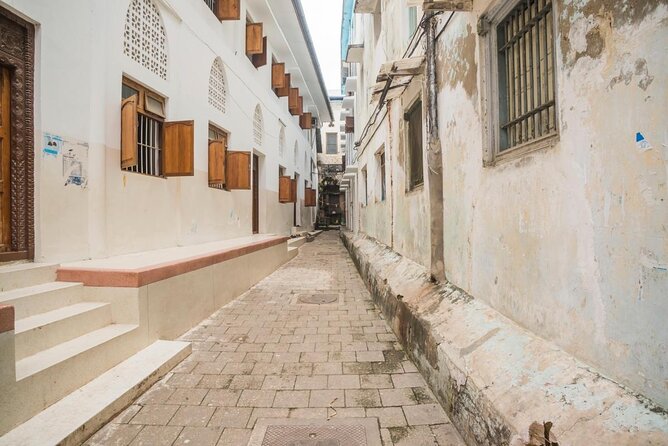
Stone Town is compact on a map, but it’s not simple to navigate in real life. This tour’s timing—about 2 to 3 hours—is long enough to connect the dots, and short enough that you’re not dragging your feet when the midday heat hits.
For $20 per person, the value is mostly about guide time. You’re paying to turn “I saw a building” into “I understand why it matters,” especially when you hit stops tied to trade, religion, and the darker parts of the city’s role in the slave trade.
You can also read our reviews of more walking tours in Zanzibar



Where You Start: House of Wonders on Sokoku Street
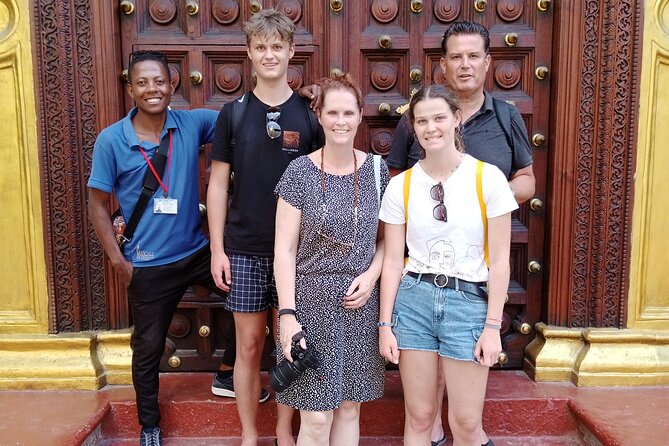
The meeting point is at House of Wonders, Sokoku St, Zanzibar, Tanzania (Plus Code R5QQ+JR). That matters because this part of Stone Town acts like a landmark hub—easy to orient yourself, and not buried deep in back lanes where you can lose your group.
You’ll also use a mobile ticket. In practice, that’s useful if you’re bouncing between attractions that want confirmations and slips of paper. And because the tour is private, you’re generally not stuck waiting for strangers to arrive before you can begin.
The Core Story: Mj Mpongwe and Old Stone Town
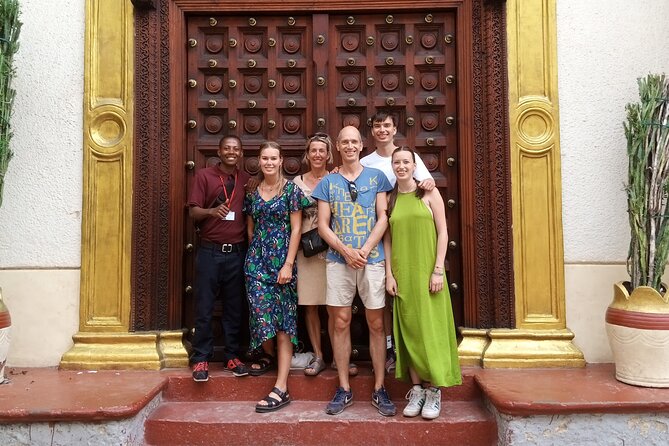
This walk focuses on the older parts of Zanzibar City, including Mj Mpongwe and the old Stone Town setting where layers of culture show up in streets, doors, and street-level life. Your guide sets up the big picture first: Zanzibar wasn’t shaped by one empire or one group—it was shaped by a mix of influences, including Persians, Portuguese, and the Sultanate of Oman.
That’s where the tour becomes more than sightseeing. When you’re walking, you can compare architectural styles, street patterns, and the practical “why” behind certain locations. It’s the kind of context that makes later independent exploring easier, because you’ll know what you’re looking at.
House of Wonders: When Architecture Signals Power

The House of Wonders stop is one of the tour’s anchor points. Even if you’ve only seen it from a distance before, the guide’s job is to explain what it represented and why it became a landmark in the first place.
A practical note: the building’s condition can be part of the story. You may see what’s left and what’s decayed, and that can shape your expectations. Bring your “history eyes,” not your “museum perfection” expectations.
Old Fort: Trade Routes, Defense, and Daily Reality

From there, you’ll head toward the Old Fort, another stop that connects the city’s strategic role with its everyday history. Forts are never just about weapons—they’re about control of movement, protection of valuable trade, and the ability to manage contact between different communities.
If you like when history has cause-and-effect, this is a good match. Your guide can help you connect why Zanzibar mattered along East Africa routes, and how that influenced what buildings were built, what walls guarded, and what areas became focal points.
You can also read our reviews of more historical tours in Zanzibar




Freddie Mercury’s Home: Pop Culture With Local Context

One of the easiest ways to get people excited about Stone Town is the Freddie Mercury Museum and the house where he lived. This tour includes that connection, so you’re not only walking through history—you’re also getting the bridge to modern fame.
What makes it satisfying is that you don’t leave it as a trivia stop. The guide can connect the Mercury story to the larger city setting, showing what life in Stone Town looks like outside of a headline. Expect a lot of photos here, and the best guides make room for that without turning it into a rushed photo line.
Jaws Corner and Forodhani Garden Area: Public Space, Market Life, Atmosphere
The tour route includes Jaws Corner and the Forodhani Garden area. These are the kind of places where you feel the city’s pulse through movement and conversation.
This is also where a guide’s advice becomes useful. The guide can help you interpret what you’re seeing—like why certain foods or activities appear in specific public spaces—without you having to guess. Even if you don’t plan to buy much, you’ll understand what these spots represent in daily life.
Darajani Market: What to Watch, What to Taste, What to Skip
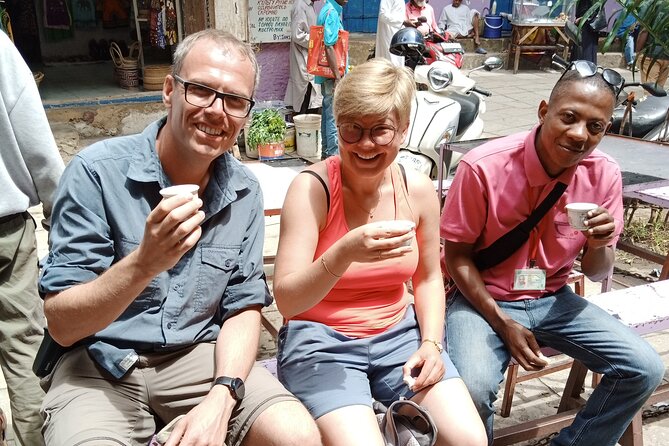
Darajani Market is on the itinerary, and it’s a great contrast to formal landmarks. Markets explain Stone Town faster than brochures do, because you see how people actually live, trade, bargain, and socialize.
If you’re there for food, keep your expectations realistic. The tour doesn’t promise a specific tasting list, but the market is a logical place to try things like fruit or street snacks if your stomach is up for it. In general, you’ll get the most out of this stop if you approach it with curiosity rather than a shopping mission.
A small reality check: markets can be intense. You might want water, and you’ll want comfortable walking shoes. If your group hates crowds, you should still go—just keep your expectations flexible.
Churches in Stone Town: Anglican and Catholic Corners
The tour also includes Anglican and Catholic churches. This is a useful addition because it shows how Zanzibar’s history isn’t only about trade and politics—it’s also about faith communities that left visible marks on the city.
These church stops often work well for photographers, but the real value is the explanations. A good guide helps you see why the buildings exist where they do, and how communities formed and changed over time.
Former Slave Market Site: The Most Important Stop
The former slave market site is included as a key part of the walk, with an important detail: the entrance fee is USD 5 per person and is not included in the tour price. Plan for that extra cost so it doesn’t feel like a surprise mid-walk.
This stop is the heart of the tour’s slave-trade focus in East Africa and Zanzibar’s role in that history. You’ll want to slow down here, and it helps to be ready for emotional weight. If you’re traveling with kids, ask your guide how they handle explanations for different ages—good guides can keep it age-appropriate without pretending it didn’t happen.
Food, Souvenirs, and the Art of Not Getting Rushed
Stone Town shopping can be a rabbit hole. The tour’s design gives you room to stop for photos and for practical shopping choices, without turning the walk into a long detour.
Guides on this tour have helped people with souvenir decision-making—things like what’s a fair buy, what’s likely mass-produced, and how to handle the bargaining mood without getting worn out. If you’re the type who loves carved doors, spices, fabrics, or small crafts, you’ll likely appreciate how the guide uses the walk to make shopping feel connected to what you’re seeing.
The Guide Factor: Why People Rate This So High
The standout theme in this tour is the guide. Names you may encounter include Alfa (often written as Alpha/Alfan/Alfa Tours), Khalfan, Rabik, and Sultan. Across these different guide experiences, the common pattern is clear: people value guides who answer questions well, pace the tour, and make the route make sense.
I also like the practical care aspect shown in several guide moments—helping someone get to their ride on time, making sure families can keep up, and even handling unexpected small issues smoothly. In the best cases, you don’t just learn facts—you feel looked after.
A quick note for families: this tour can work well with kids because a strong guide keeps them engaged and times the route for attention spans. If your group includes children, it’s worth mentioning it at booking so pacing can be set from the start.
Price and Value: Why $20 Can Be a Smart Use of One Afternoon
At $20 per person, you’re not buying entrance fees across the board. The itinerary includes key stops, and the tour itself is essentially the guide plus the route. The tour lists admission ticket as free, but the one explicit paid add-on is the former slave market entrance (USD 5).
So the value question is simple: do you want a guide to connect the dots? If yes, this price is hard to beat for a route that covers major landmarks plus the harder historical content. If you’re an independent “I’ll read the plaques myself” traveler and you enjoy getting lost, you might find you don’t need the guide. For most first-timers, though, Stone Town rewards a structured start.
Timing and Weather: When the Walk Makes Sense
This experience is weather-dependent; you’ll need good weather. That’s not a minor detail in Zanzibar. If the sky turns, your walking time can shrink or the tour may shift to another date, with a full refund offered if it can’t run as scheduled.
If you have multiple days in Stone Town, you can treat this tour like an easy anchor activity. Plan it early in your trip so the stories help you read the city afterward.
Who Should Book This Tour (And Who Might Skip It)
This is a strong fit for:
- First-timers to Stone Town who want a clear, safe starting route
- People who care about Zanzibar’s mix of cultures—Persian, Portuguese, and the Sultanate of Oman era influences
- Families who want an organized walking experience rather than a stop-and-start plan
- Solo travelers who want someone else to handle navigation and timing
You might consider skipping if:
- You need fully flat, step-free routes at all times (Stone Town streets can be uneven)
- You want a short, one-stop photo tour only (this is built around walking and context)
Should You Book This Stone Town Walking Tour?
Yes—if you want a guided orientation to Stone Town that balances famous landmarks with the serious history you can’t get from postcards. The best reason to book is the guide impact: people consistently leave talking about how much they understood and how the pacing worked for real groups, including families.
I’d say book it early in your stay, wear good shoes, and go in with one mindset: your goal is to understand the city’s layers, not just to check boxes. If you do that, you’ll walk away with Stone Town that finally feels like a place with reasons behind it.
FAQ
How long is the Stone Town Historical Walking Tour?
It runs for about 2 to 3 hours.
Where does the tour start?
The tour starts at the House of Wonders on Sokoku St, Zanzibar, Tanzania.
Is the tour private?
Yes. It’s a private tour/activity, so only your group participates.
What is included in the price?
The included item is a professional & certified tour guide. The entrance fee for the former slave market site is not included.
Are there any entrance fees?
The tour notes admission ticket free, but the former slave market entrance fee is USD 5 per person.
What if the weather is bad?
The experience requires good weather. If it’s canceled due to poor weather, you’ll be offered a different date or a full refund.
Can I cancel and get a refund?
Yes, free cancellation is available. You must cancel at least 24 hours in advance for a full refund. If you cancel less than 24 hours before the start time, the amount paid is not refunded.