REVIEW · ZANZIBAR
Stone Town Guided Historical Walking City Tour
Book on Viator →Operated by ZANZIWORLD TOURS · Bookable on Viator
Stone Town tells its story at walking pace, with a licensed local guide and a smart route that hits Forodhani Gardens, the House of Wonders, and the Old Slave Market. You’ll get the kind of context that makes the alleys feel less like maze walls and more like a living classroom.
I love the mix of architecture and street-level details, from Bayt al-ʿAjāʾib (House of Wonders) to Ngome Kongwe (Old Fort). I also like that the walk ends at Darajani Bazaar, so you can turn history into a snack-and-souvenir moment.
One watch-out: a couple of major sights have extra tickets, and the overall pace/timing can feel tight if the guide starts late or if some buildings are undergoing renovation.
In This Review
- Key highlights you’ll feel fast
- Stone Town on foot: why this 3-hour route makes sense
- Price and value: what $32.90 buys you
- Meeting at People’s Palace Museum and how the day flows
- Forodhani Gardens: seafront photos and the Night Market vibe
- House of Wonders: what you’ll see without paying twice
- Old Fort (Ngome Kongwe): Portuguese expulsion to railway terminal
- Freddie Mercury Museum: exterior story plus optional paid entry
- Walking the Stone Town streets: doors, shops, and street-level clues
- Old Slave Market and the Anglican Cathedral area: a heavy stop done with context
- Darajani Bazaar: finish with food, spices, and real shopping
- Guide style, group size, and why it can change your day
- Practical tips you can use immediately
- Should you book this Stone Town historical walking tour?
Key highlights you’ll feel fast

- Forodhani Gardens (and the Night Market) right on the seafront, ideal for photos before the crowds fully build
- House of Wonders exterior viewing paired with the story of Barghash bin Said and Zanzibar’s Omani ties
- Ngome Kongwe (Old Fort) built after Portuguese expulsion in 1699, later used as prison/railway terminal
- Freddie Mercury Museum with a see-from-outside option and an optional paid look inside the childhood home
- Old Slave Market stop handled with guided explanation so the weight of the history lands properly
- Darajani Bazaar food and shopping at the end, so you’re not hunting for dinner after the tour
Stone Town on foot: why this 3-hour route makes sense
A good Stone Town tour is mostly about timing. In a compact area, you want stops that are close enough to reach, but different enough to keep your attention. This walking tour is built for that sweet spot: about 3 hours, focused on the core sights without turning into an all-day marathon.
What you get is not just a list of buildings. You get a path through the city’s layers—Omani rule, Portuguese fallout, Swahili life, and the painful history of the slave trade—explained in plain language as you move from place to place. It’s the kind of route where you start noticing doors, alley turns, and coastal views instead of just passing them.
You can also read our reviews of more walking tours in Zanzibar


Price and value: what $32.90 buys you

At $32.90 per person for roughly 3 hours, this is priced like a practical local tour rather than a high-end museum day. The value shows up in three places:
First, the guide is a licensed local and fluent in multiple languages. That matters because Stone Town can be confusing if you’re trying to read it like a brochure. A guide gives you “why this matters” answers while you’re already standing in front of the place.
Second, the tour includes admissions for some stops and leaves other sights as optional add-ons. For example, Forodhani Gardens and Old Fort (Ngome Kongwe) are listed as admission included, and the Old Slave Market stop is also included. Meanwhile, House of Wonders and the Freddie Mercury Museum interior are not included, which lets you control your spend.
Third, it ends where you actually want to spend time: Darajani Bazaar. If you plan it right, you roll directly from history into food and shopping without backtracking.
Meeting at People’s Palace Museum and how the day flows
The tour meets at People’s Palace Museum on Mizingani Road in Zanzibar. That’s a solid starting point because it puts you in the old-town rhythm quickly, without a long commute just to begin walking.
The route works in a logical arc:
- Start at the seafront area around Forodhani Gardens
- Move through major architecture and fort history
- Reach the music-world pull of Freddie Mercury
- Then head into the heavier stop at the Old Slave Market
- Finish at Darajani Bazaar, where you can eat and browse right after the tour
Also, you’ll receive a mobile ticket, which is handy in a place where paper can get lost fast—especially if you’re juggling phone, cash, and camera.
Forodhani Gardens: seafront photos and the Night Market vibe

Forodhani Gardens—sometimes connected with the Forodhani Night Market—sits along the main seawalk, in front of major landmarks like the House of Wonders and the Old Fort. Even if you’re not a “night market person,” the setting is worth it: you get sea air, open space for photos, and a clear view of nearby historic buildings.
Timing matters here. The tour description notes that:
- If you go earlier in the day, you can stroll the garden more slowly
- If your tour aligns with evening, you’ll see a more active night market atmosphere with locals and visitors
My practical advice: if you care about photos, arrive with your camera/phone ready before you get surrounded. Night markets are fun, but they also compress your ability to shoot clean angles once everyone decides to hold up their phone at the same time.
House of Wonders: what you’ll see without paying twice
The stop for House of Wonders is focused on the Bayt al-ʿAjāʾib exterior. The listing notes admission is not included here, so think of this stop as an “architecture moment” plus historical context, not a long museum visit.
It’s described as the largest and tallest structure in Stone Town, commissioned by Barghash bin Said, the second Sultan of Zanzibar. You also get its position in the city: between the Old Fort and the former Sultan’s Palace area (connected in the description to the Palace Museum) and facing Forodhani Gardens.
Even without an interior ticket, standing there makes sense because it anchors the rest of your walk. You’ll start seeing how the fort, the seafront, and the palace-era buildings are arranged like parts of the same story.
You can also read our reviews of more guided tours in Zanzibar




Old Fort (Ngome Kongwe): Portuguese expulsion to railway terminal
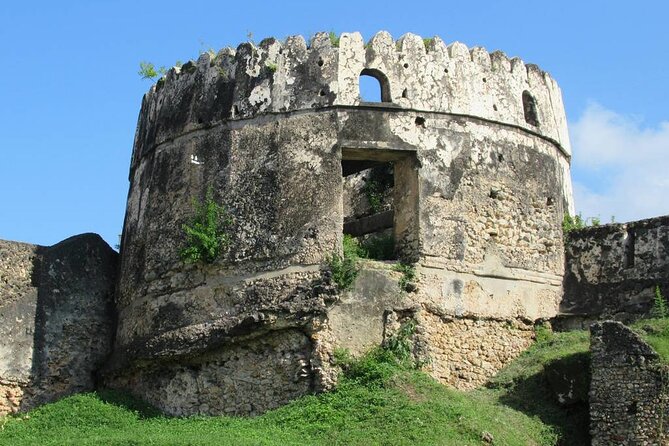
This is one of the most satisfying stops because you get multiple “chapters” in one building. The tour frames Ngome Kongwe (Old Fort) as the oldest building in the area and a core tourist attraction.
The key points you’ll hear:
- Built by Omani Arabs after the expulsion of the Portuguese in 1699
- Used over time as a garrison and prison in the 19th century
- Later used as a terminal for Zanzibar railways from 1905 to 1928, connecting Stone Town to Bububu
That timeline gives you an easy mental model for Stone Town: power changes, and buildings get repurposed. So when you look at walls and openings, you’re not just seeing “old stuff.” You’re seeing layers of control and commerce.
Admission is listed as included, and the stop is about 20 minutes, which usually hits the right length: long enough to understand it, short enough to keep the day moving.
Freddie Mercury Museum: exterior story plus optional paid entry

You’ll get Freddie Mercury’s childhood home connection in this stop. The tour explains he was born in Zanzibar in 1946 under the name Farrokh Bulsara, and that his family lived in various places around Stone Town while his father worked in the British colonial service.
Here’s the practical part: the tour notes the Freddie Mercury Museum stop has admission not included, but it also offers an option. You can typically see the exterior, and there’s an optional additional fee if you want to go inside and spend more time in the home area.
Who this fits best: music fans who want the story immediately, without turning the whole tour into a Freddie-only pilgrimage. If you’re not into Queen, you’ll still pick up how global fame connects back to local geography and family life here.
Consideration: because this stop is not included ticket-wise, decide in advance if you want to pay for the interior. If you don’t, you can still enjoy the meaning of seeing where a legend began.
Walking the Stone Town streets: doors, shops, and street-level clues

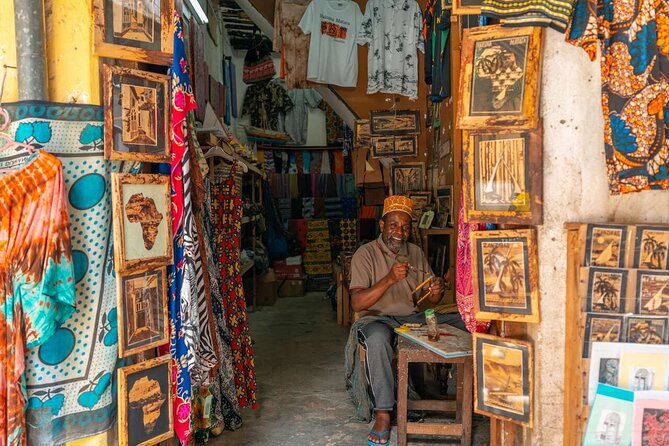
After the major sights, you’ll spend time wandering through Stone Town streets with a guide. The description highlights chances to browse souvenir shops and a focus on the Zanzibar doors—their history, significance, and symbolism.
This is the stop that makes the tour feel like Stone Town and not just “Stone Town attractions.” Doors are a real clue in the city. If your guide points out what to look for, you’ll start noticing carvings and styles while you walk, instead of only reading signage.
The time listed here is about 45 minutes, and it’s marked as free admission. That means you can move at a comfortable rhythm, stop for quick photos, and choose whether shopping is your thing that day.
Old Slave Market and the Anglican Cathedral area: a heavy stop done with context
If you want the Stone Town story in full, you can’t skip the Old Slave Market stop. The tour description places it along Mkunazini Street and connects it to the Anglican Cathedral area.
This part is deliberately not “light.” The tour explains the site was used as a place where people were bought and sold, and your guide walks you through how the trade worked and what impact it had. The stop lasts about 20 minutes and has admission included.
My advice for handling it: give yourself a minute afterward to reset. It’s the kind of stop where the facts land in your body, not just your brain. If you’re the type who prefers to keep moving right away, that’s fine too—your tour continues toward Darajani Bazaar, which can feel like a jolt. Having that transition built in is actually useful.
Darajani Bazaar: finish with food, spices, and real shopping
The tour ends at Darajani Bazaar (also known as Estella Market or Marikiti Kuu). This market is positioned as the heartbeat of Stone Town, and the description ties it to construction in 1904 by Bomanjee Maneckjee for Sultan Ali bin Hamud.
What you’ll encounter is a mix of:
- Seafood and meats
- Fruits, grains, and spices
- Shops selling more than food, including consumer electronics and clothing
Admission is listed as free, and the market time is about 30 minutes. That’s enough to snack if you want, buy a small spice bag, or grab a quick souvenir without getting stuck for hours.
Practical tip: set a budget for market shopping before you arrive. Bazaar shopping is fun, but it’s also easy to get carried away when you’re tired and hungry.
Guide style, group size, and why it can change your day
This is a private tour, so it’s only your group. That typically helps because your guide can adjust pace and questions on the spot, rather than rushing to “keep up” with a larger crowd.
The guide is described as expert and licensed, fluent in multiple languages. In real-world client experiences shared in the tour’s feedback, guides like Osman and Saidi are mentioned as friendly and patient, and one person specifically appreciated a guide who explained things in tremendous detail and used humor while staying respectful of the content.
That’s a big deal for Stone Town. Some clients also flagged communication issues when a guide spoke softly or had a heavy accent. So if you’re hard-of-hearing or very particular about language clarity, it’s smart to ask your guide early that you want questions answered clearly, not rushed.
Practical tips you can use immediately
Here’s how to make this tour feel worth it from start to finish:
- Plan your timing around Forodhani Gardens. If your goal is the Night Market energy, aim for the evening slot. If you want calm photos, go earlier.
- Bring cash for optional paid entrances. House of Wonders and the Freddie Mercury interior aren’t included, so have a little buffer.
- Wear shoes you can walk in. Stone Town streets can be uneven, and the tour has you on foot for a good chunk of the day.
- Be mentally ready for the slave trade stop. It’s part of the story, and it’s handled through guided explanation rather than quick sightseeing.
One more thing: the tour notes it requires good weather. If it’s rainy or stormy, you may need to adjust plans because the experience won’t run as planned.
Should you book this Stone Town historical walking tour?
You should book if you want a compact, guided introduction to Stone Town that covers both the pretty (seafront and architecture) and the complicated (the Old Slave Market) in about 3 hours. At $32.90, the included admissions at key stops make it feel like more than a simple stroll.
Skip it—or at least think twice—if you hate extra-ticket stops, dislike walking at a brisk pace, or want long time inside major museums. This tour is built for movement and understanding, not slow lingering.
If you want your Stone Town day to feel structured, respectful, and easy to follow, this one is a strong choice.