REVIEW · ZANZIBAR
Zanzibar Stone Town: Historical Walking Tour With a Local Guide
Book on Viator →Operated by Zanziphoria | Zanzibar Tours · Bookable on Viator
Stone Town reads best on foot. I love how this tour strings together UNESCO Stone Town architecture with real landmark history, and I especially like that your guide keeps the pace conversational as you move from street to street. You’ll see the Old Slave Market area and the Anglican Cathedral of Christ, plus the Sultan-era buildings that explain why this town looks the way it does.
One thing to consider: it’s a walking tour, and it depends on good weather. If it’s rainy, plan for slippery stones and softer schedules (you may be offered a different date or a refund).
You’ll also walk through areas that double as everyday Zanzibar life—markets, spice stalls, and souvenir strips—so the experience isn’t only about monuments. It’s also about getting your bearings fast.
In This Review
- Key things you’ll notice on this Stone Town walking tour
- Stone Town in three hours: what you really get
- Start at the City Market (opened in 1904) and get your bearings
- Carved doors, brass studs, and balconies: why the architecture walk matters
- Old Slave Market + Anglican Cathedral of Christ: a heavy stop done with specifics
- Freddie Mercury moments: what you should expect (and what to plan for)
- House of Wonders (Beit-el-ajaib) and Sultan-era sites you can picture
- Old Arab Fort and the People’s Palace museum: power, residence, and daily function
- Darajani Bazaar and Forodhani Garden: where the walk ends and Zanzibar life starts
- Price and value: is $33 a fair deal for Stone Town?
- Comfort tips for a 3-hour walk in Stone Town
- Who should book this tour—and who might skip it
- Should you book this Zanzibar Stone Town historical walking tour?
- FAQ
- How long is the Stone Town historical walking tour?
- Where does the tour start and where does it end?
- What is included in the price?
- Is admission to the Freddie Mercury Museum included?
- Are tickets included for the Old Slave Market area?
- What are the tour’s opening hours?
- Can I cancel and get a full refund?
Key things you’ll notice on this Stone Town walking tour
- A tight 3-hour route focused on the must-see Stone Town highlights
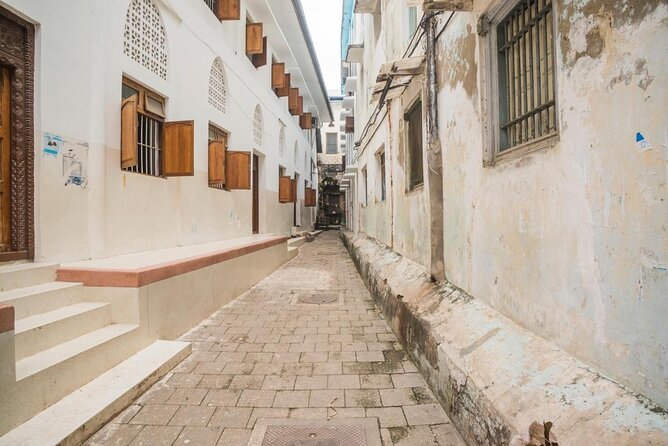
- Architecture you can actually recognize, from sand-and-stone houses to carved doors with brass studs
- The Old Slave Market and Anglican Cathedral site, with specific historical stops
- Sultan-era power centers, including House of Wonders (Beit-el-ajaib) and the Old Arab Fort area
- Market time that feels local, including Darajani Bazaar spice, fish, and fruit sections
- A smart finish at Forodhani Garden, great for easing out of the tour and continuing on your own
Stone Town in three hours: what you really get

This is a private tour for your group, moving at a comfortable walking rhythm for about 3 hours. You’re not cramming in dozens of sites—you’re hitting the key landmarks that make Stone Town understandable: the public spaces, the architecture, and the places tied to major historical chapters.
At $33 per person, the value is strongest if you care about context. The price includes the guided walk and multiple stop entries, including the Old Slave Market/Anglican Cathedral area (ticket included there). The Freddie Mercury Museum is a separate add-on you’ll handle on your own.
The tour is also built for orientation. Stone Town is a maze of narrow alleys, and a good guide matters because the difference between “pretty street” and “this is what that building signaled” is usually a few sentences of explanation.
You can also read our reviews of more walking tours in Zanzibar


Start at the City Market (opened in 1904) and get your bearings

You begin at the main City market, which opened in 1904. That date isn’t just a trivia nugget—it helps you read the modern rhythm of Stone Town: markets here are not temporary attractions, they’re part of how the town functions.
From the start, your walk turns into a visual lesson. You’ll look at the sand-and-stone construction style and the way old houses mix cultural influences—often Arab/Indian styles—with details like carved doors and balconies. The brass studs on some doors are one of those features that’s easy to miss if you’re simply sightseeing, but your guide can point out why certain design choices mattered.
As you head into the smaller lanes, you’ll also have time to shop. This is practical, because Stone Town souvenirs are everywhere, and having a guided window means you’re not wandering in circles trying to find the good stalls.
Carved doors, brass studs, and balconies: why the architecture walk matters
Stone Town’s charm is often described as dramatic, but what I think makes this tour useful is that it trains your eye. The architecture isn’t only decorative; it’s a map of social life—where people lived, where power was displayed, and how communities traded and gathered.
You’ll pass ancient houses built from sand and stone, and you’ll notice the recurring design language: carved doorways (sometimes with brass studs), ornate balconies, and the overall feel of dense, vertical living. When your guide explains how these details connect to history, the town stops feeling like a backdrop and starts feeling like a document.
The main drawback here is also the simplest: you’ll be walking on older, uneven streets. If you have mobility issues or sore feet, bring supportive shoes and expect to slow down during short uphill or bumpy sections.
Old Slave Market + Anglican Cathedral of Christ: a heavy stop done with specifics

This is the most emotionally serious part of the tour, and the way it’s handled matters. The walk brings you to the Anglican Cathedral of Christ, located on the site of the former Old Slave Market. That connection is not abstract; you’ll see the physical reminders and the interpretive panels.
You’ll spend about 30 minutes here, and the ticket is included. Your guide’s stop list is detailed: you’ll look at slave monuments, slave chambers, historical panels, and specific features tied to the site’s functioning—like the signs of the whipping post. There’s also mention of the grave of Bishop Edward Steere, the man who helped build the Anglican church.
If you prefer tours that treat difficult history directly (rather than skimming past it), this stop is a good sign. And if you find yourself needing a minute, it’s okay to step back and absorb what you’re seeing before moving on.
Freddie Mercury moments: what you should expect (and what to plan for)
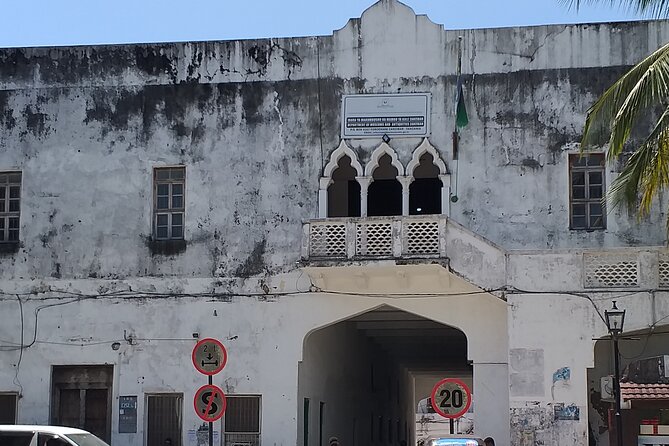
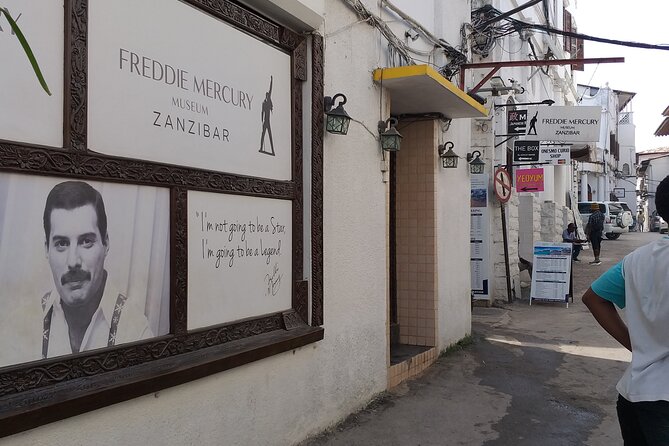
This tour works in a light touch of pop-culture without letting it swallow the whole walk. You’ll pass by the area connected to where Freddie Mercury was born, and there’s also a short stop at the Freddie Mercury Museum.
The museum time is only about 10 minutes, which is enough for a quick look but not a deep, hour-long browse. Admission to the Freddie Mercury Museum is not included, so you’ll want to budget for that on-site.
If you’re a big Queen fan, this setup might feel a little short. If you’re more curious than obsessed, it’s a nice bonus that doesn’t derail the historical focus.
You can also read our reviews of more guided tours in Zanzibar




House of Wonders (Beit-el-ajaib) and Sultan-era sites you can picture

After the Cathedral area, the tour shifts into political architecture—buildings that show how authority was expressed in stone, layout, and function.
You’ll visit the House of Wonders (Beit-el-ajaib), described as the ceremonial palace of Sultan Baraghash. You’ll also learn how the same site was used later as British Colonial Administration Offices. That kind of reuse is common in historic places, but here it’s especially clarifying: it helps you understand how one structure can serve different narratives across time.
This stop is short (about 10 minutes) and the entry is listed as free. Even with the limited time, it gives you the mental picture you need to make sense of other nearby fort and palace areas.
Old Arab Fort and the People’s Palace museum: power, residence, and daily function
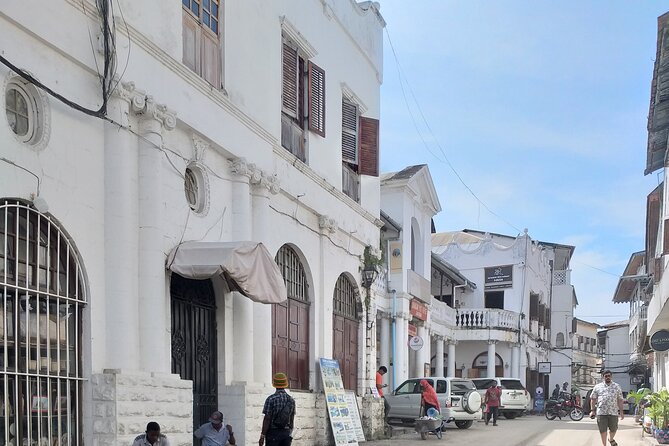
The route includes the old Arab Fort area and the People’s Palace museum. Again, the time at each is brief (about 10 minutes per museum stop), so don’t expect a slow museum crawl. Expect orientation and key facts that help you connect what you’re seeing.
The People’s Palace museum is described as a palace house used by some sultans (kings). When a guide links that to the surrounding streets and other power-center sites, you start to see how Stone Town wasn’t only built for trade—it was built for governance and status too.
This portion of the walk is best if you enjoy history that you can visualize. If you prefer strictly “best view” sightseeing, you might enjoy these stops more if you let your guide explain what you’re standing in front of rather than trying to read everything yourself.
Darajani Bazaar and Forodhani Garden: where the walk ends and Zanzibar life starts
You’ll wrap the tour with market energy. Darajani Bazaar gets about 15 minutes, and it’s focused on everyday activity—spice market, fish market, and fruits market. This isn’t a “look and leave” stop; you’re meant to move through and see how the markets operate during the daytime.
Then the tour finishes with a stroll through Forodhani Garden. Forodhani is a practical ending point because it’s open-feeling compared to the alley maze. After a few hours of narrow streets, you’ll appreciate having a spot to pause, take photos, and decide what you want to do next on your own.
Since meals and drinks aren’t included, think of this as your cue to grab something afterward. If you want snacks, plan to shop and eat outside the tour structure.
Price and value: is $33 a fair deal for Stone Town?
For $33 per person, you’re paying for three things: a guided walk that saves you from getting lost, access to key sites (including the Old Slave Market/Anglican Cathedral area ticket), and built-in time for architecture viewing and market browsing.
A tour that only shows photos around a couple of landmarks usually feels overpriced. This one is closer to a guided route through the logic of Stone Town—markets, buildings, religious site, and sultan-era structures—plus a direct history stop where the interpretation includes specific site features.
The only clear “not included” cost is the Freddie Mercury Museum admission. If you’re going to visit that museum anyway, factor that in and you still get solid value because the guided time stays focused on Stone Town’s architecture and history.
Also worth noting: it’s typically booked about 14 days in advance on average, which usually signals demand. If you’re traveling at peak times, don’t wait until the last minute.
Comfort tips for a 3-hour walk in Stone Town
The tour is designed for most travelers, but you’ll still want to prepare like it’s an outdoor city walk—because it is. Shoes matter here. Stone Town’s ground can be uneven, and you’ll spend time looking up at doors and balconies while still needing to watch your step.
Weather also matters. The experience is described as requiring good weather, and there’s an option to switch dates or get a refund if it’s canceled due to poor weather. In rainy season, bring a light rain layer or compact umbrella.
One good sign from past experiences: guides handle rain with practical readiness. Abdi is mentioned as an example of a guide who showed up prepared with an umbrella and kept the tour moving while answering plenty of questions beyond the official route. That kind of adaptability makes a big difference when the sky changes its mind.
Who should book this tour—and who might skip it
Book this if you want a focused Stone Town orientation. You’ll enjoy it most if you like architecture details, you want the major landmarks explained clearly, and you’re okay with relatively short museum-style stops.
Skip it (or pair it with extra independent time) if you expect long museum visits or deep reading. The Freddie Mercury Museum is a brief taste, and the sultan-era stops are short by design. If you love museum hours and quiet pacing, plan to return on your own afterward.
This also fits well with travelers who like to shop without turning shopping into wandering. The route includes time to check out spice and souvenir spots at sensible moments.
Should you book this Zanzibar Stone Town historical walking tour?
I’d recommend booking it if you’re spending limited time in Stone Town and you want your first visit to make sense. The combination of architecture viewing, the Old Slave Market/Anglican Cathedral stop, and the Sultan-era sites gives you a strong mental map in about 3 hours.
It’s especially worth it if you want a guide to help you read details you’d otherwise gloss over—carved doors with brass studs, balcony styles, and how major sites connect to the town’s story. Just don’t forget to plan for a short, separate Freddie Mercury Museum cost, and dress for walking weather.
FAQ
How long is the Stone Town historical walking tour?
It’s about 3 hours long.
Where does the tour start and where does it end?
The tour starts at the main City market area and finishes with a stroll through Forodhani Garden. The activity also notes that it ends back at the meeting point.
What is included in the price?
The tour includes a guided walk, exploration of ancient houses and architecture, visits to the Anglican Cathedral of Christ and the Old Slave Market, the Old Arab Fort, and time at Forodhani Garden. It also includes the chance to shop at spices and souvenirs. Meals and drinks are not included.
Is admission to the Freddie Mercury Museum included?
No. The Freddie Mercury Museum admission is listed as not included, even though there is a short stop there.
Are tickets included for the Old Slave Market area?
Yes. The Old Slave Market/Anglican Cathedral stop lists admission ticket as included.
What are the tour’s opening hours?
The schedule shown is Monday, 9:30 AM to 5:30 PM, with the overall date range listed as 07/19/2023 to 06/18/2026.
Can I cancel and get a full refund?
Yes. You can cancel for a full refund up to 24 hours in advance of the experience start time. If you cancel less than 24 hours before, the amount paid is not refunded.