REVIEW · ZANZIBAR
Private Walking Tour Of Stone Town
Book on Viator →Operated by Nas Zanzibar tours · Bookable on Viator
A quick walk in Stone Town can feel like time travel. This private tour strings together the big landmarks and the small alley moments, with Nas guiding you through the stories behind Zanzibar’s architecture. I love the clear orientation you get early on, and I especially like the payoff rooftop view from the Maru Maru Hotel. One thing to note: you’ll be doing a fair bit of walking on tight streets, so comfortable shoes matter.
You’ll see famous sites like the House of Wonders, the Old Fort, and the Sultan’s Palace area, plus stops around Forodhani Gardens and Darajani Bazaar. I also liked that it feels flexible enough to match your pace, instead of racing through checkboxes. The main drawback is that not all museum admissions are included (for example, the Freddie Mercury Museum ticket is listed as not included), so budget a little extra if you want every indoor stop.
In This Review
- Key Highlights I’d Plan Around
- Stone Town First-Timer Magic: Why This Walk Works
- Where You Start: Forodhani Gardens and the Lay of the Land
- House of Wonders and People’s Palace Museum: Power, Style, and Old Tech
- House of Wonders (and the famous electricity detail)
- People’s Palace Museum: A second palace, same power story
- Wandering the Real Stone Town Streets: Architecture and Atmosphere
- Old Fort (Ngome Kongwe): Portuguese and Oman Arabs in One Spot
- Christ Church Cathedral and the Freddie Mercury Museum: Mix of Mission and Pop Culture
- Darajani Bazaar: Market Energy Without a Ticket
- Maru Maru Hotel Rooftop: The View That Makes It All Click
- Price and Value: What $29 Buys You in Stone Town
- Best for Families, Short Stays, and Anyone Who Wants Fewer Guesswork Moments
- What to Expect on the Ground: Timing, Tickets, and Comfort
- Should You Book This Private Walking Tour of Stone Town?
- FAQ
- How long is the Private Walking Tour of Stone Town?
- Where does the tour start and end?
- What is the price per person?
- Is this tour private or shared?
- What’s included in the tour price?
- Is food included?
- Which admissions are included, and which are not?
- Is there a mobile ticket?
- Is the tour refundable if plans change?
- Are service animals allowed?
Key Highlights I’d Plan Around
- Private guide with strong English so you can ask real questions, not guess answers
- UNESCO Stone Town orientation with context for the streets, buildings, and cultural mix
- Landmark run in 2.5 hours including the House of Wonders, Old Fort, and major churches
- View from the Maru Maru Hotel rooftop to make sense of the maze below
- Market-area stops like Darajani Bazaar for atmosphere and practical details
Stone Town First-Timer Magic: Why This Walk Works
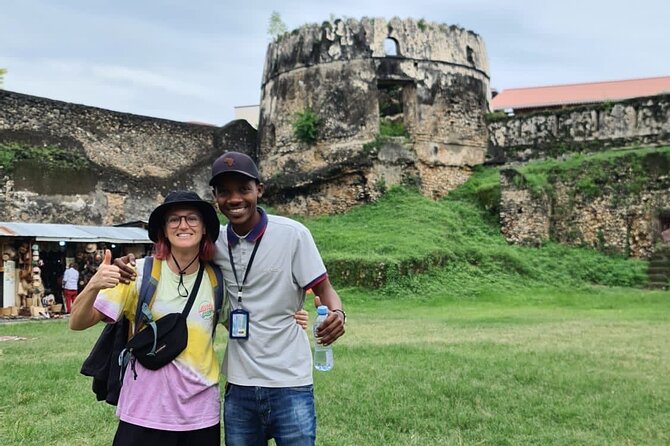
Stone Town is famous for being a maze. That’s the good news—and the frustrating news—because without context, you can wander for hours and still feel like you’re moving sideways.
This tour is built for getting your bearings fast. You start where the city energy is thickest, then you move through the key landmarks that help explain why Stone Town looks the way it does. If you’re only in Zanzibar for a short time, this is the kind of experience that helps you make your later self-guided exploring smarter.
And because it’s private, the pace stays human. When I hear past guests praising the guide’s patience and the way he answers questions, that fits what you actually need in Stone Town: time to notice doors, carved details, and street-level clues.
You can also read our reviews of more walking tours in Zanzibar


Where You Start: Forodhani Gardens and the Lay of the Land
The meeting point is Forodhani, Zanzibar, Tanzania, and the opening sets the tone. You get a quick map in your head: Stone Town’s geography, the history of it as a trading port, and why the architecture carries influences from African, Arab, Indian, Persian, and European cultures.
You’ll hear the UNESCO framing too. Stone Town was designated a UNESCO World Heritage Site in 2000, and it’s often described as a dense area with more than 2000 limestone buildings spread over about 50 hectares, with a population noted around 25,000 in the suburbs. That kind of big picture helps you stop thinking of Stone Town as random streets and start seeing patterns.
Forodhani Gardens is also treated as an information stop, not just a place to lounge. The tour approach here is practical: use the walk to learn what you’re seeing, then decide what to revisit later on your own.
House of Wonders and People’s Palace Museum: Power, Style, and Old Tech
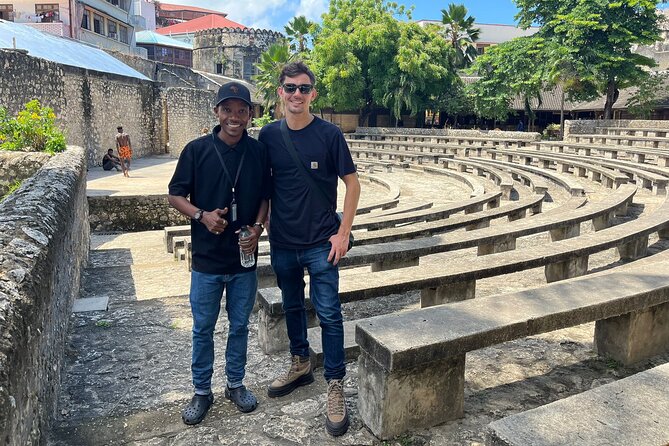
Two of the most eye-catching stops come early: House of Wonders and People’s Palace Museum.
House of Wonders (and the famous electricity detail)
The House of Wonders was built by the third Sultan of Zanzibar, Sayyid Barghash, in 1883. One detail that sticks is that it’s described as the building in Zanzibar with electricity. Even if you’ve seen the structure from photos, this kind of detail changes how you read the building when you’re standing in front of it.
You’ll also hear how the House of Wonders fits into the broader story of Zanzibar’s ruling class and contact with wider worlds. It’s not just a pretty facade. It’s a symbol, and the guide helps you connect that symbol to the city’s layout and heritage.
People’s Palace Museum: A second palace, same power story
Next is the People’s Palace Museum. This museum building is described as having been built by the first Sultan of Zanzibar, as his second palace. That matters because it explains why there are multiple “palace-like” structures and how they reflect stages of power and influence.
If you like architecture and political history (even lightly), these two stops give you a strong backbone. If you’re less interested in royalty, the upside is that the guide’s talking points still help you understand the street scenes you’ll see right after.
You can also read our reviews of more private tours in Zanzibar





Wandering the Real Stone Town Streets: Architecture and Atmosphere

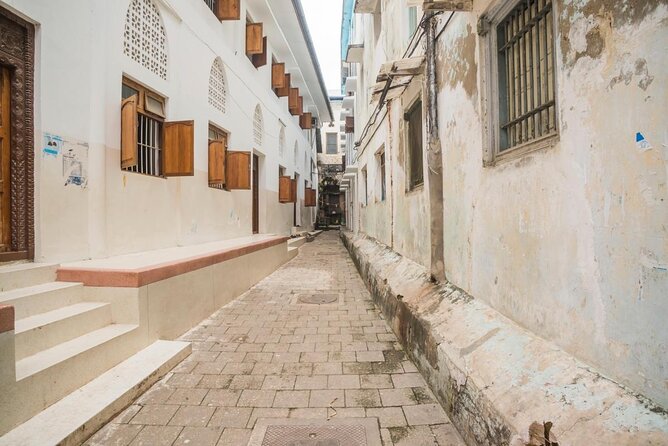
Between major landmarks, you’ll move through narrow streets and alleyways. That’s where Stone Town can either wow you or confuse you, depending on whether you understand what you’re looking at.
This tour focuses on the practical reading of the city:
- how the limestone buildings and tight street pattern shape movement
- how different cultural influences show up in details
- why the city’s trading past still echoes through what you see nearby
I like this approach because it keeps you from getting lost in the surface-level. You’ll still enjoy the sights, sounds, and smells, but you’ll also leave with a mental framework you can reuse.
One note: Stone Town’s streets can be uneven and crowded. This is a walking tour, so plan on taking your time at photo stops and be ready for close quarters in busier areas.
Old Fort (Ngome Kongwe): Portuguese and Oman Arabs in One Spot
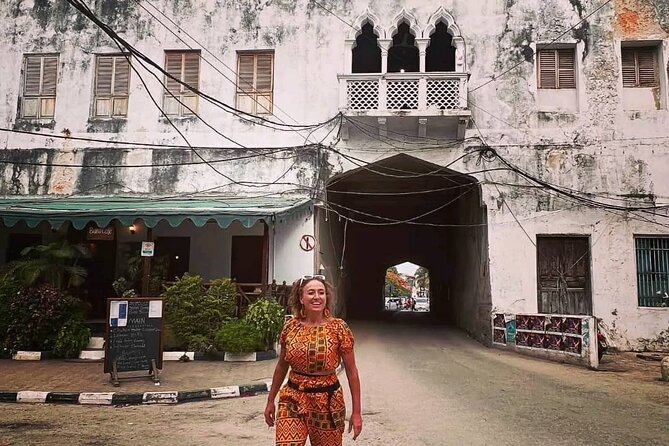
The Old Fort (Ngome Kongwe) is described as the oldest building in Stone Town. It’s credited first to the Portuguese, and later by the Oman Arabs, which gives the site a layered storyline in a very compact space.
This is a good stop for the “wait, how did this happen here?” feeling. If you only knew Zanzibar as a beach stop, the fort helps reframe it as a strategic port city that different powers wanted control over.
You’ll get deeper information about the fort, and that context makes the experience more than a quick photo. I find that old military sites become more interesting when the guide ties them back to the city’s street plan and trade role.
Christ Church Cathedral and the Freddie Mercury Museum: Mix of Mission and Pop Culture
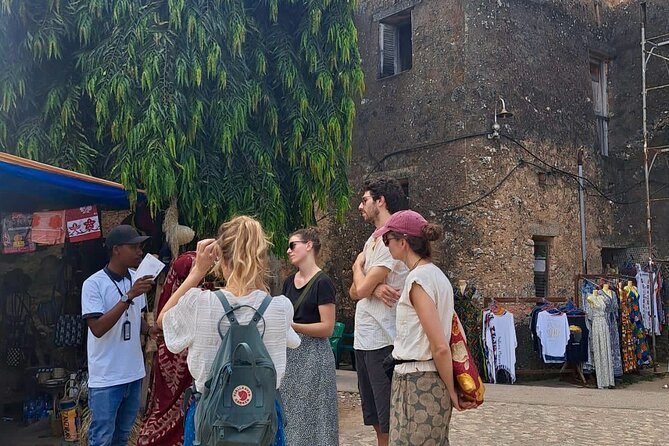
This tour includes Christ Church Cathedral, which is described as built by French missionaries. Religious architecture can be hit-or-miss on a short walk, but when it’s placed in the city’s broader cultural timeline, it feels like another clue in the same puzzle.
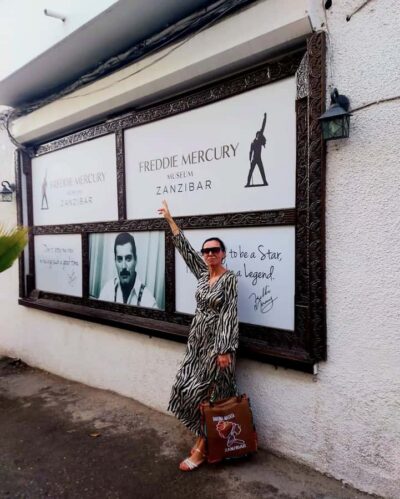
Then there’s the Freddie Mercury Museum. The tour framing here is clear: the museum is in the house where Freddie Mercury was born and grew up, now turned into a museum. This is one of those stops that changes the vibe of the day—music fame beside stone-and-coral-stone streets.
Important for your budget: the Freddie Mercury Museum admission is listed as not included. So if it’s a must for you, treat it as an add-on rather than expecting it to be covered in the base price.
Darajani Bazaar: Market Energy Without a Ticket
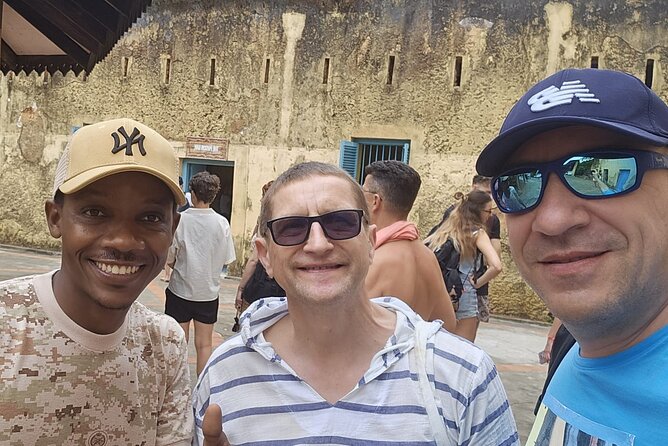
You’ll also get to Darajani Bazaar, and it’s described as the main market of Stone Town, built in 1904. The market is noted as divided into four main areas:
- fish side
- vegetables side
- cow and goat meat side
- spices and fruits
Even if you’re not shopping, it’s a useful stop because it puts the trading story back into motion. You see what people buy, how stalls are arranged, and how the market shapes the flow of streets nearby.
Here’s the practical part: Darajani Bazaar is listed as not included for admission. In many cases, that simply means you’re walking through a public market without a ticket. But the tour still treats it as a meaningful cultural stop, not a quick glance.
Maru Maru Hotel Rooftop: The View That Makes It All Click

One of the best described add-ons is the rooftop stop at the Maru Maru Hotel. Up high, Stone Town stops being a maze and starts being a place. You can see how the streets funnel, how buildings cluster, and how the city spreads.
This is the kind of photo moment that also works as a mental reset. After walking narrow lanes and passing landmark after landmark, you finally get perspective. If you plan your day around one “view payoff,” I’d put this rooftop moment at the top.
Price and Value: What $29 Buys You in Stone Town
The price is $29.00 per person for a tour that runs about 2 hours 30 minutes. It’s private, so it’s just your group, not a mixed crowd.
What you get for that price is fairly clear:
- a professional tour guide
- a bottle of water
And for key sights, many admissions are listed as included: House of Wonders, Old Fort, People’s Palace Museum, Christ Church Cathedral, plus Forodhani Gardens (listed with admission ticket included). That matters because Stone Town landmarks can add up quickly if you’re paying entry fees one-by-one.
What you should budget separately:
- Freddie Mercury Museum admission is listed as not included
- Darajani Bazaar is listed as not included
- Food and drinks are not included
So the value question becomes: do you want the guided context at multiple major stops? If yes, the price feels reasonable. If you only want one or two landmarks and you plan to self-guide the rest, you might find you’re paying more than you need.
Best for Families, Short Stays, and Anyone Who Wants Fewer Guesswork Moments
This tour style fits people who don’t want to over-plan. It’s also described as safe and enjoyable even with kids, and I like that because Stone Town can feel intense if you’re with children and you’re trying to interpret everything yourself.
It’s also a smart choice when you’re short on time. The tour is designed to cover major spots without turning the day into a full marathon. And if you tend to ask questions, this is the format that rewards that habit—since the guide’s English and patience are highlighted in past experiences.
If you’re traveling with teenagers, this can work too, because the approach isn’t just lecture mode. You’ll get stories, connections, and practical explanations tied to what you’re actually seeing on the street.
What to Expect on the Ground: Timing, Tickets, and Comfort
The tour is about 2.5 hours. That’s enough time to see several big landmarks and still have moments where the guide points out details you’d miss alone.
Still, plan for real city conditions:
- narrow lanes and uneven ground
- crowds around markets and popular sites
- frequent stops for photos and explanation
For tickets, think in categories:
- Many landmark admissions are listed as included
- Freddie Mercury Museum is listed as not included
- Food and drinks are not included
Bring your own water only if you prefer it, but you do get one bottle included. And if you’re the type who gets cold easily, note that indoor stops can vary, but the walk itself is outdoors most of the time.
Should You Book This Private Walking Tour of Stone Town?
I’d book this tour if you want a guided path through the city’s key sites in a short amount of time. It’s especially good if it’s your first day in Zanzibar or your first time seeing Stone Town, because the orientation helps you later explore with confidence.
Skip it only if you’re trying to do everything at your own rhythm and you already know Stone Town’s story well. Also consider adding extra budget for the Freddie Mercury Museum if it’s a must-see for you.
If your goal is to understand what you’re looking at—then walk, learn, and end with a view that makes sense—this private Stone Town experience is a strong bet.
FAQ
How long is the Private Walking Tour of Stone Town?
It’s listed at about 2 hours 30 minutes.
Where does the tour start and end?
It starts at Forodhani, Zanzibar, Tanzania and ends back at the same meeting point.
What is the price per person?
The price is $29.00 per person.
Is this tour private or shared?
It’s a private tour/activity, meaning only your group participates.
What’s included in the tour price?
The tour includes a professional tour guide and a bottle of water.
Is food included?
No. Food and drinks are not included.
Which admissions are included, and which are not?
The tour lists admission ticket included for stops like House of Wonders, Forodhani Gardens, People’s Palace Museum, Old Fort, and Christ Church Cathedral. Freddie Mercury Museum is listed as not included, and Darajani Bazaar is also listed as not included.
Is there a mobile ticket?
Yes, it’s listed as a mobile ticket.
Is the tour refundable if plans change?
Free cancellation is available. You can cancel up to 24 hours in advance for a full refund.
Are service animals allowed?
Yes, service animals are allowed.