REVIEW · ZANZIBAR
Zanzibar: Stone Town 3-Hour Walking Tour
Book on GetYourGuide →Operated by Babu Tours & Safaris · Bookable on GetYourGuide
Stone Town makes you slow down fast. This 3-hour walking tour packs major landmarks—from the Arab Fort area to Forodhani Gardens—into one manageable route, and I like how your guide connects the dots on Swahili roots and daily island life. My favorite part is the mix of history plus market time (spices, fruit, and shopping streets), but the main drawback is that some stops can be hard work on your feet and may not feel truly wheelchair-friendly in practice.
If you want a quick orientation without wasting time, this is a strong choice. You’ll also get a guide with languages like Spanish and French, plus hotel pickup and drop-off for a smoother start. Just keep in mind the tour is structured, so you may have to choose between lingering at shops and hitting every planned viewpoint before the 3-hour end.
In This Review
- Key things to notice before you go
- Stone Town on Foot: What You Actually Get in 3 Hours
- Meeting Point and Walking Rules That Shape Your Day
- Arab Fort and the House of Wonders: Getting Oriented Fast
- Old Slave Market and the Anglican Cathedral Area
- Forodhani Gardens and Darajani Spice/Fruit Market: Your Senses Get the Last Word
- Freddie Mercury House, Curio Shops, and Jaws Corner Coffee
- Sultan Palace Entrance and the Stops You’d Otherwise Miss
- Price and Tour Value: Why $27 Can Be a Good Deal
- Accessibility and Comfort: Be Honest About Your Limits
- Best Fit: Who This Tour Suits (and Who Should Rethink)
- Should You Book This Stone Town Walking Tour?
- FAQ
- FAQ
- How long is the Zanzibar Stone Town walking tour?
- What is the meeting time and pickup routine in Stone Town?
- What’s included in the price?
- Which languages does the live guide speak?
- Is Sultan Palace entrance included?
- Is the tour wheelchair accessible?
- What should I bring?
- What clothing is required?
- Are there restrictions on photos?
- Are large bags allowed?
Key things to notice before you go

- 3 hours, on foot: Enough time for key sights plus market browsing, without turning into an all-day slog
- History + markets together: Slave-market sites and Swahili background share the same walk as the fruit and spice stalls
- Sultan Palace entrance included: One of the bigger paid stops is already covered
- Guides matter: Names like Amari and Mohamed come up in the booking feedback, and good guiding changes the whole feel
- Watch your comfort needs: The pace and uneven ground can be rough, especially if you have mobility limits
- Photo and bag rules: Plan around no large luggage and ask before taking pictures
Stone Town on Foot: What You Actually Get in 3 Hours
Stone Town can feel like a maze at first. This tour is designed for the exact moment you step out into narrow lanes and realize you need a plan, not just a map.
In 3 hours, you’ll move through several “zones” of the city: the fort/old power sites, the former slave-market area, and then the waterfront and market streets. That matters because Stone Town’s stories are all mixed together in real life—you’re not looking at museum labels only, you’re walking where events happened and where people still trade goods daily.
You’ll also get guide-led context on the origin of Swahili, which is a big part of why Stone Town matters beyond architecture. When it’s explained well, the language story connects the coast, trade routes, and cultural mixing that shaped Zanzibar.
You can also read our reviews of more walking tours in Zanzibar


Meeting Point and Walking Rules That Shape Your Day

If you’re staying in Stone Town, pickup starts at 9:00 AM, with the guide collecting you from your hotel lobby. That timing is helpful because you’ll hit the main lanes early enough to avoid feeling rushed by heat and crowds.
Two rules will affect your experience more than you might expect:
- You need clothing that is at least below the knees.
- You should skip luggage or large bags, since the walking is close and the route is not set up for hauling gear.
This is also a “comfortable shoes” kind of tour. Stone Town streets are tight and uneven in spots, and you’ll likely spend more time listening and looking than you do getting deep rests.
One more practical note: you’re asked not to take someone’s picture without permission. That’s normal in many markets, but here it directly affects how quickly you’ll be able to photograph stalls, artisans, and everyday scenes.
Arab Fort and the House of Wonders: Getting Oriented Fast
Most Stone Town tours start at the water or the main square. This one starts with history-heavy landmarks: you’ll go to the old fort, also known as the Arab Fort, and then to the House of Wonders area.
The Arab Fort stop is useful because it frames how the city was shaped by power and defense. Even if you don’t know Zanzibar’s timeline yet, the setting helps you understand why people built in these strategic locations and why trade and authority lived side by side.
The House of Wonders part is your bridge into the rest of the city. Think of it like the moment the guide gives you a timeline anchor: where new rulers looked, what major structures signaled, and how Stone Town’s identity formed around the coast.
If you’re a first-time visitor, this is one of the best early sequences. You learn what to look for later when you’re back on your own.
Old Slave Market and the Anglican Cathedral Area
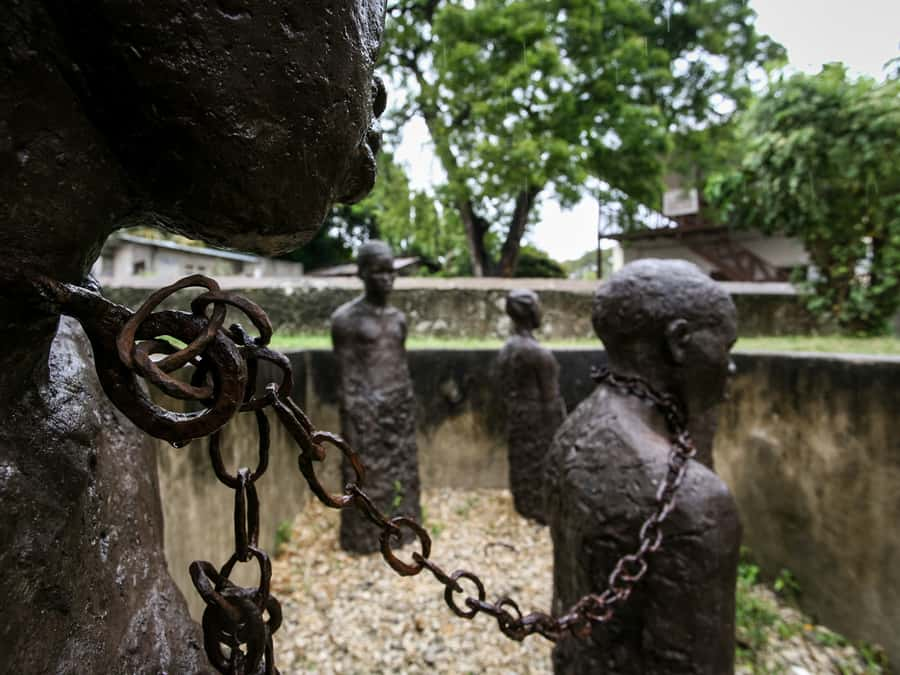
This is the heavy section of the walk. You’ll visit the Anglican cathedral area, which is also known as the former slave market, used for centuries as a hub for the East African slave trade.
Your guide will explain how captives were hunted and abducted from parts of east Africa, including places like Malawi, Congo, Zambia, and others. This isn’t a quick photo stop. It’s a place where the guide’s tone and pacing matter because the story is painful and personal, even when described historically.
Why I think this stop is essential: Stone Town’s beauty can distract you if you only focus on doors, balconies, and coral-stone walls. This brings you back to the real human cost underneath the architecture.
Practical consideration: if you’re sensitive to difficult topics, tell your guide. A good guide will adjust pacing without skipping the core facts.
Forodhani Gardens and Darajani Spice/Fruit Market: Your Senses Get the Last Word
After the fort and the darker history, the tour turns to what many people come to Zanzibar for: the markets. You’ll reach Forodhani Gardens, the darajani fruits and spice market, and also pass by the Zanzibar ferry terminal area.
This is where the tour earns its keep. A market alone can overwhelm you. With a guide, you learn what you’re seeing and smelling instead of just getting pushed through stalls by your own curiosity.
The spice and fruit market stop also ties directly to the idea of Swahili origins and coastal trade. Zanzibar’s goods traveled far, and the mix of spices here reflects that long history of exchange. Your guide can help you connect the sensory experience to the bigger story.
Also plan to spend time on the side streets. The tour includes leisure time to explore narrow lanes alongside curio shops. That means you can pause, compare items, and watch daily life without feeling like you’re always moving for someone else’s schedule.
A few more Zanzibar tours and experiences worth a look




Freddie Mercury House, Curio Shops, and Jaws Corner Coffee
This tour has a pop-culture layer, and it works because it’s not the whole experience. You’ll visit the Freddie Mercury house area, plus you’ll stop at a Zanzibar curio shop and the Jaws Corner coffee shop.
The Freddie Mercury stop is a good “reset.” After the solemnity of the slave-market area and the intensity of the historical forts, this part gives you a lighter moment to breathe while still staying in Stone Town’s story.
The curio shops and coffee stop are also practical for your day. You’ll get a chance to slow down, ask questions, and figure out what you want to buy later. If you’re shopping for spices or small souvenirs, this is the moment to start learning prices and quality from the guide’s perspective, not just from random sellers.
That said, keep your expectations realistic. The tour is only 3 hours. If you want to shop hard, you might have to choose between deeper browsing and visiting every listed stop.
Sultan Palace Entrance and the Stops You’d Otherwise Miss
The tour includes the entrance fee to Sultan Palace. Having that included is a real value add because it removes one of the common friction points on walking tours: you show up and someone says you’ll need extra tickets at the door.
Why it’s worth prioritizing: Sultan’s Palace is a landmark that helps you understand how Zanzibar’s leadership and public spaces were organized. The guide’s explanation can make the layout and symbolism click.
This is also where having a guide pays off, because palace architecture isn’t just pretty stone—it’s a record of power, ceremony, and daily functioning. Even a short visit can be meaningful if someone points out what to notice.
Price and Tour Value: Why $27 Can Be a Good Deal
At $27 per person for 3 hours, this is priced like a short, high-efficiency city tour with paid entries included (at least for Sultan Palace). For Stone Town, where walking tours can stretch longer and still feel incomplete, the half-day structure is attractive.
Here’s how I judge value on this type of tour:
- If the guide keeps the history clear and ties it to what you’re standing in front of, you’re paying for interpretation, not just movement.
- If the market time is balanced and you’re not rushed, you’re getting your money’s worth.
- If shopping stops feel overly sales-focused, the value drops fast.
One booking experience highlighted a common problem with some market-heavy tours: too much time at a specific spice stall and not enough time at broader areas with better choices. If you love shopping, I’d simply ask your guide upfront how much time you’ll spend at each market stop and whether there’s time for broader browsing beyond one specific stand.
Another practical point: communications can sometimes hiccup between hotel pickup timing and the guide. The best move is to confirm where you’ll meet the guide at 9:00 AM and be ready at the lobby with enough buffer.
Accessibility and Comfort: Be Honest About Your Limits
The tour is listed as wheelchair accessible, but there’s also a clear warning that it is not suitable for people with mobility impairments. In real Stone Town walking, those labels can be misleading because entrances and street surfaces don’t always match expectations.
If you use a wheelchair or have limited mobility, treat this as a “confirm first” situation. Even one booking specifically pointed out that the wheelchair-access label didn’t match what was possible on the streets and at the fort entrance.
For most people, the bigger question is comfort: can you walk for 3 hours on uneven ground, with minimal rest stops, while visiting historical sites? If the answer is yes, you’ll likely enjoy the route. If the answer is uncertain, ask the operator directly what parts are truly reachable in your situation.
Best Fit: Who This Tour Suits (and Who Should Rethink)
This works well for you if you want:
- A guided orientation to Stone Town that includes history and markets
- Clear explanations on why Swahili and Zanzibar history connect
- A short day plan that starts at 9:00 AM and ends within 3 hours
It’s also a good match if you like meeting in one place and letting someone else manage the route. Stone Town can be exhausting when you’re constantly choosing turns and trying to interpret signage.
You might rethink the tour if:
- You’re trying to do serious shopping and want long free time
- You need a fully accessible route for mobility limitations
- You dislike hard historical topics and would struggle with the slave-market area
If you’re traveling as a family or with friends, the private group option can help because you can set a pace that matches the group. Just know the tour is still designed around a tight 3-hour window.
Should You Book This Stone Town Walking Tour?
I’d book this tour if you want a fast, guided sense of direction plus key stops you might otherwise skip. The mix is what makes it smart: Arab Fort and House of Wonders for context, the former slave-market area for truth, and Forodhani Gardens plus darajani markets for the everyday Zanzibar you can still smell and taste.
Skip it or at least ask extra questions if your priority is maximum shopping time or if you have mobility needs that require careful planning. In those cases, a shorter or more tailored option might fit better.
If you do book, go in with three simple strategies:
- Wear below-knee clothing and comfortable shoes.
- Bring sunscreen and plan to move steadily for 3 hours.
- Ask your guide early how market time is split so your expectations match reality.
FAQ
FAQ
How long is the Zanzibar Stone Town walking tour?
The tour lasts 3 hours.
What is the meeting time and pickup routine in Stone Town?
If you’re staying in Stone Town, pickup is at 9:00 AM. The guide collects you at your hotel lobby.
What’s included in the price?
Hotel pickup and drop-off are included, along with the guide fee to the markets, entrance fee to Sultan Palace, and government taxes.
Which languages does the live guide speak?
The tour offers live guides in Spanish, French, German, Italian, and Russian.
Is Sultan Palace entrance included?
Yes, the entrance fee to Sultan Palace is included.
Is the tour wheelchair accessible?
The tour is listed as wheelchair accessible, but it is also noted as not suitable for people with mobility impairments. If mobility is a concern, you should confirm what can be reached on the route.
What should I bring?
Bring sunscreen. Comfortable shoes are also suggested for the walking.
What clothing is required?
You must wear clothing that is at least below the knees.
Are there restrictions on photos?
Yes. You may not take someone’s picture without their permission.
Are large bags allowed?
No. Luggage or large bags are not allowed.