REVIEW · ZANZIBAR
3-Hour Private Stone Town Walking Tour
Book on Viator →Operated by Art & Cultural Tours Zanzibar · Bookable on Viator
Stone Town reads like a puzzle. This 3-hour private walk helps you spot the layers fast, from the Arab Fort and seafront landmarks to Darajani’s daily life and Freddie Mercury’s Zanzibar roots. I like the clear, question-friendly guidance I’ve seen from guides such as Ahmad and Hassan, and I like how the route keeps history tied to what you can see in the streets. One catch: the sidewalks are tight and the turns are frequent, so bring comfortable shoes.
You’ll start at Old Fort on Mizingani Road and finish back there, with a mobile ticket for the booking. The stops are paced to fit a short visit, and the tour is private, so it’s just your group moving through Stone Town’s narrow lanes instead of mixing with a crowd.
If you’re hoping for a quick Stone Town orientation that still includes meaningful stops, this route is a smart pick. Guides can also tailor what you focus on, so if you care more about architecture, markets, or music history, you can steer the emphasis.
In This Review
- Key highlights worth planning around
- How this Stone Town route makes sense in just 3 hours
- Old Fort on Mizingani Road: the seafront starting point
- Forodhani Gardens: sunset timing and the dinner-street feeling
- Old Customs House: the 18th-century door that rewards close looking
- Stone Town streets and the UNESCO architecture lesson
- Darajani Bazaar: fresh market energy with the spice-and-fish reality
- Old Slave Market and Anglican Cathedral: history you can’t skip
- Freddie Mercury Museum: from Zanzibar roots to global stardom
- Walking tips for Stone Town’s narrow lanes
- Price and value: $35 per person for a private guide
- Who this Stone Town walking tour fits best
- Should you book this 3-hour private Stone Town walking tour?
- FAQ
- How long is the Stone Town walking tour?
- Where does the tour start and where does it end?
- Is this tour private?
- What does the tour include in Stone Town?
- Are there admission tickets to pay for the stops?
- What about the ticket method and meeting instructions?
- Can I cancel for a refund?
- Is the tour friendly for people who use public transport or service animals?
Key highlights worth planning around
- Old Fort first: the oldest Stone Town building sets the tone right on the seafront.
- Forodhani Gardens food walk: sunset timing matters when the sea-walk fills with dinner stalls.
- Carved details at Old Customs House: fish, lotus, and anchor motifs on the door.
- UNESCO architecture spotting: you’ll connect street scenes to Arab, Persian, Indian, and European influences.
- Darajani Bazaar for everyday Zanzibar: fresh fruit, fish, and spices in one stop.
- Freddie Mercury Museum stop: birth-and-upbringing context in Zanzibar before the England chapter.
How this Stone Town route makes sense in just 3 hours
Stone Town can overwhelm you fast. The lanes twist, buildings stack close together, and it’s easy to admire the doors and forget the bigger story. This tour is built to solve that problem by running a line through the main themes of the city: power and fortifications, daily life and markets, memory of the slave-trade era, and global pop-culture connections.
With the walking time kept to about three hours, you’re not trying to “see everything.” Instead, you get a focused sequence that helps your brain file what you’re seeing: architecture near the coast, the market belt, and the memorial sites—ending with a museum that links Zanzibar to a world-famous stage persona.
Because it’s private, your guide can pace you. If you want more photo time at the doors or more time asking about what something meant, you can slow down. If your group is sensitive to crowds or prefers quicker movement, you can keep a steady pace.
You can also read our reviews of more walking tours in Zanzibar


Old Fort on Mizingani Road: the seafront starting point
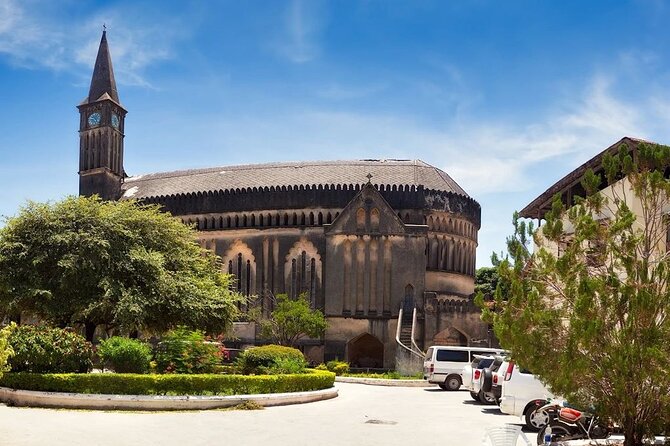
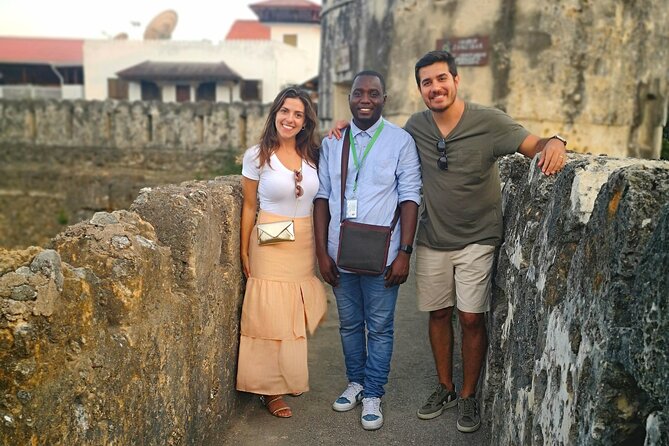
Your walk begins at Old Fort, also known as the Arab Fort. It’s the oldest building in Stone Town, and it sits right on the main seafront, adjacent to the House of Wonders (the former palace of the Sultan). Even before you move inland, you get an immediate visual lesson: this town’s power and wealth were tied to the sea.
A good guide will help you connect three things quickly:
1) why this fort was strategically placed,
2) how the seafront landmarks sit together, and
3) how the coast and palace architecture frame what came next.
You’ll also be in the right spot for what makes Stone Town feel special: landmarks aren’t scattered. They’re close enough that one viewpoint can connect multiple eras and influences.
At this first stop, your job is simple: get oriented. Once you’ve got Old Fort and House of Wonders in your head, the rest of the walking route feels less like random wandering.
Forodhani Gardens: sunset timing and the dinner-street feeling
Next comes Forodhani Gardens, a strip along the main sea walk in historical Stone Town. It’s located in front of the same big-ticket landmarks—so you keep the seafront line of the story going while shifting from power to people.
The key practical detail here is timing. Forodhani Gardens is especially busy after sunset, when visitors and locals gather for the food street market. That’s when the area feels most alive, and it’s also when you can best understand Stone Town as more than monuments. It’s meals, snacks, and casual conversation happening in the open air.
You can expect common local dinner options such as:
- grilled seafood
- samosas
- cassava sweet potatoes
- Zanzibar mix (urojo)
- Zanzibar pizza
If your group wants to eat during the tour, keep it simple: pick one or two items and pace yourself. You’re still walking for another two hours after this moment, and Stone Town’s narrow lanes don’t make it easy to stop and start frequently.
If you prefer quieter sightseeing, you can still enjoy Forodhani Gardens earlier, but it won’t have the same after-sunset draw that makes this stop a standout.
Old Customs House: the 18th-century door that rewards close looking
The tour then shifts to the Old Customs House, built in the 18th century. One of the most interesting context points is that the grandson of Sultan Said was proclaimed Sultan here in 1896. The building also faces out to sea along Mizingani Road, so you’re still in the same coastal storyline—just with a different kind of architecture and purpose.
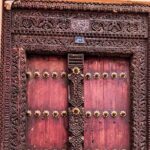
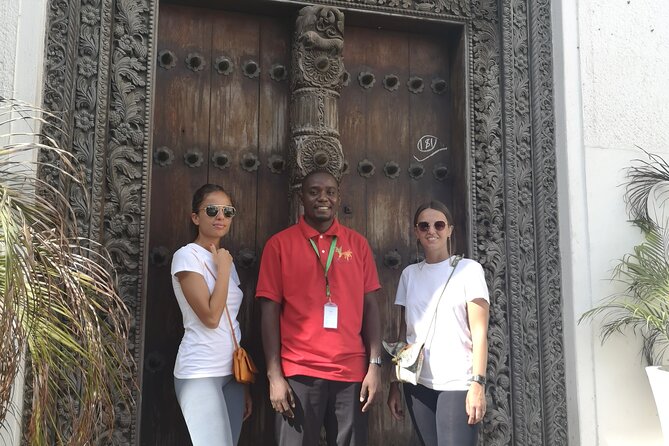
This stop is worth your time because it’s visual in a hands-on way. The standout feature is the beautifully carved wooden door, including fish, lotus, and anchor motifs. Those symbols aren’t just decoration; they match what the building’s role suggests (trade, maritime links, and the cultural language carved into everyday structures).
Practical tip: pause, look closely, and let the details sink in. Stone Town doors can look busy from a distance, but when you slow down for a minute, you’ll start noticing repeating motifs and the way craftsmen shaped the wood for light and shadow.
Stone Town streets and the UNESCO architecture lesson
After the coastal landmarks, you’ll spend a longer stretch on Stone Town itself. This is where the tour earns its keep: you’re not only hearing that Stone Town is UNESCO-listed—you’re learning how to see why.
Stone Town’s architecture mainly dates back to the 19th century and reflects the diverse influences underlying Swahili culture. You’ll hear how Arab, Persian, Indian, and European elements blend into the streetscape. The result is a town that feels like a living archive.
Your guide should help you connect what you notice in real time to the bigger story, including things like:
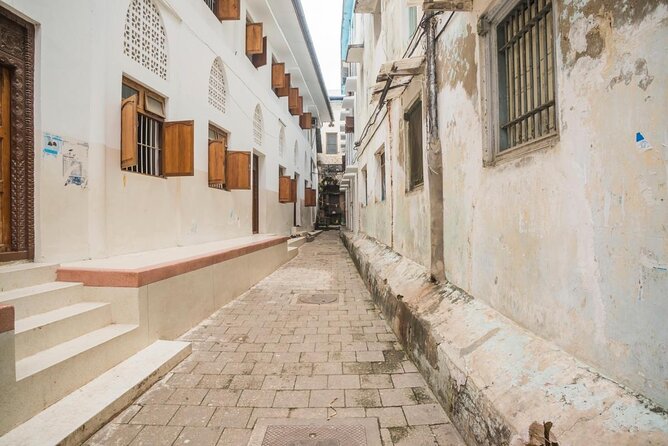
- narrow, winding street geometry
- carved door styles
- key local cultural places such as Ismail Khoja Jamat Khana and the city center around Jow’s Corner
This is a great segment for first-time visitors, because it turns random-looking scenes into recognizable categories. It’s also useful if you’ve read about Stone Town before, because you’ll get a way to translate theory into what’s right in front of you.
One small consideration: because this portion is about an hour long, your feet will feel it if you’re wearing worn-out shoes. Take short breaks when you can. Stone Town rewards patience.
You can also read our reviews of more private tours in Zanzibar





Darajani Bazaar: fresh market energy with the spice-and-fish reality
Next up is Darajani Bazaar, often also called the spice market or Darajani market. This is one of those places where you don’t just learn history—you learn how everyday Zanzibar works.
The practical detail I love here: you can see fresh goods in the open. Darajani sells things like fresh fruits, fish, and spices, so you get a sensory snapshot of what people buy and cook, not just what tourists point at for photos.
If you’re the type who likes to wander markets, this stop hits the sweet spot. It’s not only about shopping. It’s about understanding how Stone Town functions as a trading hub and how the sea and inland commerce show up in everyday life.
If you want to be extra comfortable:
- keep your phone secure while walking through tighter aisles
- think about what you’ll carry, since market stops can tempt you to buy things quickly
Even if you skip shopping, your guide can help you identify what’s being sold and why certain goods matter in Zanzibar’s supply chain.
Old Slave Market and Anglican Cathedral: history you can’t skip

This is the emotional weight in the route: Old Slave Market, near the Anglican Cathedral area. Zanzibar played a major role in political and economic power in East Africa, and it also became a central node of the slave trade. People captured on the mainland were brought to Zanzibar in chains to be sold in the city slave market, enduring horrific hardship on the journey.
In 1873, the market was closed on the orders of the Sultan. This stop isn’t only about remembering what happened—it’s about understanding how Zanzibar’s position affected lives across continents.
A good guide keeps the tone respectful and grounded in what you’re looking at. In this case, the value of a guide is hard to replace: the history is big, and the space can feel confusing if you don’t know what you’re standing on.
If your group prefers to move through serious history quickly, you can still do that. But don’t rush just to get past it. This stop is one of the reasons a short Stone Town tour feels meaningful instead of just scenic.
Freddie Mercury Museum: from Zanzibar roots to global stardom
The tour ends with the Freddie Mercury Museum, located in the heart of Stone Town. Freddie Mercury was born in Zanzibar, and he moved to England around 1963. That simple fact is a doorway into a bigger story that connects local upbringing to later international fame.
The museum’s focus (as presented in this tour context) includes:
- Zanzibar’s timeline starting from the late 1800s
- the birth place of Farroukh Bulsara
- roots with a Zoroastrian background
- childhood and upbringing in Zanzibar
- schooling in Panchangani, India
- the long path that led to global pop-rock stardom
Even if you’re not a die-hard music fan, this stop adds a different kind of meaning. It shows how Zanzibar isn’t only tied to seafront trade and historic architecture. It’s also tied to people who moved outward and changed global culture.
Practical idea: bring your curiosity. If you love music, take notes on the Zanzibar-to-world connections. If you’re more into history, pay attention to how the museum frames the time period and family roots.
Walking tips for Stone Town’s narrow lanes
Stone Town walking is not about speed. It’s about placement: where you stand determines what you see. With a private guide, you can slow down for doors, street turns, and the transition between sea views and market life.
Here’s how I’d plan it for comfort:
- Shoes matter: expect uneven spots and tight turns.
- Bring water: you’ll move for about three hours, and the sun can add up.
- Watch your bag: markets and crowded moments can make it easy to misplace something.
- Think about timing: Forodhani Gardens is most energetic after sunset, so if you want that full feel, plan your walk around evening.
If your group includes anyone with limited mobility, confirm whether the route pace works for your party since the tour is a walking-focused experience and some segments include longer stretches.
Price and value: $35 per person for a private guide
At $35 per person for about 3 hours, this tour is priced like a straightforward, mid-range guided experience. The value comes from four practical factors.
First, it’s private. That matters in Stone Town because you’re moving through narrow lanes where group control affects comfort. Private pacing usually means fewer “stand here and wait” moments.
Second, the stops are high-impact and varied. You hit major architectural landmarks, a market, a solemn memorial area, and a museum connection—all in one outing.
Third, the tour is set up with free entry marked for the listed stops. That means you’re not stacking major admission costs on top of the guide fee.
Fourth, the guide focus seems to land on what people actually want: clear explanations, good English, and answers to questions. In the guide stories linked to this experience, Ahmad and Hassan stand out for being friendly, professional, and quick to adapt to what a group cares about.
One more value note: this tour is commonly booked about 26 days in advance on average. If you’re traveling at a busy time, locking a time slot early can help you avoid scrambling.
Who this Stone Town walking tour fits best
This tour makes sense if you:
- want an efficient Stone Town orientation without trying to do everything on your own
- care about architecture and the mix of Arabic, Persian, Indian, and European influences
- like markets but also want context for what you’re seeing
- want a short visit that includes both everyday life and the sobering slave-trade history
- are curious about how Freddie Mercury’s Zanzibar origins fit into the story of the town
It’s also a solid choice for people who want a guide who can communicate clearly and keep the conversation going. The private setup helps if your group wants to ask lots of questions or shift emphasis to certain stops.
If you’re looking for a long, multi-day plan with lots of museum time, you might want something longer. But for a tight window in Stone Town, this one does a lot with three hours.
Should you book this 3-hour private Stone Town walking tour?
Book it if you want a practical Stone Town route that connects the sea, the markets, the memorial sites, and the Freddie Mercury Museum into one coherent walk. The private format and the guide quality (with clear English and question-friendly answers from guides like Ahmad and Hassan) make it easier to learn without getting lost.
Skip it only if your group hates walking, wants long museum-only time, or needs a very quiet pace throughout the market and memorial segments. Stone Town rewards attention, and this tour asks you to pay it.
If your goal is: understand Stone Town fast, then go back out to explore, this tour is a smart first step.
FAQ
How long is the Stone Town walking tour?
It’s about 3 hours.
Where does the tour start and where does it end?
The tour starts at Old Fort on Mizingani Rd, Zanzibar, Tanzania, and ends back at the same meeting point.
Is this tour private?
Yes. It’s a private tour/activity, so only your group participates.
What does the tour include in Stone Town?
The route includes stops at Old Fort, Forodhani Gardens, Old Customs House, Stone Town, Darajani Bazaar, the Old Slave Market area/Anglican Cathedral area, and the Freddie Mercury Museum.
Are there admission tickets to pay for the stops?
The listed stops show admission ticket as free.
What about the ticket method and meeting instructions?
You use a mobile ticket, and you receive confirmation at the time of booking.
Can I cancel for a refund?
Yes. You can cancel for a full refund up to 24 hours in advance of the experience start time. If you cancel less than 24 hours before, the amount you paid is not refunded.
Is the tour friendly for people who use public transport or service animals?
The tour is near public transportation, and service animals are allowed.