REVIEW · ZANZIBAR
Stone Town Walking Tour with Hassan
Book on Viator →Operated by Hansver tours · Bookable on Viator
Stone Town has layers you feel fast. This walk with Hassan strings together the big landmarks in a tight 3-hour loop, with enough storytelling to make the streets make sense. I especially like how the tour mixes “wow buildings” with real everyday places like the bazaar and Jaws Corner, and I also like that Hassan keeps the pace easy—informative, but not a lecture. One thing to consider: some key stops list admission tickets not included, so you’ll want a little extra cash and patience for ticket lines.
The other reason this tour works is simple: you’re not just seeing a list of monuments. You’re walking through the Zanzibar story—Oman-era power, Portuguese fort influence, the religious mix, and the painful history tied to the slave trade—while still getting to wander through lively public spaces. If you’re hoping for a full-on museum day with long indoor time, this may feel a bit brisk. But if you want smart highlights you can build on later, it’s a great value.
In This Review
- Key highlights to expect on this walk
- Why this 3-hour Stone Town walk works so well
- Starting at Forodhani: the meeting point and the night-market vibe
- House of Wonders: Sultan Barghash’s statement building
- Old Fort (Ngome Kongwe): Portuguese walls and festival-ready stone
- Freddie Mercury Museum: a pop-culture detour that fits the story
- St. Joseph’s Roman Catholic Cathedral: French missionaries and a long build
- Jaws Corner: coffee, jokes, and the heart of town
- Old Slave Market / Anglican Cathedral: a hard place with a factual timeline
- Darajani Bazaar: the big market structure by the creek
- Old Dispensary: charitable plans, unfinished work, and a completed building
- Malindi Mosque (Ijumaa Mosque): plain outward forms, renovated detail
- Old Customs House: Zam Zam’s home and Zanzibar’s shifting trade center
- People’s Palace Museum: from royal palace to revolutionary era to museum
- Price and what you actually get for $25
- Pacing, walking, and who this is best for
- Book it? Here’s my quick call
- FAQ
- Where does the Stone Town walking tour start?
- How long is the tour?
- How much does it cost?
- Is this tour private?
- Is the tour guide included, and what language do they speak?
- Are admission tickets included in the price?
- Do I get picked up from my hotel?
- What if the weather is poor?
- Is there free cancellation?
- Should you book Stone Town with Hassan?
Key highlights to expect on this walk
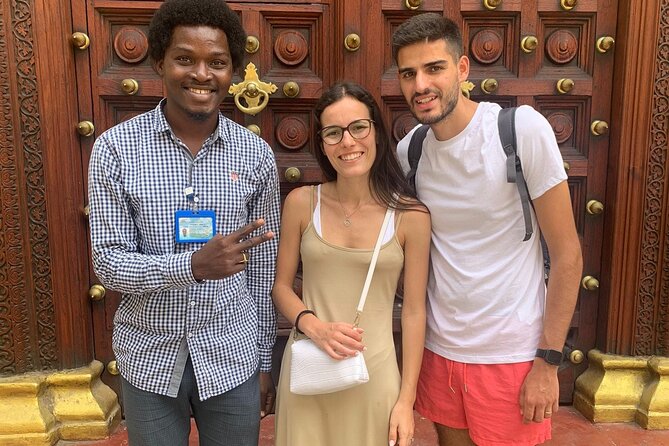
- Hassan’s Stone Town context: history, politics, and daily life woven into what you’re seeing
- Forodhani Gardens night food market energy: you’ll pass through the iconic waterfront food scene
- Major landmarks, tight route: House of Wonders, Old Fort (Ngome Kongwe), and People’s Palace Museum in one walking loop
- Faith + public life stops: churches, a mosque (Ijumaa), and Jaws Corner for coffee and conversation
- Trade and architecture nearby the creek: Darajani Bazaar and the Old Customs House
- Hard history included in a factual way: Old Slave Market/Anglican Cathedral and what happened there
Why this 3-hour Stone Town walk works so well
Stone Town is compact, but it can feel confusing if you’re going solo. This tour turns the streets into a guided map. You start and finish at Forodhani, and the overall timing is about 3 hours, so you get a full taste without burning an entire day.
At $25 per person, the value comes from the fact you’re not just paying for someone to point at buildings. You’re paying for an English-speaking guide who explains why each site matters and how the different cultures shaped what you see—Oman influence from the 19th century, Portuguese presence in the 16th century, and the later layers of churches and colonial-era architecture.
Also, it’s a private tour. That matters. You can ask questions as you walk, and you’re less likely to feel rushed in a crowd.
One more practical note: it’s a walking tour, so bring shoes that can handle uneven stone streets. And since it runs on good-weather days, check the forecast before you count on it.
You can also read our reviews of more walking tours in Zanzibar

Starting at Forodhani: the meeting point and the night-market vibe

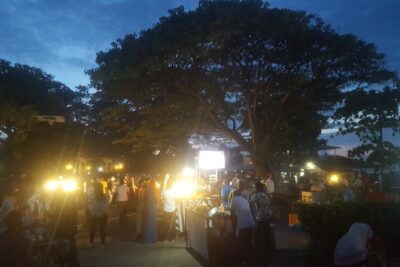
You meet at Forodhani, Zanzibar, Tanzania. From there, the first big moment is Forodhani Gardens. This is where Stone Town’s food scene really shows itself. You’ll get to experience the night food market area—where tourists and locals come to enjoy simple dinner.
Forodhani Gardens also has a specific origin story: it was laid out in 1936 to commemorate the silver jubilee of Sultan Khalifa. That little detail changes how you see the place. It’s not just a “hangout zone.” It’s a memorial space that turned into a daily life magnet.
In the tour plan, the time here is about 17 minutes, and the stop is marked with admission ticket included. So you can focus on food smells, people watching, and street energy without worrying that you’ll need another ticket just to stand in the right spot.
House of Wonders: Sultan Barghash’s statement building
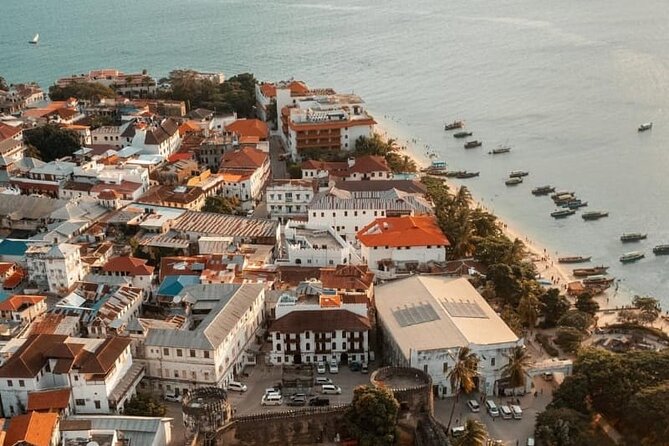
From Forodhani, you move toward one of Stone Town’s signature royal landmarks: the House of Wonders. This building was constructed in Stone Town by Sultan Baraghash bin Said. In the 19th century, it was both the largest and tallest building in the area, and it sits in a prominent location facing Forodhani Gardens.
What I like about this stop is the “why here” factor. You’re not just looking at architecture—you’re seeing the way rulers used placement, height, and visibility for power and ceremony. The tour frames it as a ceremonial palace and a reception hall, which helps you understand why the building feels so intentional.
In the plan, this stop is around 10 minutes, and admission ticket not included. If you want to go inside, budget extra time and money for that ticket (the tour schedule lists it as separate).
Old Fort (Ngome Kongwe): Portuguese walls and festival-ready stone

Next comes the Old Fort, also called Ngome Kongwe. This is one of the most important historical anchors in Stone Town. The Portuguese influence here dates to the 16th century, and the tour describes it as the oldest building in Stone Town.
You’ll also hear it called the Arabic fort in Stone Town, and it’s currently used for different Zanzibar festivals. That’s a key detail for your visit: this place isn’t only preserved history. It’s a functioning landmark that keeps being reused for events.
The stop is about 10 minutes, and admission ticket included. That’s a nice value add, because fort entries can often cost extra on walking tours.
Even if you don’t go deep inside, the fort area helps you “read” the city. You start connecting which buildings were meant for defense, which ones were meant for display, and which ones were meant for commerce.
Freddie Mercury Museum: a pop-culture detour that fits the story
Then you hit the Freddie Mercury Museum. Mercury was born in Zanzibar Town on 5 September 1946, later becoming a British singer and songwriter as lead vocalist and pianist of Queen, and he died on 24 November 1991.
This stop is short—about 7 minutes—and admission ticket not included. Still, I find it worthwhile because it shows how Zanzibar isn’t only about old empires and trade. It also produced a global pop icon, and that connection tends to make people more curious about the island’s modern identity.
Practical tip: if you’re a big Queen fan, you might want to plan an extra visit later. The walking tour gives you the doorway and context, not a long museum deep dive.






St. Joseph’s Roman Catholic Cathedral: French missionaries and a long build
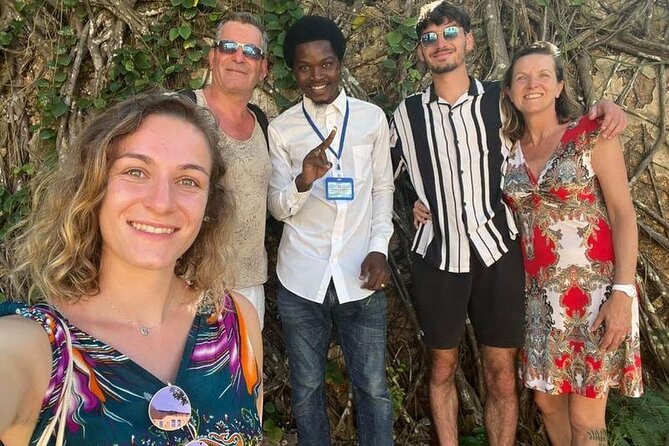
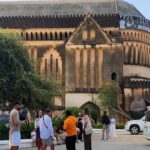
From there, you move to St. Joseph’s Roman Catholic Cathedral. The building process starts in 1863 with missionaries from the French colony Reunion, arriving around 1857–1860. Construction pauses when they find graves on the land, then resumes about 30 years later. The first mass was held at Christmas 1898.
This stop is about 7 minutes, and admission ticket not included. Even without going inside, you’ll likely notice how the cathedral adds a distinctly European religious layer to a city shaped by Swahili, Arab, and Portuguese influence.
If you care about how migration and empire left visible marks, this is one of those “details you can’t get from a postcard” moments.
Jaws Corner: coffee, jokes, and the heart of town
Next is Jaws Corner, described as the heart of Stone Town—a meeting place where local people and tourists share coffee and banter.
This stop is only about 3 minutes and admission ticket free. But I like it because it breaks the pattern of monuments. You get a quick pulse check on daily life. It’s the “you are here” stop that helps you reorient from history back to real street rhythm.
Think of it as a breath before the tour turns serious again.
Old Slave Market / Anglican Cathedral: a hard place with a factual timeline
Now you’ll reach one of the most important, heavier stops: the Old Slave Market / Anglican Cathedral area.
The tour explains that it began as a slave market where enslaved people came from different countries. The market was closed around 1873 by Sultan Baraghash. After that, the space was built into an Anglican Church by Edward Steere, the third Bishop of Zanzibar (reigned 1874 to 1882).
A detail worth noting: when Edward Steere died of a heart attack, he was buried behind the altar in the nearby building area. It’s the kind of small fact that gives a place emotional weight without turning it into sensationalism.
Time here is about 20 minutes, with admission ticket not included. Because it’s a topic that deserves respect, I’d treat this as one of your “slow down” moments on the walk.
Darajani Bazaar: the big market structure by the creek
Then comes Darajani Bazaar, one of the central market highlights. The building is described as the largest of the central market structures. It was designed in an eclectic style by British architect J. H. Sinclair and inaugurated in August 1904.
The bazaar is also placed facing the creek, and inside you’ll find small market sections for fish, spices, meat, fruits, and vegetables. This is exactly the kind of stop that makes Stone Town feel like a living economy, not just an open-air museum.
The stop is about 15 minutes, and admission ticket included. That’s another value-friendly detail. If you like photographing hands-at-work scenes—vendors packing, buyers pointing, spices in neat piles—this is a good time for it.
Old Dispensary: charitable plans, unfinished work, and a completed building
After markets, you see something different: the Old Dispensary. The construction was commissioned in 1887 by Tharia Topan as a charitable hospital for the poor.
Tharia Topan died in 1891, and the building wasn’t finished. His widow resumed the works but had to suspend them in 1893 when her budget was exhausted. Later that year, due to a family quarrel, the building was sold and finally completed in 1894 by the new owner.
This stop is about 15 minutes, and admission ticket not included.
I find this stop quietly powerful because it’s not “glorious empire architecture.” It’s a reminder that good intentions, money, and local complications all shape what gets built. The building becomes a record of real life.
Malindi Mosque (Ijumaa Mosque): plain outward forms, renovated detail
Next you visit Malindi Mosque, also known as the Ijumaa mosque (Friday mosque). The tour notes that Zanzibar mosques tend to be relatively plain compared with domes and tall minarets seen elsewhere. This one, however, was renovated in 1994 with modern arabesques-style design.
The stop is about 9 minutes, and admission ticket not included.
Even if you don’t go inside, the comparison between “plain and unpretentious” design and the later renovation gives you a sense of how tradition and modernization can exist side by side here.
Old Customs House: Zam Zam’s home and Zanzibar’s shifting trade center
Then comes Old Customs House, built around 1865 and originally described as the home for Zam Zam, daughter of Seyyid Said (first Sultan of Zanzibar), and her husband Sayyid Humud bin Ahmed of the Busaidy family.
After Sayyid Humud’s death a few years later, Zam Zam moved out and left the house to relatives. Then, in 1928, customs authority moved from the Forodhani area to the new port area. The house served as customs house until 1987.
Time here is about 18 minutes, with admission ticket included.
This is a fascinating stop because it connects architecture to trade policy. When customs moved, the city’s economic gravity shifted. You can see how the building went from family home to government use, then changed again as Zanzibar’s port center evolved.
People’s Palace Museum: from royal palace to revolutionary era to museum
Finally, you reach the People’s Palace Museum. The palace was built in the 1830s by Seyyid Said bin Sultan for members of the Sultan’s family. The tour explains it as the second palace Seyyid Said built, with the first being Mtoni palace.
The building was bombarded during the Anglo-Zanzibar war in 1896, and it was reduced to about half its original size. It continued as an Al Busaidy palace until the Revolution of Zanzibar in 1964, when Sultan Jemshid was overthrown. After that, it was renamed People’s Palace, later used as government offices, and opened as a palace museum in 1994.
This stop is about 20 minutes, and admission ticket not included.
This is one of the best “big-picture” endings because it shows how Zanzibar’s identity kept changing—empire to revolution to preservation. The building isn’t just old. It has lived through major turning points.
Price and what you actually get for $25
Let’s talk value in plain terms.
You pay $25 per person for a private walking tour in English with a professional, certified guide (Hassan is the guide named for this experience). You also get a bottle of water.
What’s included versus not included matters here because the schedule labels several stops as needing tickets:
- Admission tickets included at Forodhani Gardens, the Old Fort (Ngome Kongwe), Darajani Bazaar, and the Old Customs House.
- Admission tickets not included at House of Wonders, Freddie Mercury Museum, St. Joseph’s Roman Catholic Cathedral, Old Slave Market/Anglican Cathedral, Old Dispensary, Malindi Mosque, and People’s Palace Museum.
So, the real budget isn’t just the tour price. It’s the tour price plus whatever entrance fees you choose to pay for the sites marked not included. If you’re trying to keep costs tight, you can still enjoy the exterior and guided storytelling at those locations. But if you want to step inside, plan for extra spending.
You’ll also receive a mobile ticket, and the tour is described as near public transportation. The only thing not provided is transport from your hotel to the meeting point (and pickup is only mentioned as a conditional option if your hotel is in Stone Town—send an advanced message).
Pacing, walking, and who this is best for
This is a smart “first serious look” at Stone Town. It hits the core landmarks in one go and still leaves you mentally organized afterward.
It suits you if:
- you want context—how different cultures and events shaped what’s in front of you
- you like a mix of monuments and real street life (markets, gathering points)
- you want something around 3 hours rather than a half-day or full-day plan
- you appreciate guided conversations you can steer with questions
It may not be ideal if:
- you want long museum time at multiple indoor stops
- you dislike walking on uneven historic streets
- you prefer a tour that focuses only on one theme (like only architecture or only food)
Book it? Here’s my quick call
I’d book this if you want the fastest route from confused to confident in Stone Town. For $25, you get a tight circuit, an English-speaking certified guide named Hassan, and a blend of royal buildings, forts, market life, and serious historical sites.
My only caution: the stops with tickets not included can change your total cost. If you’re okay with that (or happy to enjoy what’s outside), this tour is a strong value and a reliable way to understand Stone Town without getting lost in the details.
FAQ
Where does the Stone Town walking tour start?
It starts at Forodhani, Zanzibar, Tanzania.
How long is the tour?
The tour lasts about 3 hours.
How much does it cost?
It costs $25.00 per person.
Is this tour private?
Yes. It’s a private tour/activity, meaning only your group participates.
Is the tour guide included, and what language do they speak?
Yes. The tour includes a professional and certified tour guide in English.
Are admission tickets included in the price?
Some admission tickets are included, and some are not. The tour lists tickets as included for Forodhani Gardens, the Old Fort (Ngome Kongwe), Darajani Bazaar, and the Old Customs House. Other stops are marked as not included.
Do I get picked up from my hotel?
Pick-up may be available if your hotel is in Stone Town, but you need to send an advanced message. The tour also notes that transport from your hotel to the meeting point is not included.
What if the weather is poor?
The experience requires good weather. If it’s canceled due to poor weather, you’ll be offered a different date or a full refund.
Is there free cancellation?
Yes. You can cancel up to 24 hours in advance for a full refund.
Should you book Stone Town with Hassan?
If you want a guided walk that actually helps you understand Stone Town—not just pose by it—this one is worth your time. The combination of landmark sites, market life, and the way Hassan connects the dots makes it a smart way to spend a few hours in Zanzibar’s UNESCO core. Just plan for the fact that a few stops may require separate admission tickets.