REVIEW · ZANZIBAR
2 Hours Private Stone Town City Tour
Book on Viator →Operated by Adarx Tour Zanzibar · Bookable on Viator
Stone Town hits fast. In just 2 hours, you get a guided sweep through Zanzibar’s trade crossroads, from landmark buildings to the streets where you can still see cultural fingerprints. I like that the tour is built around clear stops, including House of Wonders (Beit Al Jaib), the fort, and the slave-market sites, so you understand what you’re looking at. One possible drawback: some stops are short photo breaks, so if you want slow, deep exploring, this may feel a bit speedy.
I also like the tour style. It’s private, so your guide can shape the pace for your group, and the route moves logically from Forodhani toward Darajani without you having to figure out directions. In guides connected with Adarx Tour Zanzibar, like Adam, the vibe described is organized and engaging, with lots of time for questions and even a light sense of humor.
My only caution is the mix of history + markets. The walk includes very heavy slavery-related storytelling at the old slave market/Anglican Cathedral area, and later you’ll hit Darajani Bazaar where shopping and spice talk can tempt you. If you prefer all light sightseeing, you might want to mentally pace yourself for that first half.
In This Review
- Key things to know before you go
- Stone Town in Two Hours: What This Route Gives You
- Meeting at Forodhani and Ending by Darajani: How the Timing Works
- House of Wonders (Beit Al Jaib): The First Orientation Stop
- Ngome Kongwe Old Fort: Seeing the Slave Trade Story in Place
- Freddie Mercury Museum: Quick Photos, Real Context
- Stone Town Streets, Catholic Church Photos, and the Door Styles Lesson
- Old Slave Market and the Anglican Cathedral: A Thoughtful, Guided Room Sequence
- Darajani Bazaar Spice Time: Buying Without Wandering
- Price and Value: What $50 Per Person Really Covers
- Who This Tour Suits Best (and Who Might Want Something Longer)
- Book It or Skip It: My Decision Guide
- FAQ
- How long is the Stone Town private city tour?
- What is the price per person?
- Where does the tour start and end?
- What’s included in the price?
- Are any entrance tickets included?
- What parts of the itinerary are free stops?
- Is this tour private?
- Is there a set start time?
- What’s the cancellation rule?
- Does the tour depend on weather?
Key things to know before you go
- Private, 2-hour format that’s perfect for a first look at Stone Town without burning your whole day
- Beit Al Jaib (House of Wonders) as an early orientation stop, so the rest makes more sense
- Ngome Kongwe (Old Fort) entered briefly, tied directly to the slave trade story
- Freddie Mercury Museum handled as a quick photo-and-context stop, not a long museum session
- Zanzibar doors lesson on the street, with both Indian and Arabic door styles pointed out
- Darajani Bazaar spice time that gives you a focused shopping window instead of wandering aimlessly
Stone Town in Two Hours: What This Route Gives You
A Stone Town tour can sprawl. This one doesn’t. You’re walking in a tight loop that connects the big reputation sites to the everyday street fabric—so you leave with both names and meaning, not just snapshots.
At $50 per person for a private tour, the value comes from what’s included: a professional guide plus the fees and taxes for the stops that require them. Tips aren’t included, but that’s typical. The real question for you is whether 2 hours matches your travel rhythm. If you’re juggling beach time, ferry schedules, or Zanzibar fatigue (real thing), this is a smart, contained option.
This route is also beginner-friendly. You’re told it’s suitable for most travelers, and the tour is structured as a steady walk with short stops rather than long stretches of museum-heavy time. You also start in a central, walkable area and end at Darajani, where it’s easy to keep moving afterward.
You can also read our reviews of more city tours in Zanzibar



Meeting at Forodhani and Ending by Darajani: How the Timing Works
You start at Forodhani, Zanzibar at 10:00 am. The tour ends in the Darajani area, finishing in front of Jumba la treni. That end point matters because Darajani is a natural hub—after the tour you can continue your evening plans without needing another long transit leg.
The itinerary is paced in quick bursts. The early landmarks (House of Wonders, Ngome Kongwe, Freddie Mercury Museum) are brief orientation stops, then you shift into a longer street walk through Stone Town. Darajani comes last as a practical shopping block, built so you can buy spices you actually want to take home.
Also, the tour uses a mobile ticket, which is useful when you’re juggling phone batteries and Zanzibar sun. It’s a small detail, but it makes meeting up simpler.
House of Wonders (Beit Al Jaib): The First Orientation Stop
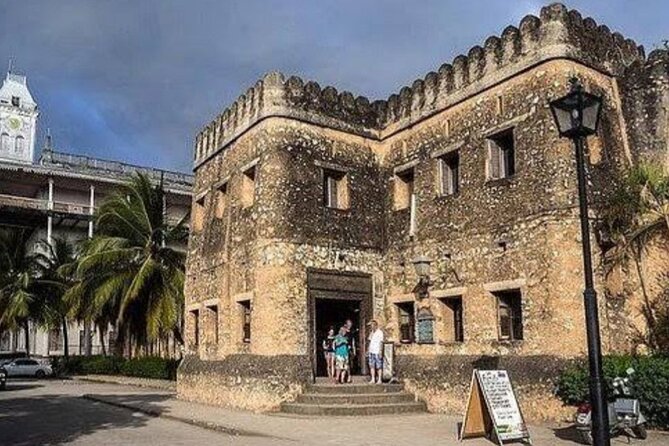
You begin with the House of Wonders, also known as Beit Al Jaib. The guide’s job here is more than pointing at a building. It’s to give you the basics of Stone Town’s shape and history so the rest of the tour doesn’t feel like random wandering.
This is a classic first-stop move for a reason. Zanzibar’s Stone Town is a mix of cultures—African, Indian, Arabian, and European—layered over centuries of trade routes for spices, silk, and also slavery. When your guide sets that context at the start, you’re more likely to spot symbolism and meaning as you move.
Admission here is free, and the stop itself is short—about 5 minutes. Think of it as your mental map being drawn, not a full deep dive into architecture.
Ngome Kongwe Old Fort: Seeing the Slave Trade Story in Place

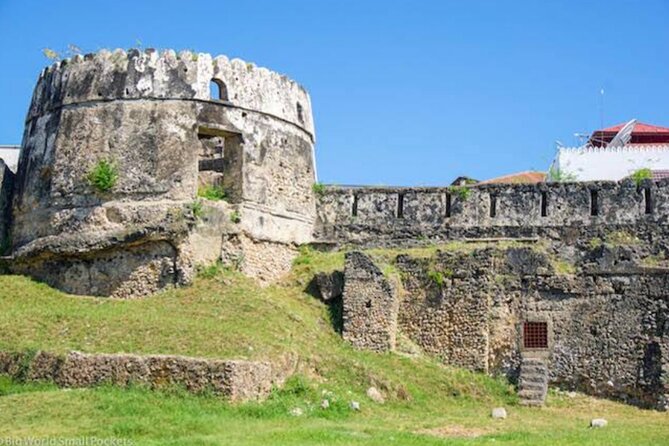
Next comes Ngome Kongwe, the Old Fort. Unlike a quick outside pass, this stop includes time inside the building and the guide explains the history tied to the fort as a key slave-trade market area.
This is one of the most serious stops on the route. If you want to be respectful, wear something modest and be ready for a heavy topic. The stop lasts about 12 minutes, and admission is included, so you’re not worrying about extra costs or ticket lines.
Why this stop matters: it links the physical place to the historical purpose. Stone Town’s buildings aren’t just pretty facades. They’re survivors of trade systems that shaped the island, for better and worse. Even a short visit can help you understand why later memorial rooms hit so hard—they’re not abstract concepts.
Freddie Mercury Museum: Quick Photos, Real Context
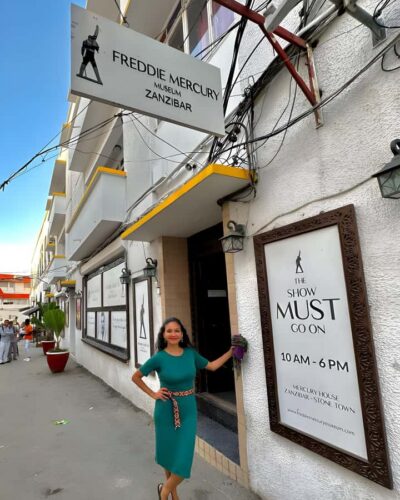
Then you get a breather: a stop by the house where Freddie Mercury was born. The tour doesn’t stage this as a long museum segment. Instead, you take pictures outside while your guide shares the relevant story.
Admission here is free, and the stop is about 5 minutes. That brevity is actually useful. It gives you a fun, familiar reference point without hijacking your entire tour for one pop-culture stop.
If you like music history and pop connections, you’ll probably appreciate this as a human-scale contrast to the heavier parts of the day. If you don’t care about celebrity links, treat it as a landmark moment and get back to the street lesson flow.
You can also read our reviews of more private tours in Zanzibar





Stone Town Streets, Catholic Church Photos, and the Door Styles Lesson
Now you shift into a longer segment—about 1 hour—walking the streets and moving through the shop bazaars area. This is where Stone Town becomes real. You’re not stuck staring at one monument. You’re watching how the town actually functions: small lanes, storefronts, and the architecture details people still build around.
You’ll also stop for photos at the Catholic church. That’s practical: a clean, photogenic break while your guide keeps narration going.
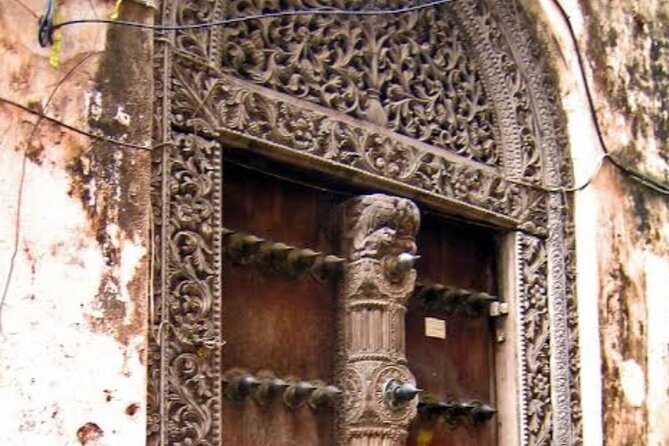
The most memorable part of this street walk is often the “door lesson.” Your guide explains Indian door style and Arabic door style as you pass them. It’s not just trivia. These door styles are a visible clue to the island’s trading past and the cultural mix that shaped daily life.
And yes, there’s shopping energy here. You may see bazaars and trade storefronts along the route. If you’re not shopping today, it helps to set a boundary in your mind: look, learn, and only buy later at the designated spice stop.
Old Slave Market and the Anglican Cathedral: A Thoughtful, Guided Room Sequence
The final major historical block is the Old Slave Market / Anglican Cathedral area. You enter the cathedral and move through a guided sequence: you’ll see rooms with boards showing key information about slave-trade history, then you’re taken to the chamber of slaves, and later you’ll see sculptures of slave.
Admission is included, and the stop is about 12 minutes. That’s not long, but it’s structured so you don’t get lost in exhibits or feel like you’re missing important context.
My practical tip: if you’re sensitive to difficult history, give yourself a moment before you enter. It’s completely fair to pause, breathe, and decide how much you want to absorb in one go. The value here is that the guide keeps the flow understandable, so you’re not just looking at rooms—you’re connecting what you’re seeing to what it represents.
Darajani Bazaar Spice Time: Buying Without Wandering
At the end you move to Darajani Bazaar for about 20 minutes. This is focused shopping time aimed at Zanzibar spices. The guide takes you to shops that match what you’re interested in, and you buy as you wish to take home.
This is a smart way to handle bazaars. If you only wandered on your own, you’d spend time deciding where to go and still miss the best points for spices. Here, you’re getting a shortcut—plus a guide to help you interpret what you’re looking at.
What I like about this arrangement: you don’t just end at the market empty-handed or overwhelmed. You end with a concrete takeaway item type—spices—so the tour has a payoff that fits Zanzibar travel.
Practical note: since you’re buying at the end, it helps to keep cash and a rough budget ready. That way you can enjoy the spice explanations without feeling pressure when the final choices arrive.
Price and Value: What $50 Per Person Really Covers
For $50 per person, you’re getting a professional tour guide and all fees and taxes for the included admissions. That matters because some Stone Town sites cost money to enter. If you were to DIY this route, you’d likely lose time figuring out which places need tickets and where you should go first.
The private format is also a big part of the value. You’re not sharing a limited guide time with a larger group that has to be managed. That’s especially helpful during the historical stops, where understanding the story is the whole point.
The tradeoff is time. At just 2 hours, you won’t get slow, unhurried visits inside every site. Some stops are designed as short context-and-photo moments, and that’s okay if your goal is getting your bearings fast.
Who This Tour Suits Best (and Who Might Want Something Longer)
This tour fits you best if:
- You want an efficient first Stone Town overview
- You prefer a guide to explain what you’re seeing, especially around door styles and trade history
- You’re short on time but still want both landmarks and street details
- Your group includes kids or mixed interests, since the pacing allows questions and breaks
It might not be the best fit if:
- You want hours inside museums and memorial rooms
- You’d rather shop longer than you walk
- You’re very history-averse and don’t want slavery-related storytelling in your itinerary
If you’re unsure, consider this an orientation tour. It gives you enough understanding to enjoy a second pass later on your own.
Book It or Skip It: My Decision Guide
I’d book this tour if you’re arriving in Stone Town and need direction more than you need a full-day schedule. The route makes sense: you start with orientation (Beit Al Jaib), hit key historic trade structures (Ngome Kongwe), add a recognizable cultural anchor (Freddie Mercury Museum), learn on the street (door styles), and then handle the hardest history with guided room stops before ending with practical shopping (Darajani Bazaar).
I’d hesitate if 2 hours feels too tight for your style, or if you know you don’t want any heavy history during your trip. Also, if you’re a slow walker or need long breaks, you might feel the pace.
If your goal is smart value and getting oriented quickly in UNESCO-listed Stone Town, this is the kind of tour that pays off.
FAQ
How long is the Stone Town private city tour?
The tour lasts about 2 hours.
What is the price per person?
It costs $50.00 per person.
Where does the tour start and end?
The start point is Forodhani, Zanzibar, Tanzania. The tour ends in Darajani, Zanzibar, Tanzania, in front of Jumba la treni.
What’s included in the price?
The price includes all fees and taxes and a professional tour guide.
Are any entrance tickets included?
Yes. Admission is included for the Old Fort (Ngome Kongwe) and the Old Slave Market/Anglican Cathedral. Admission at House of Wonders and Freddie Mercury Museum is free, and Stone Town and Darajani Bazaar stops are also free.
What parts of the itinerary are free stops?
House of Wonders, Freddie Mercury Museum, Stone Town street walk, and Darajani Bazaar do not charge admission as part of the tour.
Is this tour private?
Yes. It’s a private tour/activity, so only your group participates.
Is there a set start time?
Yes, the start time is 10:00 am.
What’s the cancellation rule?
You can cancel for a full refund up to 24 hours in advance of the experience’s start time.
Does the tour depend on weather?
Yes. It requires good weather. If it’s canceled due to poor weather, you’ll be offered a different date or a full refund.