REVIEW · ZANZIBAR
Stone Town City Tour
Book on Viator →Operated by Exodus Go Tours · Bookable on Viator
Stone Town is easy to love fast. You get a guided walk through the maze of narrow lanes, stopping at major sites like the House of Wonders and the Old Fort, plus time around Darajani Market. I especially like how the route keeps moving at a human pace (2 hours 20 minutes) and how you get built-in context at each stop, not just photo ops. One thing to consider: you’re on your feet and moving through crowded, tight streets, and the tour requires good weather.
What I like most is the combination of sights with meaning. You pass the multicultural architecture up close, then you reach the Old Slave Market/Anglican Cathedral area where your guide explains what you’re seeing in the slave chambers. You’ll also get lunch and bottled water, so you’re not budgeting for food on the fly. The only real drawback for some people is logistics: it’s not sold with private transportation, so you’ll want to be ready to get yourself to Forodhani at 9:00 am.
In This Review
- Key highlights if you want the short version
- Stone Town on Foot: A 2-Hour-20-Minute Orientation
- Price and What You Actually Get for $58
- House of Wonders: The Best First Stop for Setting the Scene
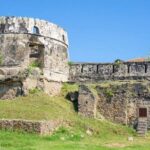
- Old Fort (Ngome Kongwe): Fortified Walls and a Walk-Through Feeling
- Freddie Mercury Museum Stop: A Photo Moment With a Real Story
- Stone Town Street Time: Zanzibar Door, Churches, and Real Shopfronts
- Old Slave Market and the Anglican Cathedral Area: Somber, Guided, and Direct
- Darajani Bazaar: Spice Shopping That Makes Sense
- Lunch, Water, and Guide Style: How It Changes the Day
- Who This Tour Fits Best (and Who Might Want a Different Plan)
- Should You Book the Stone Town City Tour?
- FAQ
- How long is the Stone Town City Tour?
- Where does the tour start and end?
- What time does the tour start?
- Is the tour private?
- What’s included in the price?
- What is not included?
- Is admission required for the stops?
- Do I need a physical ticket?
- Can most people join the tour?
- What’s the cancellation policy?
- What if the tour is canceled due to poor weather?
Key highlights if you want the short version
- House of Wonders outside viewing with history and cultural artifacts explained by your guide
- Old Fort (Ngome Kongwe) stop that includes a walk-through feel with sign-in at the entrance
- Freddie Mercury Museum birthplace house photos without ticket headaches on this part of the route
- Stone Town street time (about an hour) to see the Zanzibar Door, a Roman Catholic church, and shopfronts
- Old Slave Market/Anglican Cathedral experience with slave chambers and statues covered by your guide
- Darajani Bazaar spice shopping time after a market orientation
Stone Town on Foot: A 2-Hour-20-Minute Orientation
This is a compact way to get your bearings in Stone Town without turning your day into a long, exhausting slog. The timing works because the route is built around walkable stops: you’ll be moving most of the time, but not so fast that you miss what makes the place special.
The tour starts at Forodhani at 9:00 am and ends at Darajani, outside a building known as Jumba la Treni after you finish at the market. That end point matters. Instead of ending somewhere random, you finish in the heart of where people shop and snack, which makes it easier to continue your day on your own.
Also, it’s private in the sense that it’s only your group. That means your guide can pace the walk for the people on your booking rather than handling a large, mixed-speed crowd.
You can also read our reviews of more city tours in Zanzibar



Price and What You Actually Get for $58
At $58 per person, the value here is less about the headline price and more about what’s folded in. You’re not just buying a guide. You get lunch, bottled water, and all fees and taxes. On top of that, most of the stops are listed as free for admissions within the tour flow, with one notable exception where an admission is included for the slave chambers area.
That matters in Stone Town, because costs can add up quickly when you’re paying separately for entrances while also trying to eat and stay hydrated. With this tour, you’re essentially paying for an ordered route plus the basic needs.
One other practical point: it’s not including private transportation. If you’re staying far from the meeting area, you’ll need to figure out your own way to Forodhani. If you’re already in central Stone Town, this becomes much easier to justify.
House of Wonders: The Best First Stop for Setting the Scene
You begin with a quick meet-up with your guide, then you head to the House of Wonders area. The key detail is that you view it from outside and get a guided explanation of the building and its history, along with cultural artifacts tied to the story of the site.
Why this first stop works: it gives you a mental map for what comes next. Stone Town can feel like you’re wandering in circles unless someone helps you connect the architecture and the changing influences you see in the streets. Starting with a major landmark helps you read the rest of the neighborhood with more confidence.
This part is also efficient. The time at the House of Wonders is short, which keeps you from burning an entire morning on one building while other major sights wait nearby.
Old Fort (Ngome Kongwe): Fortified Walls and a Walk-Through Feeling
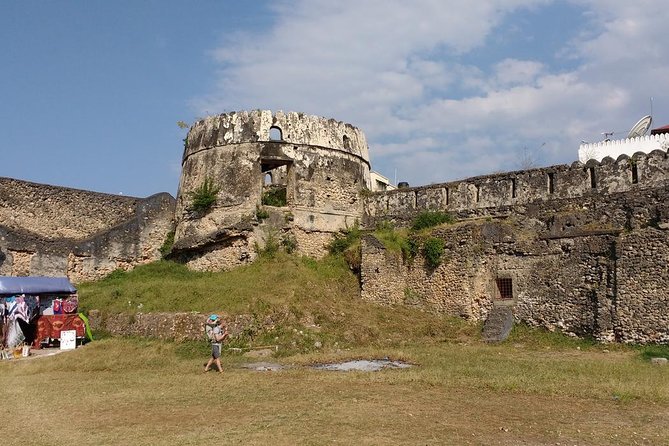
From there, you move to the Old Fort (Ngome Kongwe). You’ll sign in at the entrance door, and then your guide takes you through different parts of the fort, with historical context along the way.
This stop is valuable because forts in places like Stone Town are never just military structures. They’re also about power, trade routes, and who controlled access. Even if you don’t memorize dates, you’ll come away with the sense of what the fort represented in older times.
A small practical consideration: signing in and moving through indoor or semi-covered spaces can take a few minutes. It’s still very manageable, but if you dislike paperwork or waiting, it helps to arrive ready and keep your documents handy.
Freddie Mercury Museum Stop: A Photo Moment With a Real Story
Next comes one of the most recognizable names linked to Stone Town: the Freddie Mercury Museum, stopping at the house where he was born. The stop is built around walking there, taking pictures of the house, and listening to your guide explain the history connected to the place.
This part is fun because it’s quick and visual. You’re not stuck inside for a long time, and the guide provides context so you don’t treat it like a random celebrity stop.
Tip for your photos: Stone Town streets can get busy, and angles are tight. Go slow, take your picture cleanly, and then keep moving—your guide’s pacing is designed to keep the day from turning into a traffic jam.






Stone Town Street Time: Zanzibar Door, Churches, and Real Shopfronts
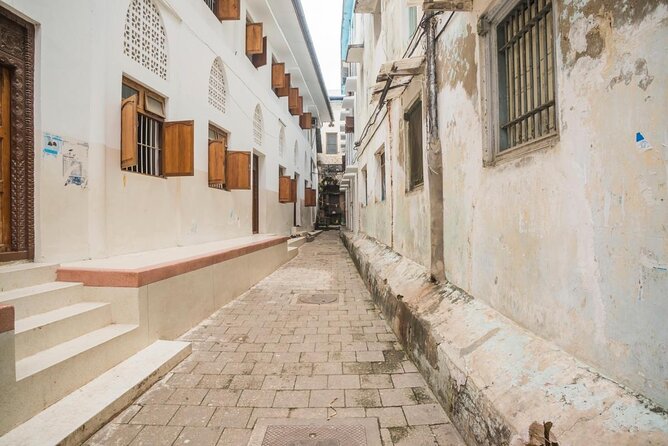
The longest stretch on the route is about an hour walking through the streets of Stone Town. This is where the city starts to feel like a city instead of a list of sights.
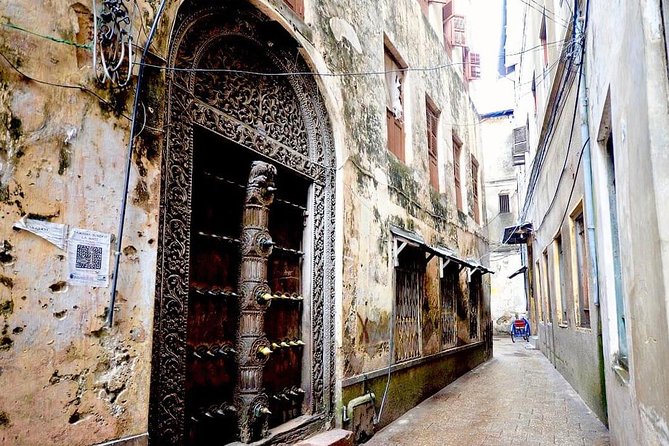
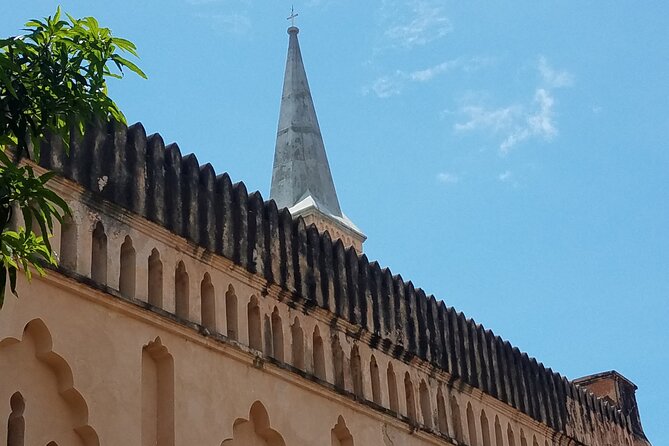
You’ll pass local shops and see multicultural architecture up close, including the Zanzibar Door, a Roman Catholic church, and the narrow lanes that make car traffic impossible. It’s also a good moment to observe how daily life and history share the same space.
This is the part that’s most sensitive to your personal style. If you like browsing, asking questions, and letting your guide point out details, you’ll enjoy this block a lot. If you prefer fast museum-style stops and minimal wandering, you may find this stretch slightly longer than you want—but it’s still framed as guided walking, not free roaming.
Old Slave Market and the Anglican Cathedral Area: Somber, Guided, and Direct
Then you reach one of the most important stops on the route: the Old Slave Market/Anglican Cathedral area. You sign up and enter a room with free time to read information boards, then your guide leads you into the slave chambers and shows you the statues.
This is the hardest part of the experience for most people, and it’s also the most meaningful. A guided explanation is crucial here because the site can be overwhelming if you just look around silently. Your guide’s job is to connect what you see with the history behind it, so the experience doesn’t become just a photo stop.
A practical note: since there’s a free-time element for reading boards, it can feel like a break in the pacing. That’s a good thing. It gives you a moment to process and move through at your own speed before your guide brings the story back.
Darajani Bazaar: Spice Shopping That Makes Sense
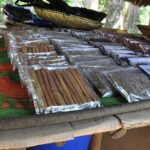
At Darajani Bazaar, the tour shifts from monuments to everyday commerce. Your guide explains the market, then you visit shops with a chance to buy spices and other items to take home.
This part works well on this schedule because you’re not shopping blind. Instead of wandering and hoping to find decent prices, you get orientation first, then you’re free to focus on purchases during the shop time.
If you’re planning to bring spices home, here’s how I’d use this stop: pick one or two things you can clearly use soon after you return, and don’t get swept into buying everything just because it looks interesting. Also, keep in mind that you’ll end at Darajani, so plan any extra errands after the tour rather than trying to do everything before it ends.
Lunch, Water, and Guide Style: How It Changes the Day
This tour includes lunch and bottled water, which may sound basic, but it’s one of those details that can make or break a short city walk. Stone Town’s streets can wear you down, and having food handled for you prevents the common problem of skipping lunch or eating something you didn’t really choose.
Guide quality is also a real factor. In particular, I’ve seen strong emphasis on friendly, helpful guiding on this kind of route. Oumar is mentioned as helpful and friendly, and the city walk experience was appreciated for being well organized alongside a good lunch. There’s also reference to a francophone guide, Suleiman Abdallah Aliy, who guided the city tour and handled the Slave Market stop with an official approach in French.
What does that mean for you? It means you’re likely to get explanations that land, not just general chatter. And it helps if you’re the kind of traveler who wants to understand what you’re looking at while you’re walking.
Who This Tour Fits Best (and Who Might Want a Different Plan)
This is a great fit if you want:
- a short, high-coverage Stone Town overview without spending your whole day in transit
- guided context at key landmarks, including the heavy-history site
- a built-in way to get to Darajani and then keep exploring on your own
It’s especially useful if you’re new to Stone Town and you want to avoid getting stuck in the wrong streets without a framework. The itinerary mixes recognizable stops (Old Fort, Freddie Mercury Museum birthplace) with local life (shops and market area), so you get both the wow factor and the everyday texture.
You might consider another approach if:
- you hate walking through tight, crowded streets
- you’re expecting a long, museum-heavy schedule rather than guided street time
- you’re relying on the tour to include private transportation (it doesn’t)
Should You Book the Stone Town City Tour?
If your goal is to see major Stone Town highlights efficiently and with guidance, I’d say yes. At $58 with lunch, water, and all fees/taxes handled, it’s a solid value for a city day that would be harder to manage on your own—especially if you want the slave chambers stop to be explained rather than treated as a checklist.
Book it if you like structured walking and you’re okay with moving through narrow streets on a schedule. I’d also prioritize this tour if you’re the type who enjoys learning why places look the way they do, from the House of Wonders area to the Old Fort and the Zanzibar Door.
If you prefer total freedom, or you’re staying far from the meeting point and don’t want to plan your own way to Forodhani, then you may want to pair a flexible plan with your own transport instead.
FAQ
How long is the Stone Town City Tour?
The tour lasts about 2 hours 20 minutes.
Where does the tour start and end?
It starts at Forodhani, Zanzibar, Tanzania. It ends in Darajani, Zanzibar, Tanzania, in front of a building known as Jumba la Treni after visiting Darajani market.
What time does the tour start?
The start time is 9:00 am.
Is the tour private?
Yes. It’s a private tour/activity, meaning only your group participates.
What’s included in the price?
Lunch and bottled water are included, along with all fees and taxes.
What is not included?
Private transportation is not included.
Is admission required for the stops?
For most stops, the admission ticket is listed as free. The Old Slave Market/Anglican Cathedral stop has admission included.
Do I need a physical ticket?
You’ll have a mobile ticket.
Can most people join the tour?
Most travelers can participate.
What’s the cancellation policy?
You can cancel for a full refund up to 24 hours in advance of the start time. If you cancel less than 24 hours before, the amount paid is not refunded. The tour also requires good weather.
What if the tour is canceled due to poor weather?
If it’s canceled due to poor weather, you’ll be offered a different date or a full refund.