REVIEW · ZANZIBAR
Stone Town tour
Book on Viator →Operated by Paradise Tours & Safaris · Bookable on Viator
Stone Town can feel like a living map. This 3-hour tour threads together key sights with a certified guide who handles the navigation, so you spend less time guessing and more time seeing. I like that all fees and taxes are included, which keeps surprises low. I also like the mix of architecture, museums, and markets in one compact route, including the Old Slave Market/Anglican Cathedral stop. One drawback to keep in mind: the House of Wonders (Beit-el-Ajaib) entrance is not available right now due to reconstruction, so you may get less than a full museum walkthrough there.
Here’s what you can expect in practice: you’ll start near Mizingani Road and finish around Darajani Street / Darajani Market, with a guided pace that works well for most people. If you’re the sort of traveler who wants lots of quiet time, do note that one solo traveler flagged that the guide’s English can be hard to follow and that personal questions can come up. If language clarity and boundaries matter to you, it’s smart to set expectations early in the tour.
Still, with a strong overall rating and lots of praise for friendliness and clear communication, this is the kind of tour that can quickly get you oriented in Zanzibar’s most famous old town. You also get the practical perks: pickup is offered, there’s a mobile ticket, and it’s private so it’s just your group.
In This Review
- Key highlights worth your attention
- Where this Stone Town tour fits on your Zanzibar day
- Getting oriented: starting near Mizingani Road
- Stop 1: Old Fort (Ngome Kongwe) in 10 minutes
- Stop 2: House of Wonders (Beit-el-Ajaib) and the reconstruction reality
- Stop 3: Old Slave Market + Anglican Cathedral, where the story gets specific
- Stop 4: Darajani Bazaar and the practical joy of market time
- Price and value: what $20 gets you in Stone Town
- What to expect from the guide (and how to make it work for you)
- Time budget: a realistic 3-hour pacing plan
- Accessibility and getting around Stone Town’s streets
- Should you book the Stone Town tour?
- FAQ
- What’s included in the Stone Town tour price?
- How long is the tour?
- Is food included?
- Where does the tour start and end?
- Is the House of Wonders entrance open?
- Is the tour private?
Key highlights worth your attention

- House of Wonders visit, but entrance is currently closed due to reconstruction
- Old Fort (Ngome Kongwe) ties directly to the slave trade story in Zanzibar
- Old Slave Market + Anglican Cathedral includes an exhibit, slavers’ chambers, and a memorial
- Darajani Bazaar route hits spice, fish/meat, and vegetable sections in one place
- Certified guide handles navigation, which matters in Stone Town’s maze of lanes
Where this Stone Town tour fits on your Zanzibar day

This is a 3-hour guided walk through Stone Town. That length is a sweet spot: long enough to cover several meaningful stops, short enough that you’re not wiped out before dinner. You’ll move through classic Stone Town lanes, where getting your bearings on your own can take much longer than you expect.
For most visitors, the value here is the “connector” role. You’re not just checking one landmark. You’re getting a guided sequence that links buildings and sites to the same bigger story: the role Zanzibar played in regional trade, the colonial-era and religious layers you still see in the city, and the market life that runs right alongside the monuments.
Also, since it’s private (only your group participates), you’re not stuck waiting for a large crowd. If your group is small or you’re traveling solo, that can make the experience feel more personal—just remember the one caution about language and question style from a solo traveler.
You can also read our reviews of more tours and experiences in Zanzibar.



Getting oriented: starting near Mizingani Road

You meet on Mizingani Road (Mizingani Rd, Zanzibar, Tanzania). From there, the tour works its way toward Darajani Street and the market area.
Why the start location matters: Stone Town’s streets can be disorienting, especially the moment you turn off the main lanes. Having your guide lead you from the start means you don’t lose time—and you avoid the stress of repeatedly re-checking directions while also trying to read signage that might be easy to miss.
The tour also notes that pickup is offered. If you have to walk to the meeting point, you’ll want to confirm pickup details ahead of time. And because the tour is said to be near public transportation, it can be easier to fit into your day if you’re bouncing between parts of Zanzibar.
You’ll finish at Darajani Street (Darajani St, Zanzibar, Tanzania) near Darajani Market, which is a great place to continue exploring after the tour while everything is still fresh in your mind.
Stop 1: Old Fort (Ngome Kongwe) in 10 minutes
The first stop is Old Fort (Ngome Kongwe). The key idea presented here is that this was a place where Arabs kept enslaved people before sending them to prison.
Even though this is only listed as 10 minutes, don’t treat it as a throwaway quick stop. It sets the tone for the route. You’re shown an anchor point in the city’s physical layout, and you begin to understand how different parts of Stone Town connect to the same painful history.
What I’d watch for here:
- Keep your camera ready, but also listen closely to the guide’s explanation. The meaning of fort walls and courtyards in Stone Town isn’t always obvious from the outside.
- If you’re sensitive to slavery-related content, mentally prepare for what comes next—because the Old Slave Market stop is longer and more detailed.
This is the tour’s “context” moment. Quick, but important.
Stop 2: House of Wonders (Beit-el-Ajaib) and the reconstruction reality
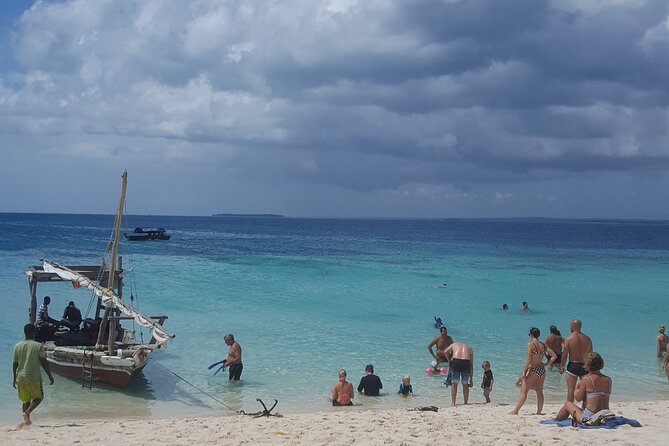
Next is House of Wonders (Beit-el-Ajaib)—described as the largest and tallest building of Stone Town. It currently houses the Museum of History and Culture of Zanzibar and the Swahili Coast.
Here’s the practical note that can change your expectations: the entrance to the building is not available right now because it’s under reconstruction. The tour still schedules time here (about 15 minutes), but you may be seeing it in a more limited way than a full museum visit.
What this means for you:
- If you want the museum galleries inside, plan for the fact that you likely won’t get that door-to-door experience on this particular tour.
- Still, the building’s scale and significance can be worth the stop. In Stone Town, “outside views” can be meaningful, especially when your guide frames what the museum is meant to represent.
The time allocation is short enough that it shouldn’t throw off your overall day, and it keeps the tour moving toward the more in-depth slavery exhibit.
Stop 3: Old Slave Market + Anglican Cathedral, where the story gets specific

This is the longest stop on the route: about 1 hour at the Old Slave Market / Anglican Cathedral area.
You’ll see an exhibition describing the history of slavery in Africa, slavers’ chambers, and a monument commemorating slavery in Zanzibar. At the end of this segment, you’ll also visit Bishop’s grave in the Anglican Cathedral.
This is the stop that gives the tour its emotional weight. And it’s also where a certified guide really matters, because museum-style exhibits can turn into a blur if you’re just reading captions without someone helping you connect the dots.
A few things that make this stop valuable:
- You’re not only hearing general background. You’re looking at specific elements tied to the story, including slavers’ chambers and a memorial.
- The addition of the Anglican Cathedral and Bishop’s grave adds another layer—religion, authority, and how different eras marked the same geography.
One caution: if you’re traveling with children or anyone who may struggle with heavy topics, consider how this stop will land. The tour is positioned to be informative, not sanitized.






Stop 4: Darajani Bazaar and the practical joy of market time
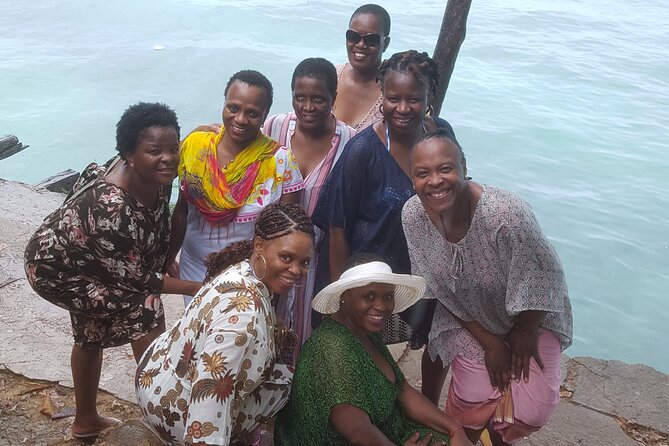
After the cathedral area, the tour heads to Darajani Bazaar—about 40 minutes.
Darajani Bazaar is described as the biggest bazaar in Stone Town. It’s made up of the Spice Market, Fish and Meat Market, and Vegetable Market, and it’s linked to the history of Said Sultan Baraghesh.
This is where the tour changes gears. You go from memorials and exhibits to everyday commerce—where Zanzibar’s trading culture shows up in smells, colors, and the quick rhythm of negotiation.
Practical tips for this market segment:
- Go in with curiosity, not hunger. Food and drinks are not included, so if you want snacks, you’ll need to buy them yourself.
- Bring a plan for photos. Markets can be crowded, and you’ll likely want a gentle approach—look first, then ask if you can photograph a seller or stall area.
Also, since you’re finishing in this area, you can use your market time to pick up small souvenirs or ingredients for later. Ending here is smart: it’s a natural “off-ramp” where you can keep exploring without having to retrace your steps.
Price and value: what $20 gets you in Stone Town

The price is $20.00 per person for a 3-hour private Stone Town tour. That’s relatively low for a guided walk that includes navigation support, a certified guide, and all fees and taxes.
Here’s why the math can work for you:
- If you were to piece this together yourself—getting to sites, figuring out entry situations, and managing the time—costs add up fast, and you lose the benefit of a guide who can explain what you’re seeing.
- The tour includes a paid admission component at the Old Slave Market area (listed as included), while other stops like Old Fort and the House of Wonders are listed as free. Even so, the guide time and the structure matter most.
One factor to weigh carefully: because the House of Wonders entrance is currently not available, you should treat this as a “see-and-understand the area” stop, not a full museum experience.
If you’re the kind of traveler who values context and wants a tight route without logistics headaches, this price can be a good deal.
What to expect from the guide (and how to make it work for you)

The experience emphasizes a certified guide who handles navigation and itinerary. That’s a big deal in Stone Town: lanes twist, signs can be confusing, and landmarks can be easy to miss if you’re just walking by.
There’s strong positive feedback on guide quality—especially that the guide is friendly and informative and that online coordination worked smoothly. If your guide messaging includes quick WhatsApp-style coordination, that helps a lot for pickup and meeting clarity.
Now the honest caution from a solo travel perspective: one traveler found the guide’s English hard to understand and felt uncomfortable with personal questions by the end. You can’t always control how personal a conversation becomes, but you can control how you respond. If you prefer a more fact-and-sight approach, ask early that you’d like the tour focused on the sites. A simple tone-setting request can go a long way.
Time budget: a realistic 3-hour pacing plan
This tour is listed at about 3 hours (approx.). The stop durations add up like this:
- Old Fort (Ngome Kongwe): 10 minutes
- House of Wonders: 15 minutes
- Old Slave Market / Anglican Cathedral: 1 hour
- Darajani Bazaar: 40 minutes
That schedule is efficient. You’ll likely have minimal downtime between locations. In Stone Town, that’s usually a good thing, because your brain stays engaged and the route flows without long waits.
You should still plan for a slower pace if you stop for extra photos or want time to browse a stall. Markets move fast, and the guide will likely keep the group moving so you don’t get stuck behind other visitors.
Accessibility and getting around Stone Town’s streets
This tour is listed as wheelchair and stroller accessible, and service animals are allowed. It’s also noted as near public transportation, which can help if you need to adjust your day.
Stone Town streets can be uneven and narrow in places. Even if a tour is “accessible,” it helps to come prepared: wear comfortable shoes and be ready for occasional sidewalk gaps or cobbled surfaces.
If you’re bringing a stroller or mobility aid, the biggest factor is timing. The tour is short, with scheduled stops, which can be easier than a long, unstructured wander.
Should you book the Stone Town tour?
Book it if you want:
- A structured Stone Town route that hits the main anchors without you having to plot every turn
- A guide to explain why specific places matter—especially at the Old Slave Market / Anglican Cathedral
- Market time at Darajani Bazaar that doesn’t feel like random wandering
Consider skipping or swapping if:
- You’re specifically hoping for a full House of Wonders museum interior visit. The entrance is currently not available, so your experience there will be limited.
- You need very minimal conversation from a guide. If you’re solo, language clarity and question style can matter a lot. Set expectations early.
If you’re balancing history with daily life in just a few hours, this tour is a solid way to do it—and it lands you right where you’ll likely want to keep exploring after.
FAQ
What’s included in the Stone Town tour price?
The tour price includes all fees and taxes. Specific admissions are listed as free at some stops and included at the Old Slave Market segment.
How long is the tour?
It’s listed as about 3 hours (approx.) total.
Is food included?
No. Food and drinks are not included.
Where does the tour start and end?
It starts on Mizingani Road and ends at Darajani Street / Darajani Market in Stone Town.
Is the House of Wonders entrance open?
The tour information says the entrance to the House of Wonders is not available because the building is under reconstruction.
Is the tour private?
Yes. It’s described as a private tour/activity, so only your group participates.