REVIEW · ZANZIBAR
Stone Town Tour in Zanzibar.
Book on Viator →Operated by Mudikei Zanzibar Tour Guide · Bookable on Viator
One of the best ways to start Zanzibar is walking Stone Town. I like that this tour packs major landmarks into a short visit, and I especially like how your guide turns the street maze into something you can actually navigate. One thing to plan for: several stops have optional admissions that aren’t included, so bring a little cash or plan your timing accordingly.
You’ll meet at Forodhani and end right back there, which keeps the day simple. The route is designed for people with moderate walking ability, with quick stops (often under 20 minutes) where you get the meaning behind what you’re seeing, not just a photo stop. If you’re coming in for the first time, this tour is an efficient way to get your bearings fast and know what to explore next.
In This Review
- Key highlights to expect on this Stone Town tour
- Why this Stone Town walk works in 2–3 hours
- Starting at Forodhani: your easy meeting point and evening baseline
- Mercury House (Freddie Mercury Museum): quick stop, optional ticket
- Old Fort (Ngome Kongwe): from 17th-century defense to today’s public spaces
- Forodhani Gardens and the night food scene: what to eat and how to enjoy it
- People’s Palace (Beit el-Sahel): why the exterior still matters
- Old Slave Market site: a respectful stop with clear context
- Darajani Bazaar: spices, seafood, and everyday Zanzibar shopping
- St. Joseph’s Roman Catholic Cathedral: a short cultural checkpoint
- What’s included, what costs extra, and what to bring
- Who should book this Stone Town tour
- Should you book this Stone Town Tour?
- FAQ
- How long is the Stone Town Tour in Zanzibar?
- Where does the tour start and end?
- Is the Freddie Mercury Museum admission included?
- Is admission included for the Old Fort?
- What about Old Slave Market/Anglican Cathedral—are any tickets needed?
- What food and drinks are included?
- Is the tour private?
- What time of day does the tour operate?
- Do I need to carry a paper ticket?
- Can I cancel for a full refund?
Key highlights to expect on this Stone Town tour
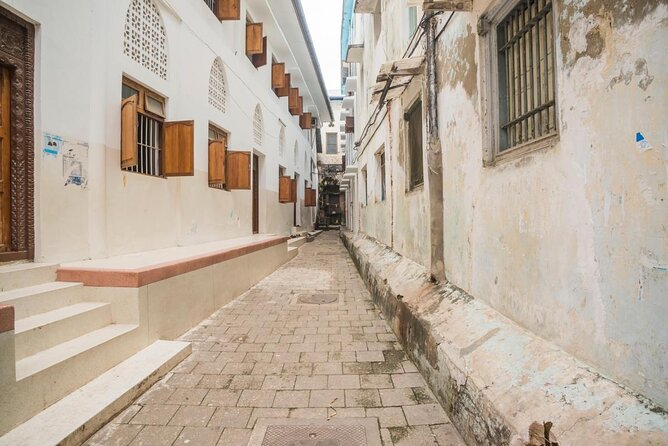
- A tight, well-paced route that fits into 2–3 hours without feeling rushed all at once
- Freddie Mercury House (Mercury House) as a quick cultural stop, with admission optional
- Old Slave Market site explained with context and respectful framing
- Forodhani Gardens evening food at the center of the night street-food scene
- Darajani Bazaar for spices, seafood, and everyday market life
- Private guide format, so you’re not stuck in a big group bottleneck
Why this Stone Town walk works in 2–3 hours

Stone Town can feel like a living puzzle. The lanes twist, the buildings stack close together, and it’s easy to feel like you’re just walking and hoping for the best. This tour is built around short, high-impact stops, so you get meaning quickly—and you still have time to wander on your own afterward.
At $28 per person for a private tour, the value comes from the combination of guided orientation plus multiple landmark stops, rather than one big-ticket attraction. Water is included, so you’re not hunting for it mid-walk. Also, this is commonly booked about 24 days in advance on average, so if your schedule is tight, don’t wait too long.
Timing matters here. The tour runs 9:00 AM–9:30 PM (Monday to Wednesday), which is helpful because you can choose a time that best matches your interests—daytime landmarks versus evening food at Forodhani.
You can also read our reviews of more tours and experiences in Zanzibar.



Starting at Forodhani: your easy meeting point and evening baseline
You’ll start at Forodhani, right on the edge of Stone Town’s waterfront energy. That location is smart because it acts like a reference point: you meet there, then the tour moves inward toward landmarks and markets, and you come back to the same area at the end.
If you’re doing this in the evening, Forodhani Gardens becomes the anchor for one of the best parts of the experience: street-food time. Even if you’re not eating, it’s useful to understand what’s going on there—where locals gather, what the smells and sounds are like, and why this spot matters beyond the Instagram frame.
Practical tip: wear shoes you don’t mind getting dusty. Stone Town is a walking city, and the “moderate physical fitness” note is really about being comfortable with uneven sidewalks and market lanes.
Mercury House (Freddie Mercury Museum): quick stop, optional ticket
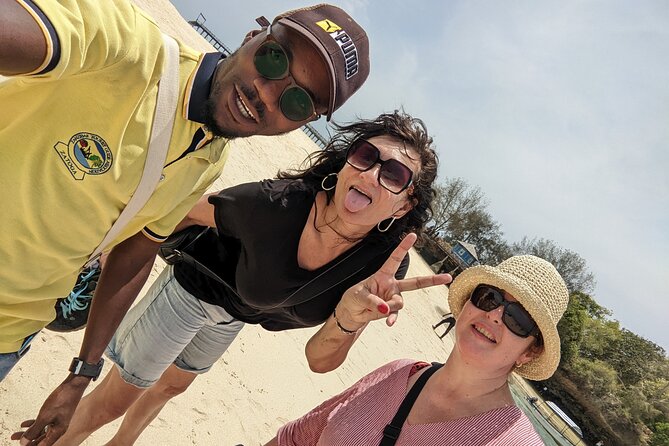
Your first stop is the Freddie Mercury Museum at Mercury House. It’s the historic residence tied to Farrokh Bulsara (Freddie Mercury’s birth name), and the museum setup is designed for fans and curious first-timers alike.
Expect a short visit (about 10 minutes) focused on context, plus the option to go in if you want. The admission ticket isn’t included, so treat this as either:
- a fast exterior-orientation and photo stop if you’re tight on budget, or
- a short museum add-on if you want the full story inside.
Either way, this stop is valuable because it adds a modern, global layer to Stone Town. Zanzibar isn’t only about old trade routes and sultans—it’s also about how the island fits into worldwide pop culture.
Old Fort (Ngome Kongwe): from 17th-century defense to today’s public spaces
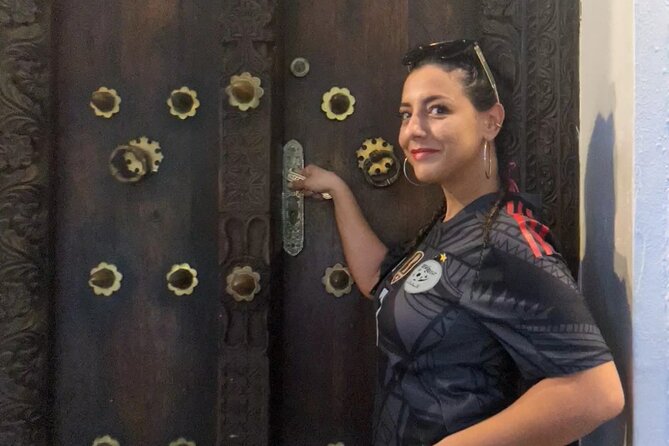
Next comes Ngome Kongwe, the Old Fort. It dates to the 17th century and was built as a defensive fortress. Today, the fort is used as a cultural center, with shops, markets, and performances happening in the area.
This stop is about understanding function. If you only look at the walls, you’ll miss the point. A good guide helps you connect the fort’s defensive purpose to the reality of what Stone Town became—trade, movement, and daily life all happening inside and around these structures.
Admission isn’t included here either, which keeps the tour flexible. You can spend your time looking around the fort area and then shift your focus to the next stops without feeling locked into paid entry.
Forodhani Gardens and the night food scene: what to eat and how to enjoy it
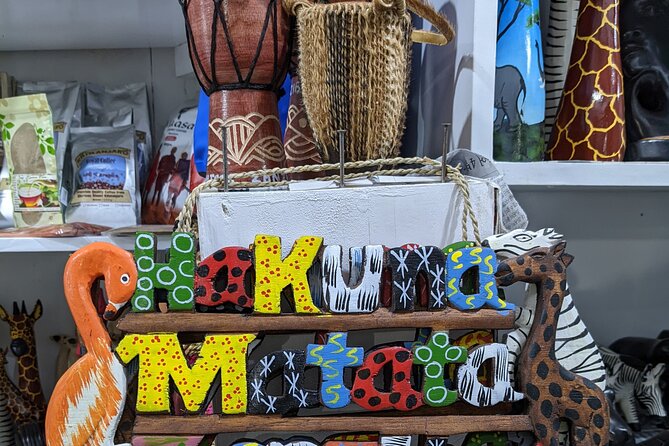
Forodhani Gardens is the waterfront park that turns into a major night-food destination after dark. The key idea: you’re not just eating random street snacks—you’re stepping into a routine that locals and visitors both use as their evening gathering spot.
This portion is free (time is included, and the admission ticket is listed as free). The food setup is centered on seafood and Zanzibari street dishes. You can expect options like grilled seafood, samosas, chapatis, and sugarcane juice, plus a spread of other local flavors you’ll likely see from stall to stall.
Where Foodchain Garden fits in: the tour’s highlights include time to try a range of Zanzibar dishes and seafood at Foodchain Garden. So if you’re the type who wants to eat with guidance—rather than wandering, ordering blindly, and hoping—it’s a good match.
A simple strategy:
- If you arrive hungry, plan for a heavier meal here.
- If you’d rather graze, pick one seafood item plus one snack and leave room for later exploring.






People’s Palace (Beit el-Sahel): why the exterior still matters

The People’s Palace—also known as Beit el-Sahel—was originally built as a residence for Sultan Barghash in the late 19th century. After Zanzibar’s 1964 revolution, it became the official residence of the President.
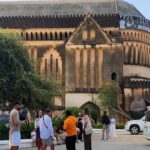
One practical detail: it’s not open to the public, so you’re not touring rooms inside. But even for 4 minutes, the exterior gives you a strong sense of power and change over time—Arabic, Indian, and European architectural influences all visible in the building’s look.
This stop works because it teaches you how politics and architecture link together in Stone Town. You’ll walk away seeing the building less as a generic landmark and more as a physical marker of Zanzibar’s shift from sultanate rule to the post-revolution era.
Old Slave Market site: a respectful stop with clear context
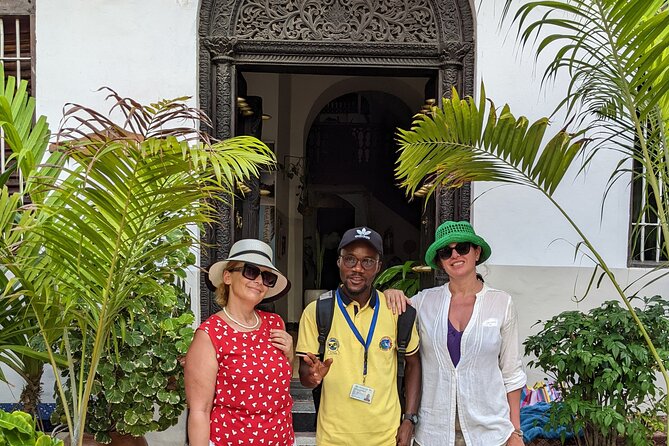
The Old Slave Market/Anglican Cathedral area is one of the most sobering places you’ll see in Stone Town. The site holds the remnants of what used to be a central market where enslaved Africans were bought and sold during the 19th-century East African slave trade.
The tour format here is about time and tone: about 20 minutes, with no admission fees included. You’re meant to slow down, understand the significance, and process what you’re seeing. This isn’t an area for jokes or rushing. If you want to take your time, this is the stop where you should.
My advice: if your group is doing other high-energy activities that day, keep this site as a mid-to-later stop rather than right at the start. Let your mind settle first, because the subject deserves your full attention.
Darajani Bazaar: spices, seafood, and everyday Zanzibar shopping
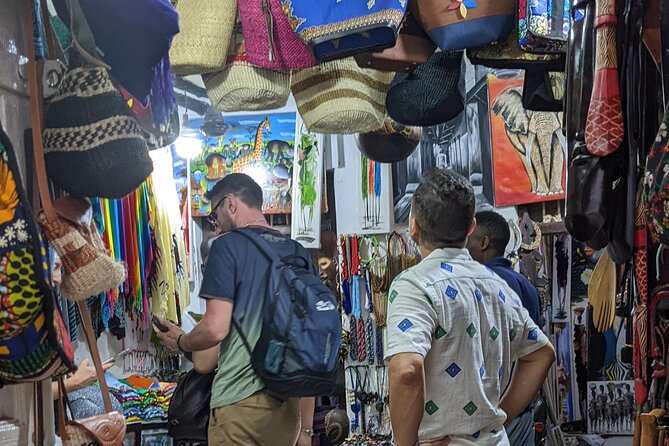
After the heavy history, the route moves into daily life with Darajani Bazaar. This market is one of the oldest and most popular on the island, and it’s organized into sections—so you can actually make sense of what you’re looking at instead of getting lost in chaos.
You’ll see goods across categories, including fresh produce, spices, meats, seafood, clothing, household items, and handicrafts. One of the best-known sections is the spice area, where you can spot fragrant spices such as cloves, cinnamon, cardamom, and vanilla.
The value here isn’t just shopping—it’s learning what makes Zanzibar’s food culture distinct. Spices are part of everyday cooking here, and seeing them in bulk helps you understand why local dishes taste the way they do.
If you like buying small souvenirs that won’t feel like you overpaid for random trinkets, this is the place to do it—with your guide’s help on what you’re actually looking at.
St. Joseph’s Roman Catholic Cathedral: a short cultural checkpoint
Next is St. Joseph’s Roman Catholic Cathedral. It’s a late 19th-century building with cultural importance for Zanzibar.
This stop is brief (about 3 minutes), so it’s best treated as a checkpoint—something that adds another layer to Stone Town’s story. After you’ve walked through markets and historical sites, a religious landmark helps you understand how different communities shaped the built environment.
What’s included, what costs extra, and what to bring
Here’s what you can count on:
- Water is included
- The tour is private, so only your group participates
- Your ticket is mobile (easy to show on the spot)
- Some sights list admissions as not included, like the Freddie Mercury Museum and other paid entry options at stops
This matters because your real cost depends on whether you choose to pay for the optional museum admissions. The price you’re paying for the tour itself is $28 per person, but plan a little extra for any indoor entry fees that interest you.
What to bring:
- Comfortable walking shoes (Stone Town lanes add up fast)
- Sun protection if you’re going daytime
- A phone with enough battery for photos and maps
- A little cash for optional admissions and food choices (especially if you go hard on the night market)
Who should book this Stone Town tour
This is a great fit if:
- You want quick orientation for a first visit
- You care about both the famous landmarks and the everyday market experience
- You like having a guide connect sites to meaning, not just locations
- You want the convenience of starting and ending at the same Forodhani meeting area
It may be less ideal if:
- You want long time inside museums or slow, lingering museum-style pacing
- You prefer a mostly beach-and-relax day (this is a walk-and-look tour)
- Your schedule only allows fewer than 2 hours and you hate the idea of split time across multiple stops
A final note on quality signals: this tour has a 5/5 rating and is recommended by 100% of past bookings (72 reviews). The strongest pattern from that kind of score is consistency—guides who keep people engaged and help them make sense of Stone Town quickly.
Should you book this Stone Town Tour?
If you’re trying to make your Zanzibar time count, I’d book it. The biggest win is the structure: landmarks tied together with market life and food at Forodhani, all in a private format that stays efficient. You’ll get enough background to explore on your own afterward without feeling like you missed the point.
Only hesitation I’d consider is optional admissions. If you want every stop to be paid-entry and you don’t want extra costs, pick your choices carefully. Otherwise, this is exactly the kind of guided Stone Town introduction that helps you see more, stress less, and eat better at night.
FAQ
How long is the Stone Town Tour in Zanzibar?
The tour runs about 2 to 3 hours.
Where does the tour start and end?
It starts at Forodhani, Zanzibar, Tanzania, and ends back at the meeting point.
Is the Freddie Mercury Museum admission included?
No. Admission to the Freddie Mercury Museum at Mercury House is not included.
Is admission included for the Old Fort?
No. Admission for the Old Fort is not included.
What about Old Slave Market/Anglican Cathedral—are any tickets needed?
No. Admission is listed as not included, meaning you’re visiting the site without ticketed entry being part of the tour price.
What food and drinks are included?
Water is included, and the tour includes a food stop experience connected with Zanzibari dishes and seafood at Foodchain Garden. Coffee and/or tea are not included.
Is the tour private?
Yes. It’s a private tour/activity, and only your group will participate.
What time of day does the tour operate?
The listed opening hours are Monday to Wednesday, 9:00 AM to 9:30 PM.
Do I need to carry a paper ticket?
No. You’ll receive a mobile ticket.
Can I cancel for a full refund?
Yes. You can cancel for a full refund up to 24 hours in advance of the experience start time. If you cancel less than 24 hours before, the amount paid is not refunded.