
REVIEW · ZANZIBAR CITY
Zanzibar: Private walking tour in stone town
Book on GetYourGuide →Operated by COASTLINE TOURS AND TRAVEL · Bookable on GetYourGuide
Stone Town has a way of grabbing your attention fast. This private 3-hour walking tour packs in UNESCO-listed sights with a guide who explains what you’re seeing as you weave through Zanzibar’s tight streets. I like that you’re not just looking at buildings—you’re learning why they matter, including where the past of East Africa’s oldest city shows up in daily life.
Two things I especially like: you’ll get a structured pass through major landmarks (the House of Wonders and Palace Museum), and you’ll also visit the former slave market site at the Anglican Cathedral so the history isn’t skipped. The main consideration is that a walk is still a walk: you’ll cover a lot in 3 hours, and if you’re hoping for a slow, extra-long wander, this format may feel a bit tight.
In This Review
- Key Things I’d Book This For
- Stone Town Is Best Seen on Foot, Not From a Van
- Meeting at the Old Fort: Where the Tour Really Starts
- The Anglican Cathedral Area: Facing History Without Soft Focus
- Stone Town’s Markets: Quick Look at Real Daily Life
- House of Wonders: When You Learn to Read the Buildings
- Palace Museum: Sultan-Era Power, Now in Public View
- What the 3-Hour Format Gets Right (and What It Can’t)
- Value Check: Is $44 Per Person Fair?
- Best For: First-Time Visitors Who Want Context
- Should You Book This Stone Town Walking Tour?
- FAQ
- How long is the Stone Town private walking tour?
- How much does it cost per person?
- What sites will we visit during the walk?
- Is there an entrance fee included?
- What’s included in the price besides the guide?
- What is not included?
- What languages are available for the live tour guide?
Key Things I’d Book This For

- Small, guided pace on foot through Stone Town’s narrow lanes where cars can’t go
- House of Wonders + Palace Museum stops that connect architecture to Zanzibar’s rulers
- Anglican Cathedral slave market site visit for context you can’t get from photos
- Market time to see local life, not just monuments
- Architectural callouts that help you notice details you’d otherwise miss
- Professional guides with English, French, German, and Italian options (including strong German reported for some guides)
Stone Town Is Best Seen on Foot, Not From a Van

Stone Town is one of those places where the streets are the attraction. The lanes are narrow, winding, and built for people on foot, not for sightseeing buses. That’s why this kind of tour is such good value: you’re paying for a guide’s eyes and walking route, not for a long ride between stops.
The UNESCO historic center feeling is real here. As you move block by block, you start to understand how old Zanzibar grew—traders, explorers, rulers, and faith communities all leaving their fingerprints. You also get a practical advantage: walking means you can stop when something catches your eye, without waiting for traffic logistics.
You can also read our reviews of more walking tours in Zanzibar City



Meeting at the Old Fort: Where the Tour Really Starts

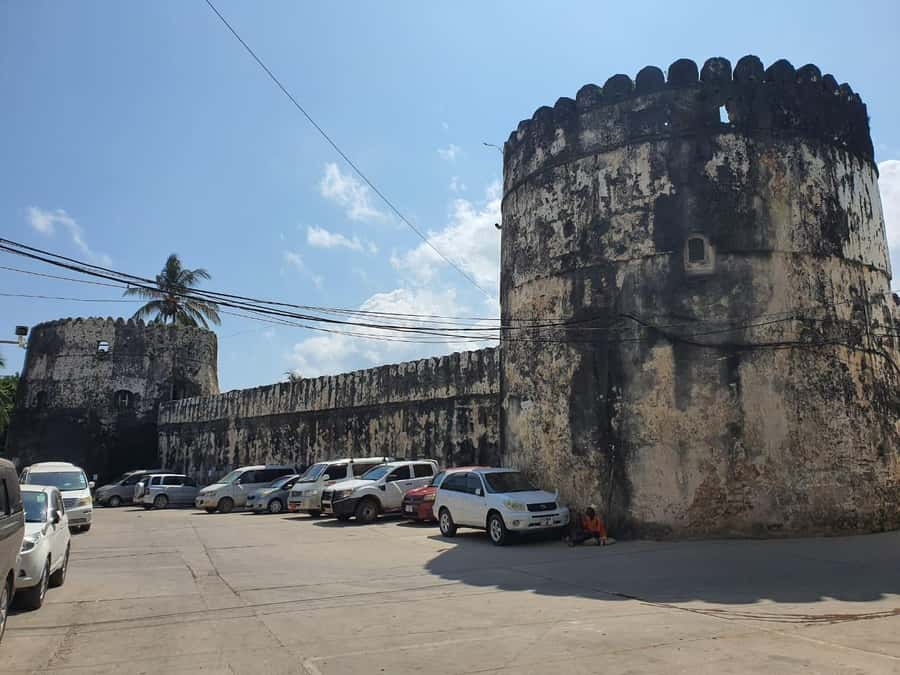
The meeting point is simple and easy to find if you’re oriented: your guide is at the entrance gate of the Old Fort. If you choose pickup, a driver meets you at your hotel lobby and you’ll head to the start point from there.
I like this because it reduces that first-day confusion. Stone Town can be maze-like, especially when you’re adjusting to the heat and the soundscape. When you start with a guide right at the Old Fort area, you’re set up to navigate the rest of the walk with confidence.
Pace-wise, plan for a steady walk. You’re doing multiple stops in a compact 3-hour window, plus a shorter food-market moment. Wear comfortable shoes—Stone Town streets can be uneven, and you’ll want stability more than cute sandals.
The Anglican Cathedral Area: Facing History Without Soft Focus
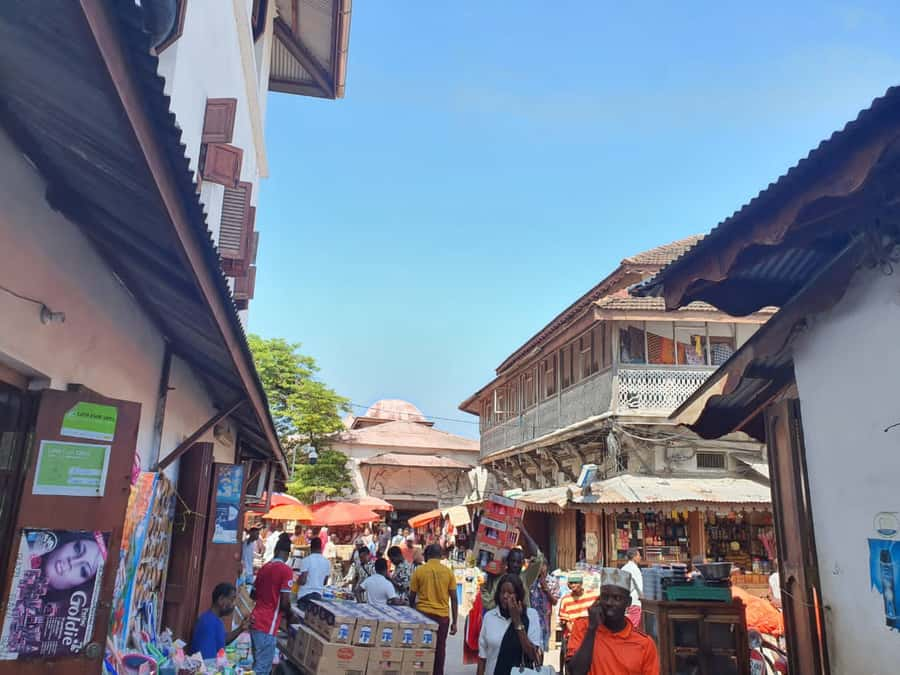
One of the most important stops is the site of the former slave market at the Anglican Cathedral Church. This is not the kind of place you should rush through, and it’s not the kind of place you can understand from a quick glance.
Here’s why the guide presence matters: the history behind this area is heavy, but the power of the visit is in learning how the story connects to the rest of Zanzibar—trade routes, power, and the way different communities lived and shaped the city. Your entrance fee is included here, which is a nice touch because it prevents a common headache: standing at a doorway while everyone figures out payment.
Also, notice how the site sits inside Stone Town’s everyday scene. That contrast—ordinary streets around an extraordinary past—is something you can only pick up when you’re actually there, walking nearby.
Stone Town’s Markets: Quick Look at Real Daily Life

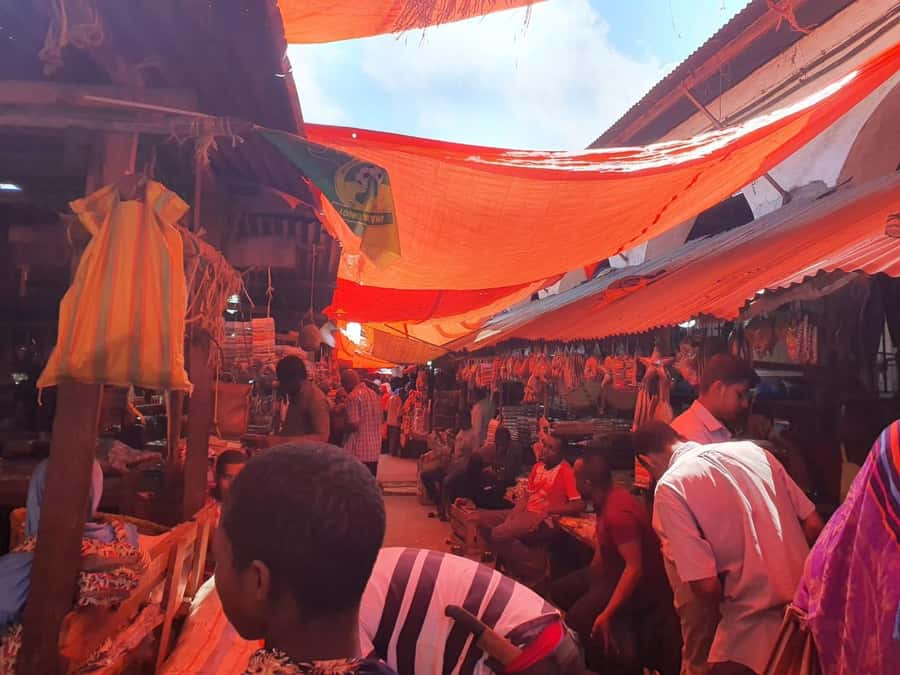
The tour includes time at a food market stop for about 30 minutes. This isn’t marketed as a full meal, and you shouldn’t expect it to replace dinner plans. Instead, it’s more like a snapshot: you’ll see how people shop, chat, and move through daily rhythms.
I like this structure for two reasons. First, it keeps the tour from becoming a food tour that eats the whole schedule. Second, it helps you orient yourself for the rest of your stay. After this stop, you’ll know where you can return later for snacks or fruit without feeling lost.
Practical note: food and drinks aren’t included, so bring cash if you plan to taste things. Even if you don’t buy anything, it’s still worth going—this is where Stone Town feels most alive.
House of Wonders: When You Learn to Read the Buildings

The House of Wonders stop is one of the anchors of this walk. Even if you’ve seen photos online, it’s different in person—because you can watch how the building’s form and details fit into the street scene around it.
What I like here is the guide’s role. One of the tour highlights is that you’ll discover information about the architect of the old building. That kind of detail changes how you see architecture. Instead of thinking, Wow, that’s old, you start thinking, Who built this, and what were they trying to show?
You’ll likely also notice the way Stone Town’s architecture reflects centuries of contact—styles and influences shaped by people who came through the Indian Ocean world. The tour doesn’t treat buildings like museum objects. It treats them like evidence.
You can also read our reviews of more private tours in Zanzibar City




Palace Museum: Sultan-Era Power, Now in Public View
Next up is the Palace Museum, which is a perfect match for a walking tour because it sits in the middle of the city’s story. A palace isn’t just about beauty. It’s about rules, hierarchy, and who had access to power.
Here, the guide helps connect the dots between Zanzibar’s rulers and the physical spaces they used. When you understand what rooms and courtyards represent, the museum visit feels more grounded and less like a generic indoor stop. It also helps you see how Stone Town’s elite life overlapped with the city’s merchant and traveler culture.
This stop is also where timing matters. Because your overall tour is 3 hours, the museum visit is paced within that framework. If you’re the type who loves reading every sign and lingering for photos, you may want to ask your guide where the best photo angles are so you don’t feel rushed.
What the 3-Hour Format Gets Right (and What It Can’t)
Let’s talk about the time. A 3-hour Stone Town walking tour is long enough to cover key landmarks, but short enough that you won’t feel stuck all day. For first-time visitors, that balance is gold. You get orientation, context, and a sense of direction for the rest of your trip.
Still, there’s a limitation. Stone Town rewards slow wandering, and some travelers may want more time in markets, more time photographing doors and balconies, or more time understanding specific neighborhoods. If you fall into that camp, consider using this as your “first overview day,” then plan a second walk on your own.
In addition, your experience depends on the guide and their language comfort. Multiple language options are offered (English, French, German, Italian). If you want a very specific language nuance, I’d ask for that when reserving so you’re not left wishing for clearer explanations mid-walk.
Value Check: Is $44 Per Person Fair?

At $44 per person for 3 hours, this tour sits in a reasonable midrange zone for guided Stone Town experiences—especially because an entrance fee at the slave market site is included, along with guiding fees. You’re also not paying for a private vehicle (hotel pickup is optional), which means more of the cost goes toward the guide and the actual walking route.
The best value signal is the structure: UNESCO-area walking access, multiple core landmarks in one outing, and a market stop that gives you practical local context. If you’re paying for a guide to translate the city, identify meaningful sites, and keep you moving efficiently through narrow streets, the math starts to work.
If you’re expecting a museum-only deep study or a long, leisurely exploration, you may feel the price is steeper than the time allows. But if you want a focused first-day orientation with the essential history included, this is a solid deal.
Best For: First-Time Visitors Who Want Context
This tour is a great match if:
- you’re visiting Stone Town for the first time and want a clear introduction,
- you want the major landmarks in a single morning or afternoon block,
- you like guided explanations that help you notice architectural details,
- you prefer walking through narrow streets instead of being chauffeured around.
It’s less ideal if:
- you hate walking or have mobility limitations (this is a walking tour by design),
- you want a slow, hour-by-hour meander with minimal structure,
- you plan to spend lots of extra time reading every sign and taking long pauses for photos.
Should You Book This Stone Town Walking Tour?
If it’s your first time in Zanzibar and you want an easy way to understand the city’s layers, I’d book it. The visit to the former slave market site at the Anglican Cathedral is the kind of stop that gives your trip meaning beyond scenery. Add in the House of Wonders and Palace Museum, plus a market moment, and you get a balanced mix of history, architecture, and everyday life.
Just go in with the right expectations: it’s 3 hours, so it’s a focused orientation, not a whole-day deep study. If you confirm your preferred language and you’re comfortable walking, this is an efficient way to get your bearings fast in Stone Town—without missing the places that matter.
FAQ
How long is the Stone Town private walking tour?
The tour lasts 3 hours.
How much does it cost per person?
The price is $44 per person.
What sites will we visit during the walk?
You’ll visit Stone Town’s main landmarks including the old fort area meeting point, the bustling market (with a food market stop of about 30 minutes), the House of Wonders, the Palace Museum, and the site of the former slave market at the Anglican Cathedral Church.
Is there an entrance fee included?
Yes. The entrance fee at the slave market is included.
What’s included in the price besides the guide?
The guiding fee is included.
What is not included?
Food and drinks aren’t included, and hotel pickup and drop-off are not included (pickup is optional).
What languages are available for the live tour guide?
The live guide is available in English, French, German, and Italian.