Two hours, one unforgettable Maasai lesson. Maasai World in Mpandeni is a hands-on way to get beyond Zanzibar postcards and understand Maasai culture through everyday tools, traditional clothes, and real conversation with Maasai people. I love that it’s structured like a mini cultural visit, not a long lecture, and it naturally builds to an activity you can participate in.
The second thing I like a lot is the chance to ask questions and get direct answers during the tour and village time. David is one guide name that shows up in people’s experiences, and the storytelling is often described as thoughtful and grounded in history and present life. One possible drawback: some of what you hear may challenge Western assumptions, so go with an open mind and a willingness to ask follow-ups.
In This Review
- Key takeaways before you go
- Maasai World in Mpandeni: What You’ll Learn in Two Hours
- Cultural tools, clothing, and the basics of everyday life
- Dance with the Maasai: How it turns questions into understanding
- Tour in the Maasai village: What to watch for
- The bow and arrow activity: Fun, structure, and respect
- Asking questions and learning customs from Maasai people
- Price and value for $20 in Zanzibar
- Timing, meeting point, and making the most of your 2-hour slot
- Who should book Maasai World, and who might skip it
- Should you book Maasai World in Zanzibar?
- FAQ
- What is Maasai World in Zanzibar?
- Where does the experience start?
- How long is the experience?
- What time is Maasai World open?
- Do I need to bring a ticket?
- Is it a private tour or shared group?
- Is there a bow and arrow activity?
- How much does it cost?
- Is there free cancellation?
- Are service animals allowed and is it suitable for most travelers?
Key takeaways before you go
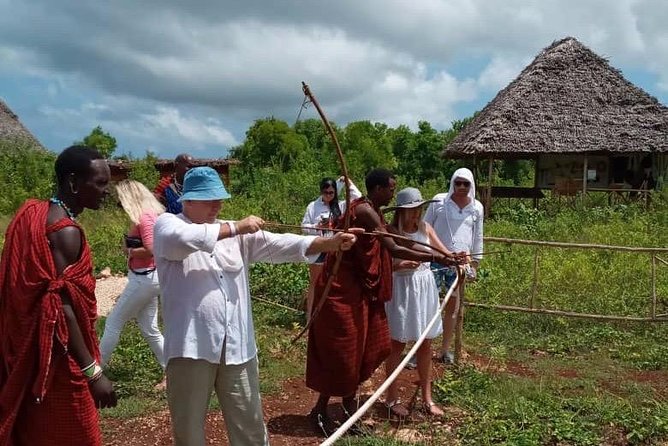
- Bow and arrow time: you’ll try a traditional archery activity as part of the experience.
- Village walk and village living: you’ll tour an authentic Maasai village setting, not just a staged show.
- Dance as context: the dancing isn’t just background entertainment; it’s part of how daily life and culture get explained.
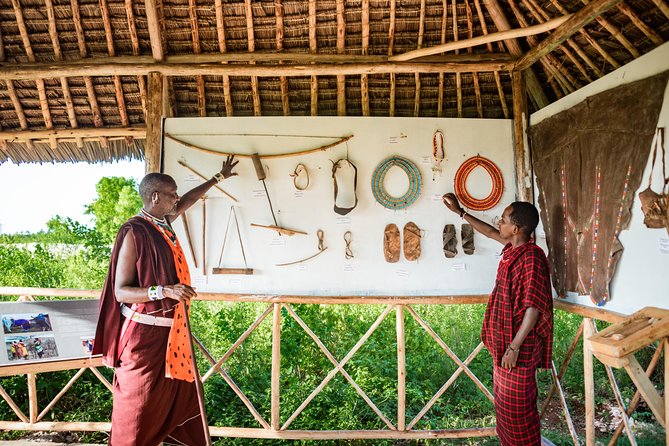
- Tools and clothing on display: you’ll see traditional items and learn what they’re for.
- Ask questions in real time: you’ll have chances to talk directly with Maasai people about local customs.
- Private group experience: it’s only your group, which helps questions and pacing.
Maasai World in Mpandeni: What You’ll Learn in Two Hours
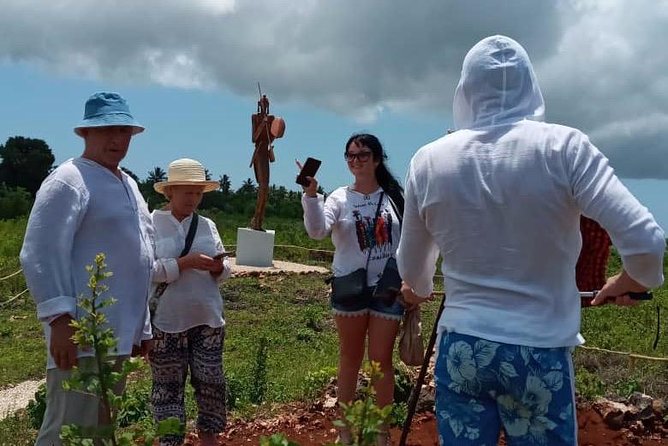
Maasai World is located in Mpandeni, Zanzibar, at Maasai World58H2+2CP. The whole visit runs about 2 hours, so it works best as a focused cultural stop while you’re in the area. Opening hours run daily from 10:00 AM to 7:00 PM, which makes it easy to slot in around beach time or dinner plans.
Because the session is short, you should treat it like an introduction with plenty of interaction. You’ll start with cultural explanations and visual items, then move into activity and village atmosphere. If you’re the kind of traveler who likes to move fast from curiosity to doing, this format clicks.
Also, this is a private tour/activity, meaning only your group participates. That’s a real value add if you’re traveling with friends or family and want your questions answered without being lost in a crowd.
You can also read our reviews of more tours and experiences in Zanzibar.



Cultural tools, clothing, and the basics of everyday life
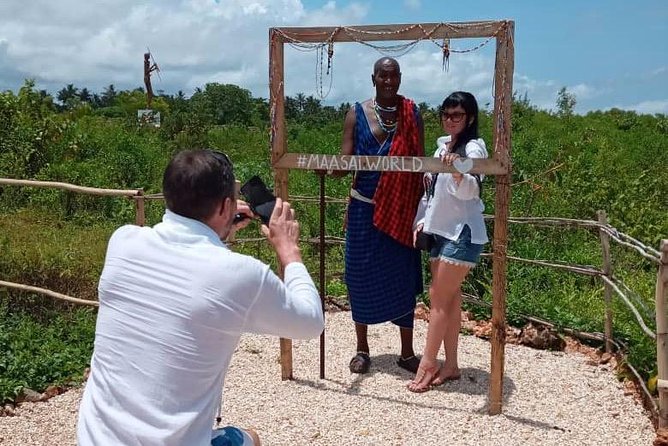
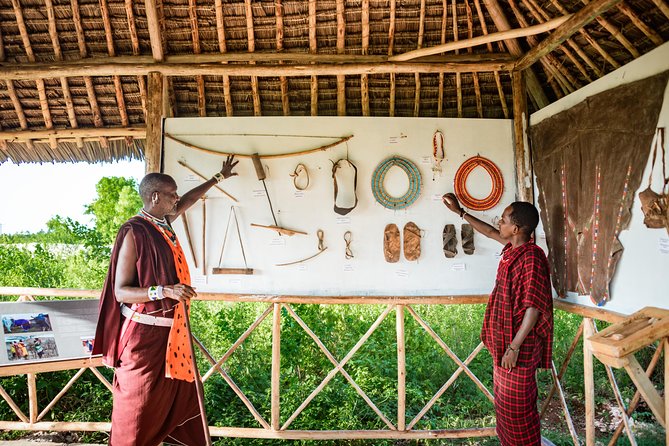
One of the most memorable parts is how the experience centers on tools and clothes traditionally used by Maasai people. Instead of trying to teach everything at once, the visit uses physical items as your entry point. You can ask what different tools are for and how clothing fits into daily living and identity.
This approach matters more than it sounds. When you learn through objects, you understand function and meaning at the same time. You’ll also get a clearer sense of how culture is carried day-to-day, not only through ceremonies.
And since Maasai World includes a tour of an authentic Maasai village setting, you’re not stuck inside a single room of displays. You’ll see the broader living context that explains why these items matter.
Dance with the Maasai: How it turns questions into understanding
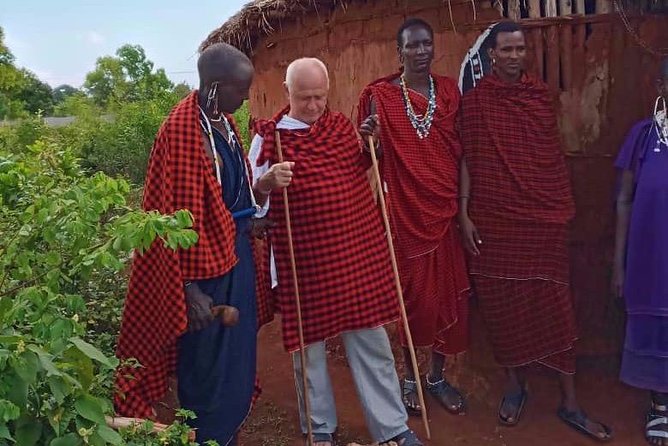
Dance is part of the program, and it’s a big reason the experience feels lively. The dancing isn’t just performance. It helps you connect the culture you’re learning about with how people move, gather, and express themselves.
I like this element because it gives you an emotional handle on the topic. Even if you don’t understand every detail on the first pass, you still get a sense of energy, community, and tradition. Then when you shift into questions, your brain is already tuned in.
This is also where the private group format helps. If your group asks questions during or after the dance segment, you’re more likely to get clear answers that match your interests.
Tour in the Maasai village: What to watch for
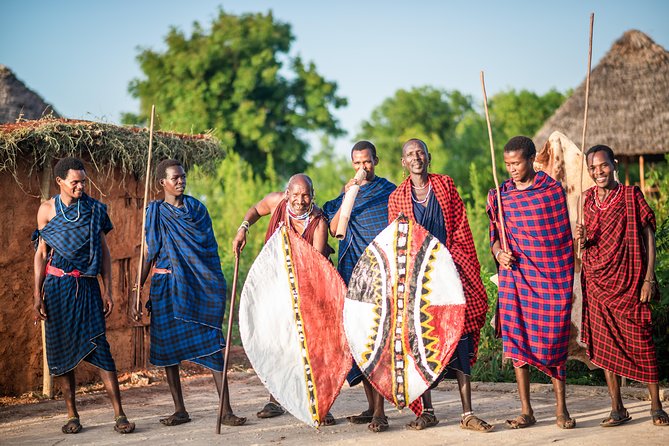
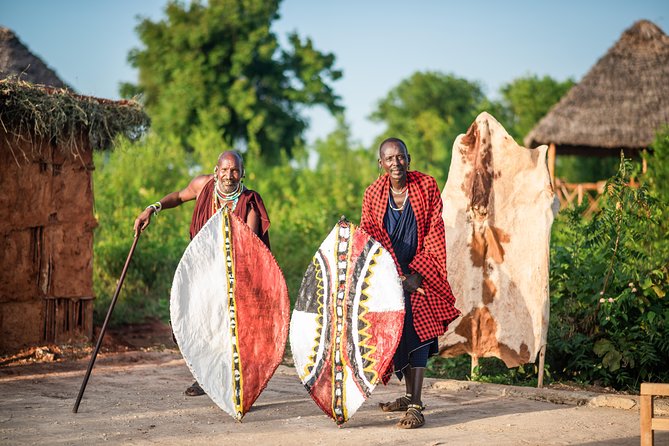
A key part of the visit is a tour in an authentic Maasai village. That means you’ll spend time in the village setting, not only around a guide and a few props. The point here is to help you understand the type of living being discussed, so you can connect stories to surroundings.
What should you look for? Don’t stress about memorizing cultural facts. Focus on what feels consistent and practical: how people organize daily life, how community roles show up, and how the explanations relate back to the items you saw earlier. When the guide talks about customs, keep a running note of what surprised you or what you want clarified.
If your goal is to learn, this segment is where the experience turns from entertainment into comprehension. The village walk also tends to be where conversations feel most natural, especially since you’ll have opportunities to ask questions.
The bow and arrow activity: Fun, structure, and respect
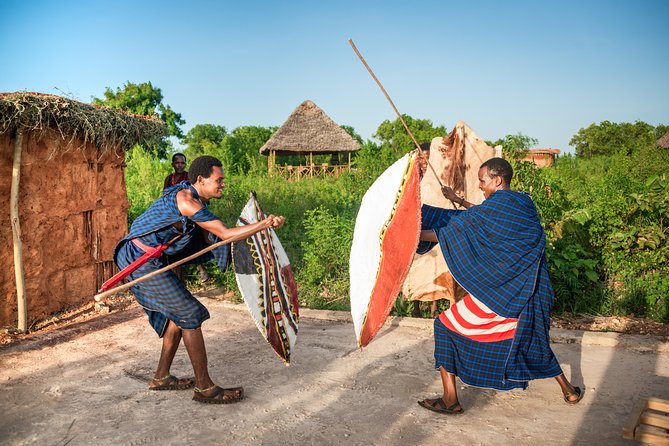
Then comes the activity that gets people smiling fast: trying a traditional bow and arrow. This is the moment where learning becomes physical, and it’s why many people rate this experience so highly.
Here’s how to get the most out of it. Go in ready to listen to instructions, even if you’ve never handled anything like this. Watch how the Maasai host demonstrates, then try again. The goal isn’t scorekeeping. It’s learning through action.
There’s also a deeper value: the bow-and-arrow segment makes it easier to understand why certain tools and skills are part of cultural life. You can connect the earlier explanations about items and traditions to a practical experience of your own.
A small consideration: if you’re expecting a long, advanced archery lesson, the timing won’t match that. The whole tour is about two hours, so the archery is a try-out, not a training program.





Asking questions and learning customs from Maasai people
One of the most praised parts is the chance to ask questions about local customs from Maasai people. This is the kind of feature that turns an average cultural visit into a real conversation.
In experiences like this, the best questions often start simple:
- What does this item do in daily life?
- How do customs change over time?
- What should visitors understand, and what misunderstandings are common?
This is also where the guide’s role becomes important. One guide name that appears in visitors’ experiences is David, described as knowledgeable about Maasai history and how it has developed over time. Even if you don’t get the same guide, you can still expect the experience to be guided by someone who can explain the connections between past and present life.
Be ready for answers that don’t soften the edges. Some information may not be easy to digest if you’re used to Western storytelling styles or assumptions. If you’re open to nuance, you’ll probably leave with a much clearer picture than you came in with.
Price and value for $20 in Zanzibar
At $20 per person, Maasai World is priced like a short cultural add-on, not a half-day excursion. On paper, it can sound simple. In practice, that low price matters because you get multiple components in a compact time slot: cultural tools and clothing, village time, dance, archery, and Q&A.
You’re also not paying extra for the tour to feel like a production. The format is interactive and guided, with time allocated to conversation rather than just watching. If you’re the kind of traveler who spends money to learn, that combination is what makes the value work.
A real-life planning detail: tickets get booked about 33 days in advance on average, so if you know your Zanzibar dates early, reserve ahead. That way you’re not stuck guessing whether a specific time still has space.
Timing, meeting point, and making the most of your 2-hour slot
The experience starts at Maasai World58H2+2CP, Mpandeni, Tanzania and ends back at the meeting point. That round-trip convenience is helpful. You don’t need to coordinate separate transport for a continuing tour; you can treat this like a contained block in your schedule.
Because the operating window is 10:00 AM to 7:00 PM, you can pick a time that suits your energy level. If you like your activities earlier, aim for late morning or early afternoon. If your plan is beach-first, late afternoon can work well too, just don’t push it too late.
Also, it’s listed as near public transportation, which helps if you’re not renting a car or organizing taxis constantly. And since it’s a mobile ticket, you won’t need to hunt for paperwork on the spot.
The most important practical tip: arrive with enough time to settle in before the tour starts. With experiences like this, the first minutes set the tone for questions and comfort.
Who should book Maasai World, and who might skip it
This is a great fit if you want:
- An interactive cultural visit rather than a passive show
- A structured way to see traditional tools and clothing
- A chance to ask questions directly and learn customs
- A short, plan-friendly activity that still includes movement (dance) and participation (bow and arrow)
You might consider something else if you’re looking for:
- A long, academic-style deep dive with lots of museum-level detail
- A purely recreational activity with no cultural conversation
- A full-day safari-style adventure
If your travel style is curious, respectful, and question-friendly, Maasai World usually hits the sweet spot.
And if you’re traveling as a group, the private format can be a strong reason to book. It tends to make the experience feel more personal and helps your group stay engaged throughout.
Should you book Maasai World in Zanzibar?
Yes, you should book Maasai World if your goal is cultural learning you can actively participate in. For $20, you’re getting more than a quick photo stop: you get a village tour setting, traditional tool and clothing context, dance, a bow-and-arrow try-out, and time to ask customs questions.
My decision rule is simple: book it if you want meaningful interaction in a short window and you’re okay hearing answers that may challenge assumptions. Skip it if you prefer purely observational activities or you’re trying to fill a whole day with one stop.
If you do book, plan to bring a calm, curious mindset. The experience works best when you treat the visit like a conversation, not a checklist.
FAQ
What is Maasai World in Zanzibar?
Maasai World is a cultural experience in Mpandeni, Zanzibar that focuses on Maasai culture through tools and clothing, a village tour, dance, and a bow-and-arrow activity.
Where does the experience start?
The meeting point is Maasai World58H2+2CP, Mpandeni, Tanzania.
How long is the experience?
It lasts about 2 hours.
What time is Maasai World open?
It’s open daily from 10:00 AM to 7:00 PM.
Do I need to bring a ticket?
You’ll use a mobile ticket. Confirmation is received at the time of booking.
Is it a private tour or shared group?
It’s listed as a private tour/activity, so only your group participates.
Is there a bow and arrow activity?
Yes. The experience includes an arrow and bow activity where you can try shooting.
How much does it cost?
The price is $20.00 per person.
Is there free cancellation?
Yes. You can cancel up to 24 hours in advance for a full refund.
Are service animals allowed and is it suitable for most travelers?
Service animals are allowed, and most travelers can participate. It’s also near public transportation.