REVIEW · ZANZIBAR CITY
Stone Town Exciting Walking Tour & Convenient Transfer – Zanzibar
Book on Viator →Operated by Your Trips Guide · Bookable on Viator
Stone Town turns walking into a lesson. This Stone Town walking tour in Zanzibar City packs major sights into a 3 to 4 hour route through UNESCO streets. You’ll see how the island’s trade links shaped everyday buildings, from carved doors to museum rooms and old forts.
I especially like how the tour organizes classic anchors of Stone Town: the Old Market and Old Fort early, before the day gets too hot. You also get key indoor time where it matters, including the House of Wonders (National Museum) and Tippu Tip’s house with entry handled.
One watch-out: guide quality can make or break the experience. One recent review complained the guide lacked solid history details and even skipped Forodhani Park, and the walking time in the sun was rough.
In This Review
- Key things to know before you go
- Stone Town on foot: why this format works
- Pickup, group size, and how the walk likely feels
- Old Market and Old Fort: your fastest start in Stone Town
- House of Wonders and Tippu Tip’s house: trade power in two very different rooms
- Africa House and the door-and-balcony details you’ll actually notice
- Palace Museum and Old Dispensary: useful stops if you like context
- Former Slave Market and Anglican Cathedral: where to slow down
- Timing, heat, and what to bring for a 3 to 4 hour walk
- Price and value: is $20 fair for Stone Town?
- Who should book this Stone Town walk
- Book it or skip it: my recommendation
- FAQ
- How long is the Stone Town walking tour?
- What does the tour cost?
- Where does the tour take place?
- Is hotel pickup and drop-off included?
- What major sights are included in the tour?
- Are tickets included for everything?
- How large is the group?
- Can I cancel for free?
- Are service animals allowed?
Key things to know before you go
- Old Market + spice area: fish/meat/vegetable sections plus a dedicated spice stop
- House of Wonders (National Museum): admission included, so you’re not hunting tickets
- Tippu Tip’s house: a specific named site, not a vague stop
- Former Slave Market area: included in the route, but the Slave Market ticket costs extra
- Max 20 people: a small group that can move through tight streets without turning into chaos
Stone Town on foot: why this format works
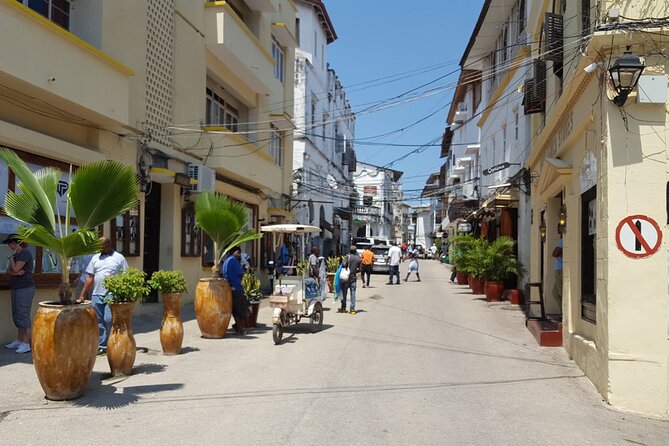
Stone Town is one of those places where big-picture thinking stops helping fast. The streets are narrow, the turns come quickly, and the buildings reward slow attention. A walking tour is the right tool here because you can spot the clues while you’re still nearby.
This tour is built around exactly that: you move street-to-street through Zanzibar City and hit landmarks that explain why the town looks the way it does. Expect a guided path through the Old Market area, the fort, and several named heritage buildings. The goal is not speed-running the whole island. It’s getting you oriented and helping you notice the details that make Stone Town feel like a living map.
You can also read our reviews of more walking tours in Zanzibar City



Pickup, group size, and how the walk likely feels
You may have hotel pickup and drop-off if you select the option. That matters more than it sounds because getting to the right start point inside Stone Town can save time and reduce stress. The tour also caps at 20 travelers, so you’re less likely to get lost in a crowd at key corners.
Duration is listed as 3 to 4 hours, so plan for steady walking rather than long museum marathons. Zanzibar sun can be intense, and one review specifically flagged the heat and long time outdoors as a problem. Bring water, wear a hat, and be ready for the fact that Stone Town streets don’t always offer easy shade.
One practical tip: if heat is a concern, treat indoor stops as your recovery time. Make sure you pause fully at places like the National Museum and other ticketed buildings, so the rest of your route feels manageable.
Old Market and Old Fort: your fastest start in Stone Town

If I had to pick the best way to start, it’s with the Old Market area. It puts you in the daily rhythm of the town before you start thinking about monuments. You’ll visit the Old Market, which has been operating since 1903 with sections for fish, meat, and vegetables, plus a spice area that gives you a sensory entry point to Zanzibar’s trade story.
From a value angle, the market stop is smart because it’s both practical and meaningful. Even if you don’t buy anything, you’ll understand why goods mattered here and why the town developed the way it did. It’s also a good place to mentally map the surrounding lanes so later landmarks feel easier to place.
Then you head to the Old Fort, another anchor stop that helps you read Stone Town like a system: commerce, protection, and power. Forts aren’t just scenic backdrops; they explain why control over trade routes mattered. This pairing of market and fort works because one shows daily exchange, and the other shows security and strategy.
House of Wonders and Tippu Tip’s house: trade power in two very different rooms
The tour includes the House of Wonders (National Museum), and the entry ticket is included. This is one of those places where the architecture and exhibits reinforce each other. The museum stop is your chance to connect the outdoor street details to bigger stories about who ruled, who traded, and why Zanzibar became central to regional commerce.
Next comes Tippu Tip’s house. This matters because it’s specific. Instead of giving you one generic “cool old house,” the route points you to a named figure and a place tied to the island’s past. You’ll get a clearer sense of how individual personalities and wider trade networks can leave physical traces in the town.
A good way to get more out of these indoor stops: don’t rush the explanations. Look at how spaces are laid out and what’s preserved. Stone Town’s heritage isn’t only in grand facades; it’s also in how houses were built and used.
Africa House and the door-and-balcony details you’ll actually notice
The itinerary includes the Former English Club, now known as Africa House. Even without going deep into specifics, this kind of stop is useful because it shows how Zanzibar’s institutions shifted over time. It’s one more piece in the puzzle of foreign presence and local adaptation.
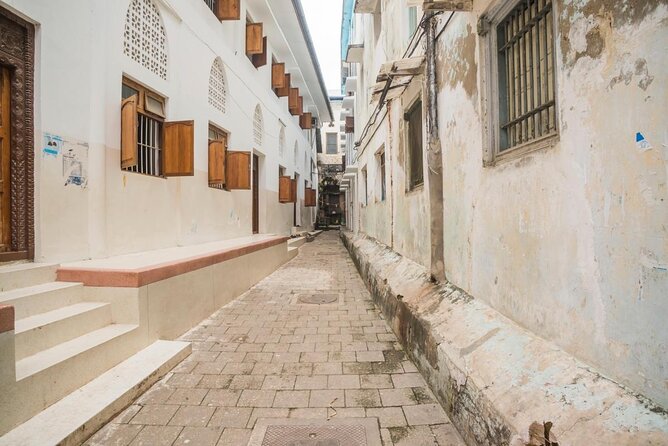
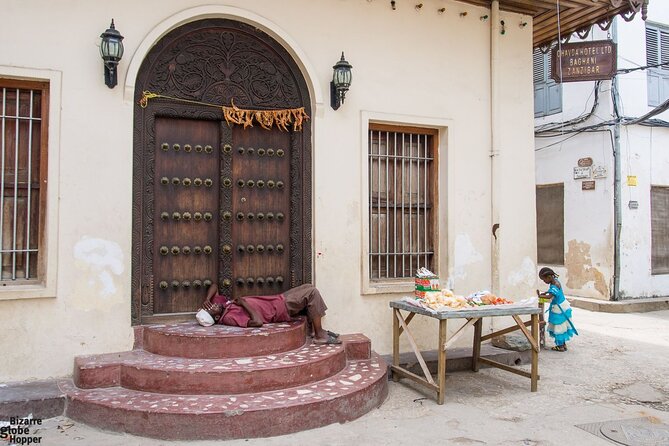
After that, you’ll spend time walking through the maze of alleys with carved doors and wooden balconies. This is where Stone Town becomes fun in a different way. The buildings are like historical captions in wood and stone. Once you start looking for door carvings, worn thresholds, and balcony styles, you stop seeing the town as a blur.
One small consideration: tight streets mean your photos will often be vertical and angled. If you rely on smartphone panorama mode, you’ll still get good results, but you might need to step back and reset for each shot. Wear shoes that grip well, especially if there are uneven patches in the lanes.
A few more Zanzibar City tours and experiences worth a look





Palace Museum and Old Dispensary: useful stops if you like context
The route also includes the Palace Museum and the Old Dispensary. These aren’t random “let’s see a building” additions. They help fill out the story of Stone Town beyond trade and power, touching daily life and how the community organized important functions.
If you’re the type who enjoys connecting architecture to social history, these stops can feel satisfying. If you only want the biggest-photo landmarks, you might treat these as supporting acts rather than the highlight. Either way, having them inside a guided route means you won’t wander past them wondering what they are.
Former Slave Market and Anglican Cathedral: where to slow down
The tour includes the Former Slave Market area along with the Anglican Cathedral area. This is heavy ground, and the design of your visit matters. The Former Slave Market is listed as an important landmark and a poignant reminder of Zanzibar’s past.
There’s one cost detail you should plan for: the Slave Market ticket is not included and is listed as five dollars per person. If you’re budgeting, treat that as part of the real price of the experience, not an optional add-on.
I suggest you keep your pace calmer here than in the markets. If you want to understand what you’re seeing, take a moment before you read anything or take photos. This isn’t the place for rushing.
Timing, heat, and what to bring for a 3 to 4 hour walk
Even on a “short” tour, Stone Town can feel like more time once you add sun and narrow streets. The tour’s duration is 3 to 4 hours, and a recent review criticized the long hours in the sun. You should take that seriously.
Bring the basics:
- Water bottle (and a small backup if you run through it)
- Hat or cap
- Light, breathable clothes
- Comfortable walking shoes
If you know you get tired in heat, ask your guide to keep indoor stops practical and don’t be shy about taking quick pauses. Also, plan your photo timing: you can burn energy trying to shoot everything at once.
Price and value: is $20 fair for Stone Town?
At $20 per person, this tour sits in the budget-friendly lane for a guided Stone Town route. The value depends on what you’d pay on your own.
Here’s what’s included: the Old Market and Old Fort, the House of Wonders (National Museum) entry, Tippu Tip’s house, Africa House, plus Old Dispensary, Former Slave Market, and Palace Museum as part of the route. Your money also covers a professional guide and optional air-conditioned vehicle pickup/drop-off if you select it.
The main price caveat is that the Slave Market ticket costs extra at five dollars per person. So your real per-person spend is closer to $25 if you plan to enter that specific paid ticket area.
For me, this price is reasonable if you want a guided path through multiple named locations without doing the planning yourself. If you’re trying to go only to the top two or three sites, you might not get as much value.
Who should book this Stone Town walk
This tour fits best if you:
- Want a structured introduction to Stone Town in a few hours
- Like guided context for major named landmarks (House of Wonders, Tippu Tip’s house, Old Fort)
- Prefer small-group movement through tight streets (max 20 travelers)
It’s also a decent match for first-time visitors who don’t want to piece together a “best of” route on their own.
You might skip or choose another option if:
- You’re sensitive to heat and want more shade-heavy touring
- You strongly rely on the guide for deep history detail and interpretation, because one review suggests guide knowledge can vary
- You’re hoping for lots of flexible stops based on your personal interests within that time frame
Book it or skip it: my recommendation
I’d book this tour if your priority is getting oriented in Stone Town and checking off several major heritage buildings without spending your whole day planning. The mix of markets, fort, and named sites gives you a solid framework to understand the town’s trade and cultural layers.
But I’d go in with clear expectations. Bring sun protection, and don’t assume every guide will deliver the same level of historical detail. Before you start, set a simple goal like: I want to understand why trade and power left marks on buildings here. If the guide can’t answer basics, you’ll want to ask more than once and keep your energy for the stops that do deliver.
If you’re the type who needs more than a general overview to feel satisfied, consider reviewing other options too. With a rating of 3.7 from 3 reviews, there’s enough variation that it’s worth picking your moment.
FAQ
How long is the Stone Town walking tour?
The tour is listed as about 3 to 4 hours.
What does the tour cost?
The price is $20.00 per person.
Where does the tour take place?
It runs in Zanzibar City, Tanzania, focusing on Stone Town.
Is hotel pickup and drop-off included?
Hotel pickup and drop-off are included if you select the option. The pickup is by an air-conditioned vehicle.
What major sights are included in the tour?
Included stops cover Old Market and Old Fort, House of Wonders (National Museum), Tippu Tip’s house, the former English Club (Africa House), plus Old Dispensary, Palace Museum, and the Former Slave Market area.
Are tickets included for everything?
The House of Wonders entry is included. The Slave Market ticket is not included, and it costs five dollars per person.
How large is the group?
The tour has a maximum of 20 travelers.
Can I cancel for free?
Yes, you can cancel for a full refund up to 24 hours in advance. If you cancel within 24 hours of the start time, the amount you paid is not refunded.
Are service animals allowed?
Yes, service animals are allowed.