REVIEW · KENDWA
Kendwa: Tandem Skydive in Zanzibar
Book on GetYourGuide →Operated by African Skydive Ventures Ltd · Bookable on GetYourGuide
A 10,000-foot jump sounds unreal. In Kendwa, you trade the beach for a quick lesson and a tandem parachute experience over the Indian Ocean. The result is a clean, high-adrenaline way to see Zanzibar from above.
What I like most is the focus on safety and professionalism, plus the simple, visual payoff: you get a big chunk of time in the air, with views that feel almost impossible to fake. One thing to consider is the height and physical requirements—this is not for everyone, and there are clear limits on health, weight, and pregnancy.
You start on the beach, then you move through training with an international instructor before you jump. I also like that the plan centers on 100% beach landings, so you’re not wondering where you’ll touch down. A possible drawback: the experience is weather-dependent, and the operator only confirms your start time after you check availability, so your day needs a little flexibility.
In This Review
- Key highlights to know before you go
- The Big Moment: 10,000 Feet Above Kendwa Beach
- Why the height matters to your photos and your memory
- The 2-Hour Plan: Training, Jump Setup, Then Air Time
- Training With Real Instruction: What You Actually Learn
- What you should do mentally
- Freefall and Parachute Time: 30 Seconds That Change Your Brain
- Timing makes the experience easier to enjoy
- Those Indian Ocean Views: What You Get From Above
- Expect to look, not just react
- The Beach Landing: Why 100% Beach Matters
- A small preparation tip
- Included Photos and Videos: The Proof You’ll Actually Want
- Price and Value: Is $542 Worth It?
- Who the price fits best
- Who This Fits (and Who Should Skip It)
- Best match
- Best to skip
- Meeting Point in Kendwa: Simple, Beach-First Setup
- Booking With Flexibility: Reserve Now, Pay Later
- Should You Book This Tandem Parachute Jump in Kendwa?
- FAQ
- How high is the jump?
- How long is the freefall?
- How long do you fly under the parachute?
- Will I land on the beach?
- Are photos and videos included?
- What language are the instructors?
- Is private transportation included?
- Who is this not suitable for?
Key highlights to know before you go
- Jump altitude of 10,000 feet for those huge ocean-and-beach views
- 30 seconds of freefall paired with 5–10 minutes under parachute
- 100% beach landings in Kendwa, built for a smooth finish
- Same-day photos and videos included, so you leave with proof
- English and Russian instruction for real communication
- Recent feedback praises calm, professional instruction, including one instructor named Mike
The Big Moment: 10,000 Feet Above Kendwa Beach
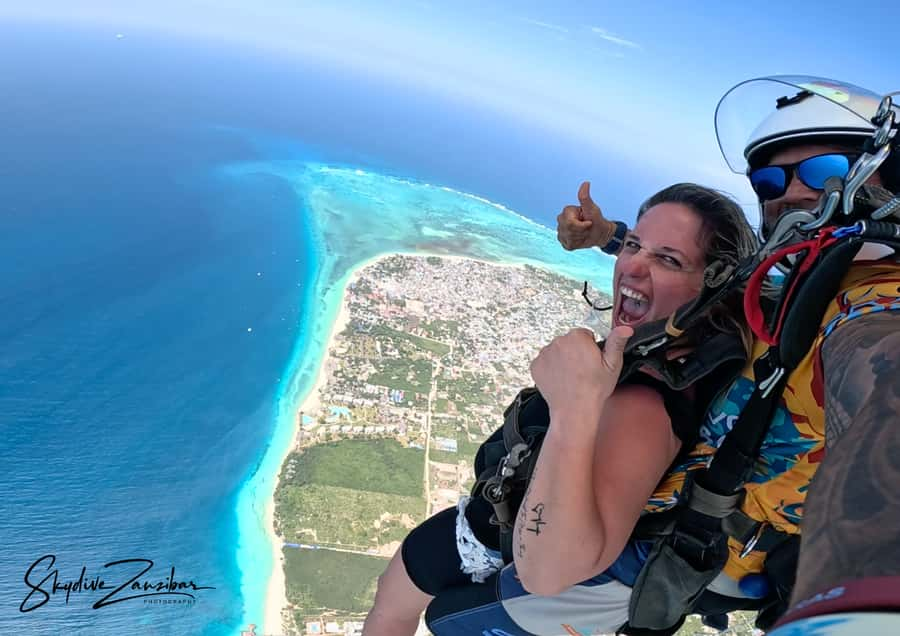
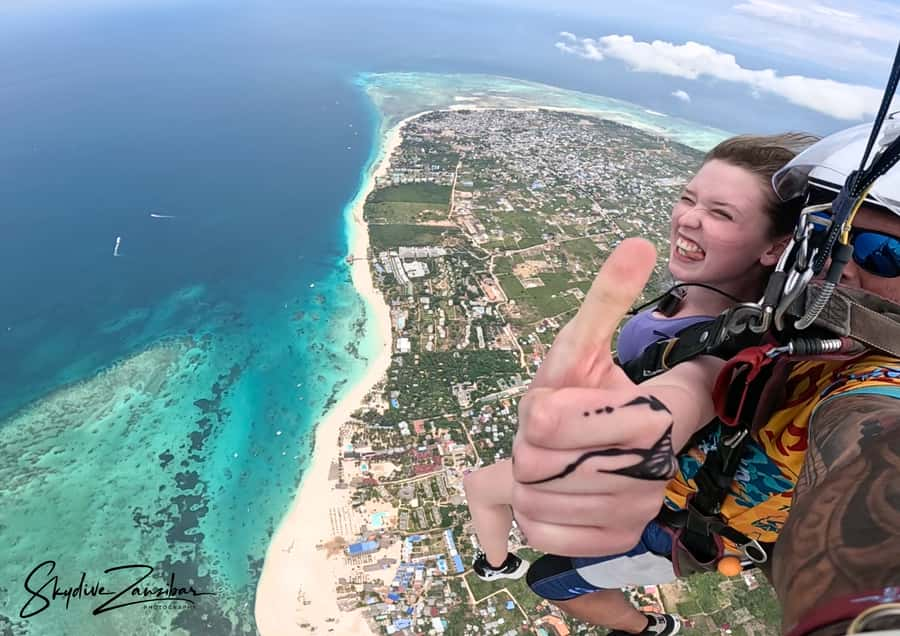
This is a tandem parachute jump designed around one idea: you want Zanzibar’s coast at full scale. From 10,000 feet up, you get a wide view of the white sand, the shape of the shoreline, and the Indian Ocean’s shifting colors. It’s the kind of perspective that makes the island feel different, like you’re seeing it for the first time.
The jump is tandem, so you’re not solo planning or handling the gear. Your role is mostly to listen, follow cues, and enjoy the ride while your instructor manages the technical side. That matters because it turns the hardest part of sky time into a guided experience instead of a stress test.
You can also read our reviews of more tours and experiences in Kendwa.


Why the height matters to your photos and your memory
At 10,000 feet, details spread out. You can pick out the geometry of the coast and see water patterns that you just can’t notice from beach level. For many people, that’s the difference between a thrill ride and a once-in-a-lifetime view.
The 2-Hour Plan: Training, Jump Setup, Then Air Time
The whole experience is scheduled for about 2 hours. That’s long enough to fit the basics, get you kitted up, and still move quickly into the jump process.
Here’s the shape of the day:
1) You meet at the Skydive Zanzibar office on the beach, next to the swimming pool.
2) You go through brief training so you know what will happen and how to respond.
3) You jump with an instructor, then spend time in freefall and later under the parachute.
4) After landing, you’ll get your photos and videos the same day.
The main practical upside of a tight schedule is that you don’t burn half your vacation waiting around. The main planning downside is that you should keep your day flexible; starting times depend on availability.
Training With Real Instruction: What You Actually Learn
Before you fly, you’ll get brief training and you’ll work with an international instructor. The goal is not to teach you to be a sky professional. It’s to help you understand the sequence and feel prepared—so you can focus on the experience instead of guessing what’s coming next.
The best sign is how people describe the instruction. In the feedback, one instructor named Mike was highlighted for a calm voice that made the person feel safe and able to enjoy the rest of the jump. That’s exactly what you want: steady coaching that reduces panic and helps you follow what to do at each stage.
What you should do mentally
Go in expecting adrenaline. Even if you stay calm, your body will react. The training and instructor cues are there to keep that reaction from turning into confusion. If you listen closely and stay present, the experience feels smoother.

Freefall and Parachute Time: 30 Seconds That Change Your Brain
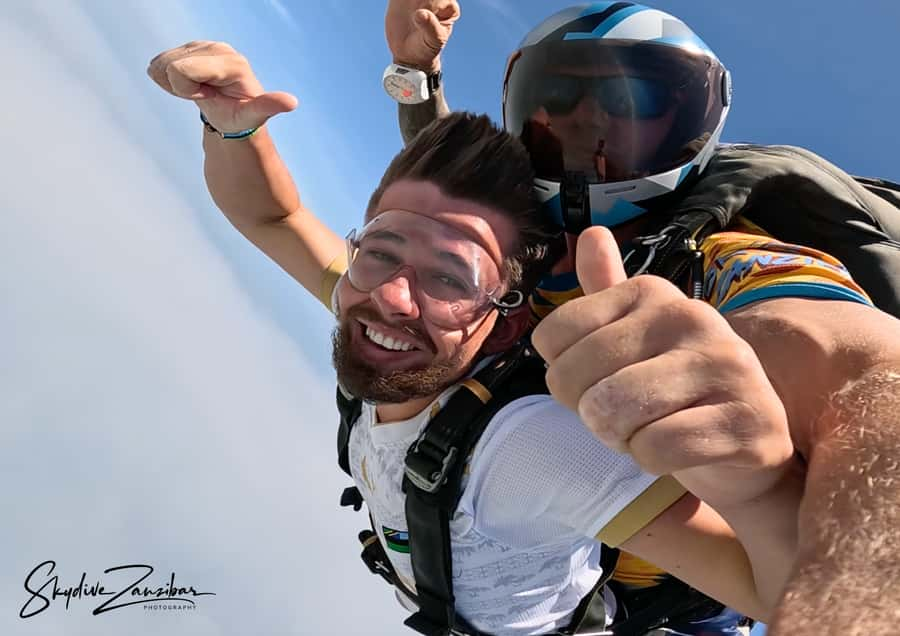
The jump includes 30 seconds of freefall, followed by 5–10 minutes under the parachute. That mix is smart. Thirty seconds is long enough to feel like the world drops away, but short enough that you’re not stuck in raw intensity for too long.
Then the parachute phase flips the emotion. Freefall is fast, loud, and intense. Under parachute, your attention shifts to what you can see: the shoreline, the ocean color, and the way the beach slowly grows bigger as you come down.
Timing makes the experience easier to enjoy
Not every person handles long periods of extreme fear well. This format is intense, then it gives you a calmer window where you can breathe and take it in. You get both: the thrill and the appreciation.
Those Indian Ocean Views: What You Get From Above
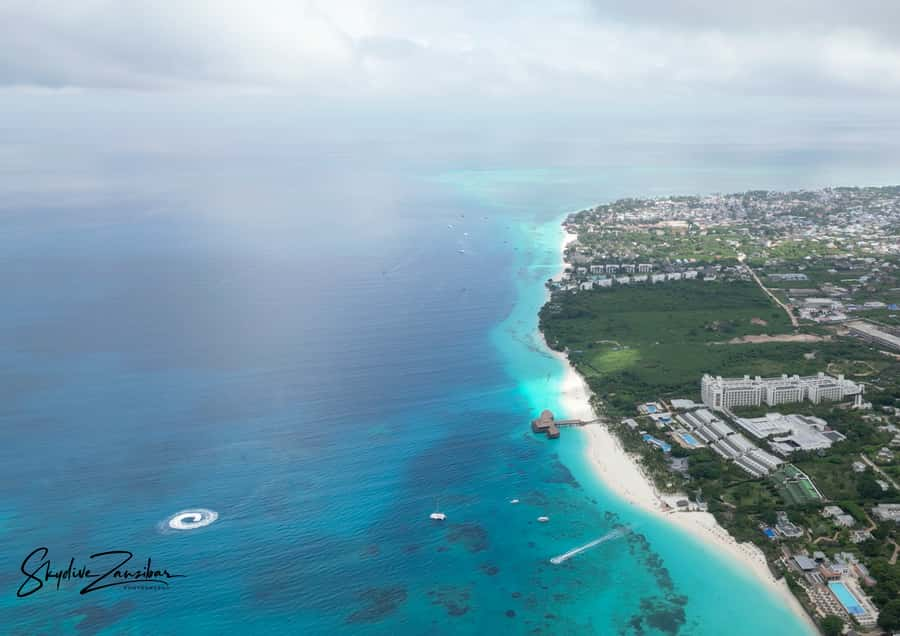
The highlight here isn’t just height—it’s the view. From up in the air, Kendwa becomes a clear picture of coastline and sea. The ocean changes tone in patches, and the beach looks bright and clean from far above, like someone turned up the saturation.
I love that the experience is built around a coastal setting. It means you’re not jumping over random terrain; you’re jumping over the reason people come to Zanzibar in the first place.
Expect to look, not just react
People sometimes brace for the jump and forget to enjoy it. With this setup, you can plan for both. During freefall, you’ll likely be focused on the body feeling. Once you’re under canopy, you can actually see what you came for.
The Beach Landing: Why 100% Beach Matters
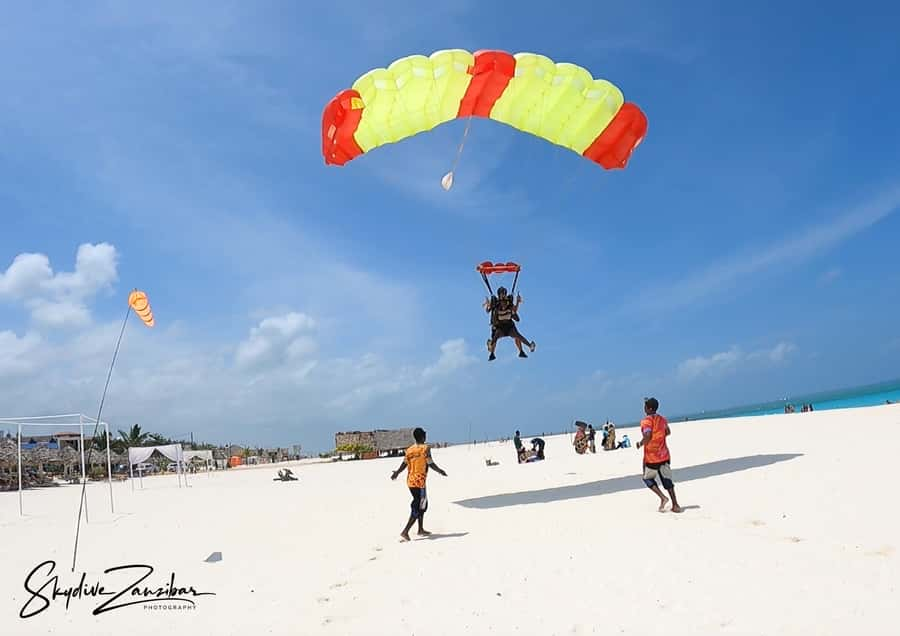
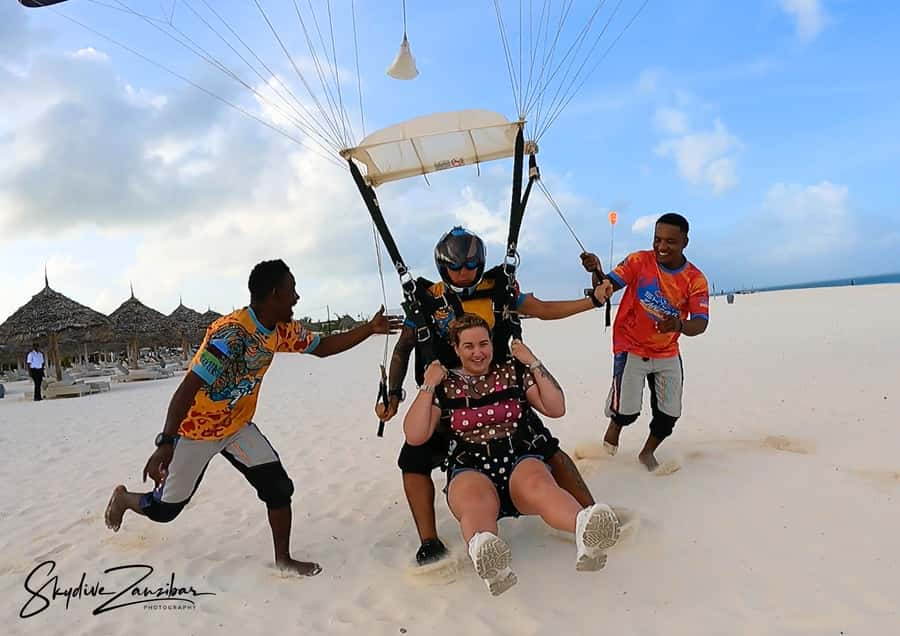
Landing is where many adrenaline activities either feel clean or feel chaotic. Here, the promise is simple: 100% beach landings. That matters because beach landings tend to feel more controlled than landing somewhere off the coast or in rougher terrain.
It also shapes your expectations. You’re not trying to picture where you’ll end up—you’re landing back on the sand where you started. That can reduce post-jump stress, which makes the whole day feel more complete.
A small preparation tip
When you’re about to land, your best friend is following your instructor’s cues. Don’t overthink it. Landing is the stage where listening pays off the most.
Included Photos and Videos: The Proof You’ll Actually Want
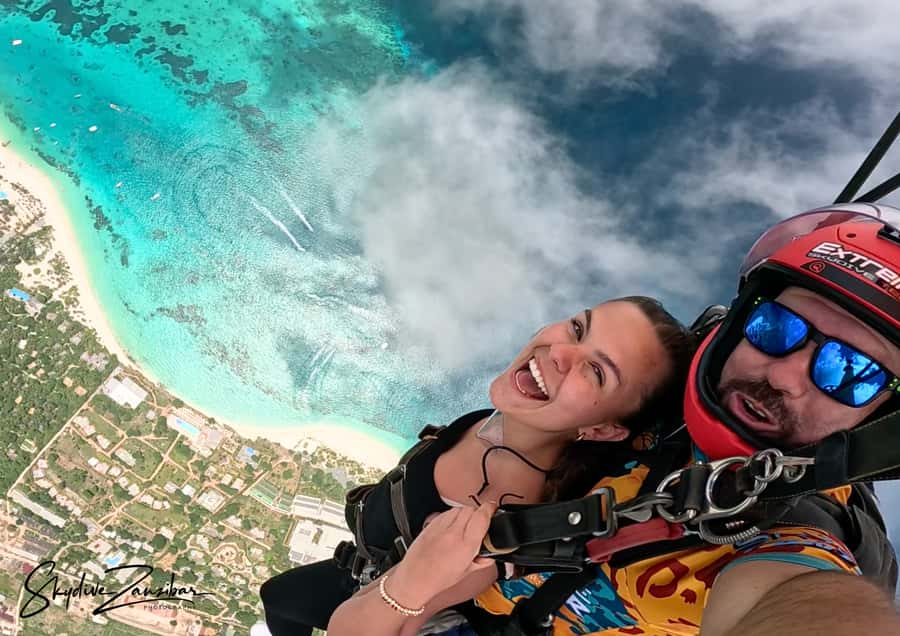
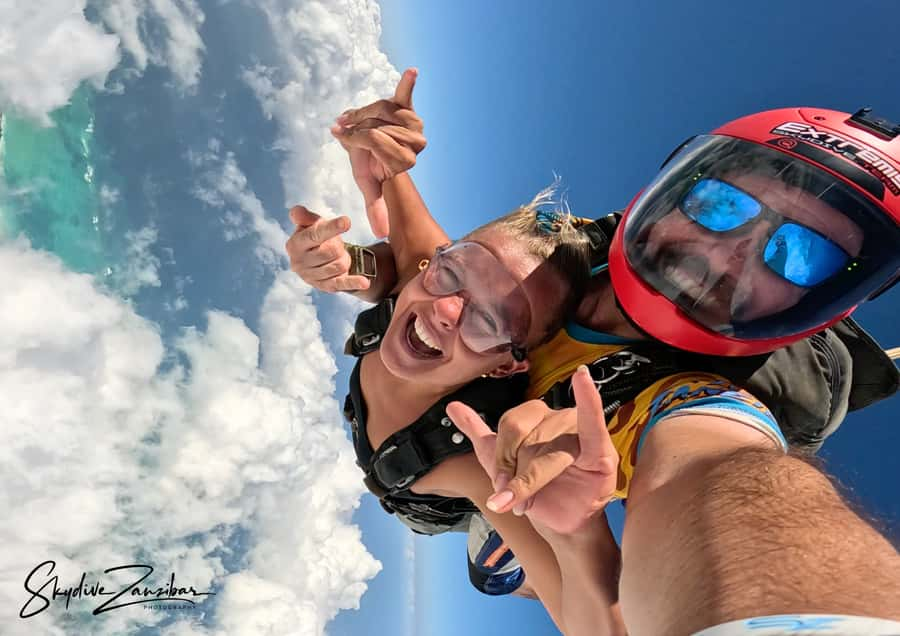
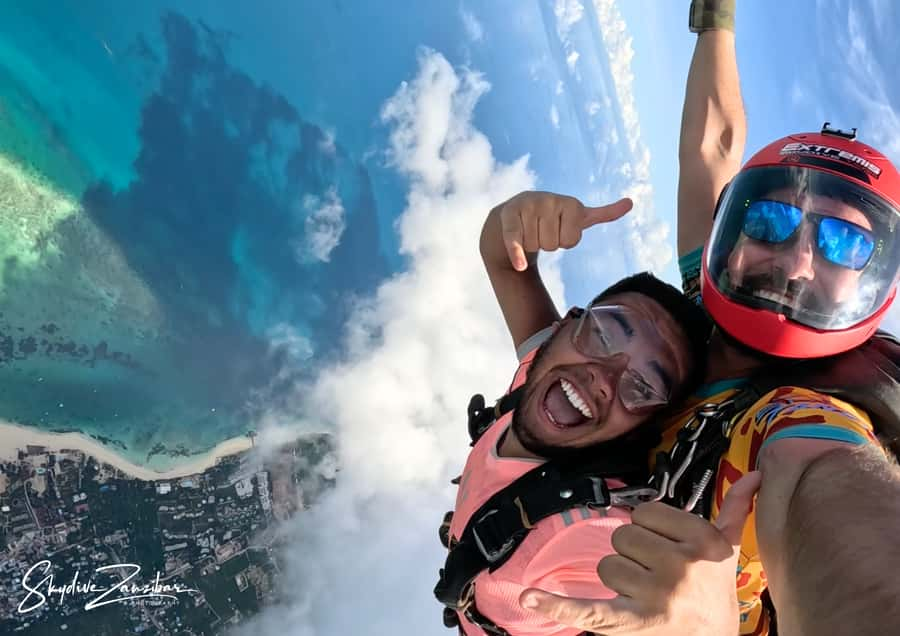
A lot of tours offer photos as an upgrade. Here, photos and videos are included, and you receive them the same day. That’s a big value point because you don’t have to wait for a download link or wonder if the footage will be delayed.
It also changes how you experience the jump. You can focus on the air without trying to film everything yourself. Your memories stay in the moment, then you still get visuals you can share right after.
Price and Value: Is $542 Worth It?
At $542 per person, this isn’t a budget activity. But it is one of those experiences where the price is tied to safety equipment, certified instruction, and the cost of running jump operations from a specific location.
What makes it feel more reasonable is the package:
- tandem instructor-led jump from 10,000 feet
- safety equipment provided (including a student harness and googles)
- time in the air that splits into freefall + parachute viewing
- same-day photos and videos included
If you’re traveling in a group, it also helps to remember that this is not something you can recreate cheaply. You’re paying for access, training, and controlled execution in a single day.
Who the price fits best
I’d book this if you value a high-impact experience and you’re the type who wants a serious view, not just a short thrill. If you’re only looking for something light and low-stress, a tandem parachute jump probably costs more emotion than you want.
Who This Fits (and Who Should Skip It)
This activity is not for everyone, and the limits are clear. It is not suitable for:
- children under 12
- pregnant women
- people with back problems
- people with heart problems
- wheelchair users
- people over 220 lbs (100 kg)
It also says no alcohol and drugs. That’s a good rule in any high-risk activity.
Best match
You’ll likely love it if you:
- want a bucket-list coastal experience with a real instructor
- can handle a short, intense moment followed by calmer parachute time
- care about professional guidance and straightforward execution
Best to skip
If you have any of the listed health limits, don’t try to negotiate them. Safety comes first, and your body deserves respect.
Meeting Point in Kendwa: Simple, Beach-First Setup
You’ll meet at the Skydive Zanzibar office located on the beach next to the swimming pool. That’s helpful because it removes a layer of confusion. You’re on the coast, you’re near the action, and you don’t need to hunt for an address far from the shore.
One practical note: private transportation is not included. If you’re staying somewhere away from Kendwa’s beachfront, you’ll want to plan your ride so you don’t arrive stressed. The jump day runs best when you’re calm and early.
Booking With Flexibility: Reserve Now, Pay Later
The experience includes free cancellation up to 24 hours in advance for a full refund. It also offers reserve now & pay later, which is useful if you’re juggling Zanzibar weather or adjusting your trip schedule.
This kind of flexibility matters for jump activities. Even if everything else in your itinerary is fixed, sky time is the one part you might need to shift.
Should You Book This Tandem Parachute Jump in Kendwa?
If you want a bold Zanzibar highlight that’s easy to understand and hard to forget, I’d say yes. This is built around a clear promise: 10,000 feet, real instruction, 30 seconds of freefall, 5–10 minutes under canopy, and beach landings. Add included same-day photos and videos, and you get an experience that pays you back in both emotion and keepsakes.
Skip it if you fall into the health and weight limits or if you know you need something low-stress. Also, if you can’t handle the idea of a short but intense fear response, you might want to look for calmer ways to see the island.
One last thought: pay attention to the instructor communication on the day. The tone and calm coaching are a big part of why people leave feeling safe and happy—and it’s the difference between surviving the moment and enjoying it.
FAQ
How high is the jump?
You jump from 10,000 feet.
How long is the freefall?
You get about 30 seconds of freefall.
How long do you fly under the parachute?
After freefall, you’ll have 5–10 minutes under the parachute.
Will I land on the beach?
Yes. The experience includes 100% beach landings in Kendwa.
Are photos and videos included?
Yes. Photos and videos are included, and you receive them the same day.
What language are the instructors?
Instructors are available in English and Russian.
Is private transportation included?
No. Private transportation is not included.
Who is this not suitable for?
It’s not suitable for children under 12, pregnant women, people with back problems or heart problems, wheelchair users, and people over 220 lbs (100 kg).