REVIEW · ZANZIBAR CITY
Jozani Forest
Book on Viator →Operated by Suncoast Zanzibar Tours · Bookable on Viator
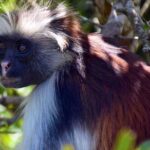
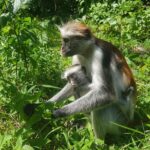
Monkeys on Zanzibar? This is where you actually see them. A private half-day in Jozani Forest is all about spotting Zanzibar’s endemic red colobus (plus black-and-white colobus), while a local guide helps you pick out other animals, birds, and butterflies as you walk through real swamp and mangrove habitats. I love how often the monkeys are visible, and I love that the guide turns the walk into a proper nature lesson. One heads-up: this is a wildlife walk, so timing and weather matter, and you can’t treat monkey sightings like a guaranteed schedule.
If conservation is your thing, you’ll feel it here. The red colobus were once considered at risk, and the work done in the forest helped the population rebound to around 6,000 red colobus in Jozani Forest today. You’ll also get a wide mix of habitat types, so the day doesn’t feel like one long look-at-trees moment.
Logistics are simple, which I appreciate on Zanzibar. You get hotel pickup and drop-off, travel by air-conditioned vehicle, and the experience includes bottled water and all fees and taxes, with a mobile ticket to keep things light. The tour is private, so you can go at your pace—just know it’s still a walk, not a bus ride with photo stops.
In This Review
- Quick hits you can use on your walk
- Jozani Forest, the half-day nature walk that feels alive
- The monkey lineup: red colobus plus black-and-white colobus
- Stop style: forest walking first, mangroves after
- What else you’ll spot besides monkeys
- The guide experience: private pace, real explanations
- Weather matters more than you think
- Price and value: what $100 buys you
- How long you’ll be out (and how to plan your day)
- Who should book this Jozani Forest private tour
- Should you book Jozani Forest?
- FAQ
- What animals can I see on this tour?
- How long does the Jozani Forest tour take?
- Is hotel pickup and drop-off included?
- Is admission included?
- What’s included in the price besides the guide and entry?
- Do I get a ticket on my phone?
- What if the weather is poor?
Quick hits you can use on your walk
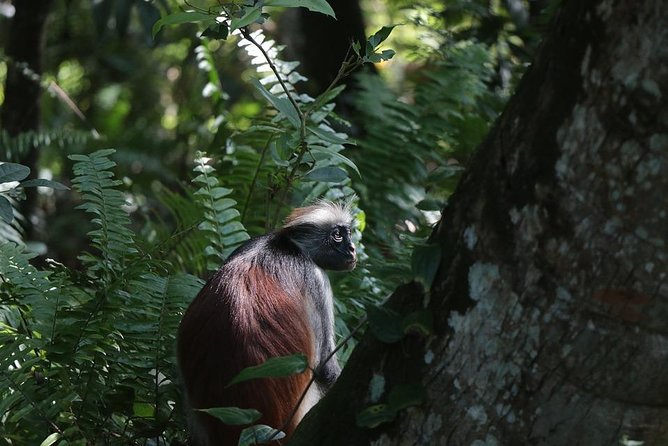
- Endemic red colobus as the main event: learn why they’re special to Zanzibar and see them in their forest home
- A real habitat mix: swamp forest, evergreen thickets, mangroves, and multiple wildlife zones in one outing
- More than monkeys: bush pigs, duikers and antelopes, elephant shrews, chameleons, birds, and even butterflies
- Go at your pace: private tour format means fewer time-pressured photo breaks
- Transfers included: you’re picked up and dropped off, so you’re not stuck figuring out transport
Jozani Forest, the half-day nature walk that feels alive
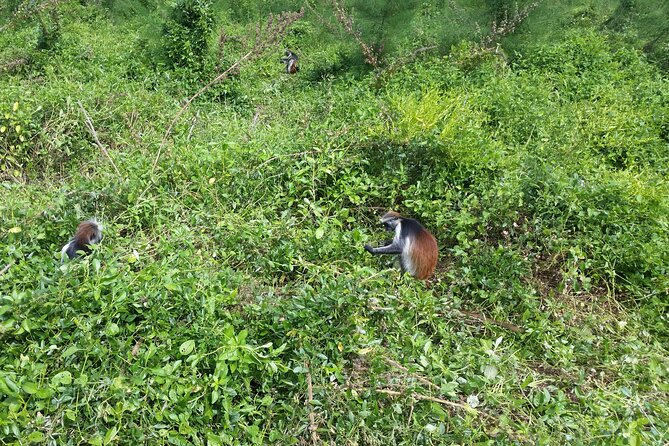
Jozani Forest is one of those places where the timing of the day matters. Early morning and late afternoon usually feel best for animals, but even outside the peak window, this forest can deliver because the focus is on walking paths that put you close to where wildlife shows up. You’re not racing from one “viewpoint” to another—you’re moving through habitats that naturally concentrate animals.
What makes this tour worth your attention is the way it balances the famous attraction with the rest of the system. Yes, the red colobus are the draw. But you’ll also learn why Jozani matters ecologically by seeing the forest structure—swamp areas, evergreen pockets, and mangroves all in the same general region. It’s a “small world” experience, in the best way.
You can also read our reviews of more tours and experiences in Zanzibar City.
The monkey lineup: red colobus plus black-and-white colobus
The core of your visit is getting eyes on Zanzibar’s endemic red colobus. These monkeys have a conservation story that gives the sightings extra meaning: about 20 years ago, the population was considered endangered, and conservation efforts helped reverse that trend. Today, the forest holds an estimated 6,000 red colobus, which is why your chances of spotting them are strong.
You’ll also have a shot at other colobus species in the area, including black and white colobus. When you see different monkey types close to one another, you stop thinking in terms of a single species checklist and start noticing behavior—how they move, how they perch, and how they use the canopy.
One practical point: while this is sold as a half-day monkey tour, treat it like wildlife viewing with a plan, not a theme park show. Your guide’s job is to help you scan, choose spots carefully, and stay patient when activity is quiet.
Stop style: forest walking first, mangroves after
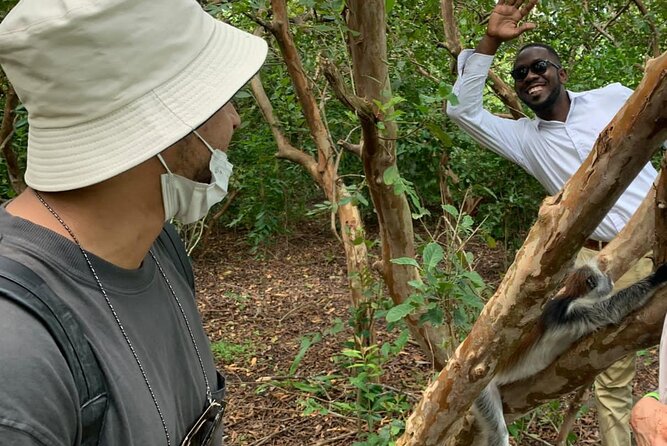
Your experience is built around a guided walk that begins in the forest area (near Red Stage by Red Monkey Beach Lodge). From there, you spend time moving through the habitats where the monkeys and other animals are most likely to be found.
The forest part is where the guide’s interpretation really matters. Jozani Forest includes swamp forest, evergreen thickets, and other environments that change what you see. That habitat variety is how you can go from spotting monkeys and birds up high to noticing animals or signs closer to the ground as you move along.
After the forest walk, the experience typically continues with a mangrove section. Mangroves have their own feel—roots, shallow channels, and a different set of birds and insects. If it rains, this part can still be memorable because the mangroves keep their character even when visibility changes. Just pack for wet conditions and expect the ground to be slick where paths are used.
What else you’ll spot besides monkeys
The best nature tours don’t just point; they teach you what you’re looking at. In Jozani Forest, there’s a strong wildlife mix beyond the colobus monkeys.
Here are the types of animals and creatures you can keep an eye out for during your walk:
- Sykes and red colobus monkeys (the headline species)
- Bush pigs
- Ader’s duiker and suni antelopes
- Elephant shrews
- Chameleons
- Lots of birdlife
- Butterflies as you move through lighter, warmer patches
In practice, sightings vary. But the value here is that your guide helps you read the forest. Instead of only seeing what’s easiest to spot, you’ll learn what’s worth scanning for—like bird movement patterns, canopy activity, and the kind of microhabitats where reptiles or small mammals might be present.
The guide experience: private pace, real explanations
This is a private tour, so it’s built for your group rather than a large shared schedule. That matters because wildlife spotting isn’t “one size fits all.” If your group wants slower walking so you can watch a specific treeline, you can do that. If you want to move on quickly when activity is low, you can also adjust.
You’ll have a local guide guiding your spotting and helping you understand what you’re seeing. A big theme from people’s feedback is the explanation quality—how the guide connects monkeys to the forest, then widens the lens to other species. That’s where your half-day can feel like more than a quick photo run.
Also, since this tour includes hotel transfers, you’re not spending your energy on back-and-forth logistics. You get time back for the walk itself.

Weather matters more than you think
Jozani Forest is a “go out and look” experience, which means good weather really helps. The tour is described as weather-dependent, and the operator notes that if it’s canceled due to poor conditions, you’ll be offered another date or a full refund.
If it’s raining, don’t assume it’s a dead day. One person noted it was raining and still turned into a new experience, which makes sense: wildlife keeps moving, and the forest can feel alive in different ways when rain cools things down. Just remember that wet ground affects walking comfort, and visibility can change what you spot.
My practical tip: bring a light rain layer, wear shoes that can handle damp paths, and keep a small towel or cloth in your bag. You’ll be glad you did.
Price and value: what $100 buys you
At $100 per person, the value comes from combining three things:
- Admission and all fees included (park ticket is part of the experience)
- Hotel pickup and drop-off plus an air-conditioned vehicle (you’re paying to remove transport stress)
- A private guided walk focused on wildlife spotting, not just basic sightseeing
If you were to do this on your own, you’d still need transport, entry management, and a guide to maximize your chances of spotting the right species. A private format also helps because you’re not sharing every decision with strangers—your guide can focus attention on your group, which pays off when wildlife activity is subtle.
So the question isn’t only “Is it expensive?” It’s “Is it efficient?” For a half-day, the structure here is efficient: you arrive, you walk, you learn, you see what Jozani is known for, then you’re back to your hotel.
How long you’ll be out (and how to plan your day)
The tour runs about 2 to 6 hours. That wider range is normal for wildlife experiences because animal activity doesn’t follow a stopwatch. Plan your schedule with breathing room, especially if you also want time for beach downtime or another excursion.
Because it’s private and you have pickup included, it’s usually easier to fit into a travel day than a DIY plan. Just avoid stacking back-to-back activities with no buffer. If you hit prime monkey activity, you’ll naturally want to stay with it a little longer.
Who should book this Jozani Forest private tour
Book it if:
- You want real wildlife viewing rather than only “see a forest” sightseeing
- You care about the conservation angle behind Zanzibar’s endemic red colobus
- You like guided scanning—someone showing you what to look for makes the forest feel bigger
- You prefer private pacing (less time pressure, more focus)
Skip or think twice if:
- You hate walking in uneven, damp forest paths (even short walks can feel like real walking here)
- You’re expecting a high-speed, guaranteed checklist with no waiting at all (wildlife doesn’t work that way)
Should you book Jozani Forest?
Yes, I think you should book this if your goal is a focused, guided wildlife outing with a strong chance of seeing the stars of Zanzibar’s forest. The value is solid because admission and transfers are included, and the tour isn’t just about monkeys—it’s about understanding the living system that supports them.
If you’re flexible with timing and you’re okay with the small surprises that come with nature walks, this is an easy win.
FAQ
What animals can I see on this tour?
You’re mainly looking for Zanzibar’s red colobus monkeys and also the black and white colobus. The forest has other wildlife you might spot too, including bush pigs, duikers and suni antelopes, elephant shrews, chameleons, and lots of birdlife. The experience also notes butterflies.
How long does the Jozani Forest tour take?
It typically runs 2 to 6 hours.
Is hotel pickup and drop-off included?
Yes. Pickup and drop-off are provided, and you travel in an air-conditioned vehicle.
Is admission included?
Yes. The admission ticket is included.
What’s included in the price besides the guide and entry?
The experience includes bottled water and covers all fees and taxes.
Do I get a ticket on my phone?
Yes. The tour uses a mobile ticket.
What if the weather is poor?
The experience requires good weather. If it’s canceled due to poor weather, you’ll be offered a different date or a full refund.